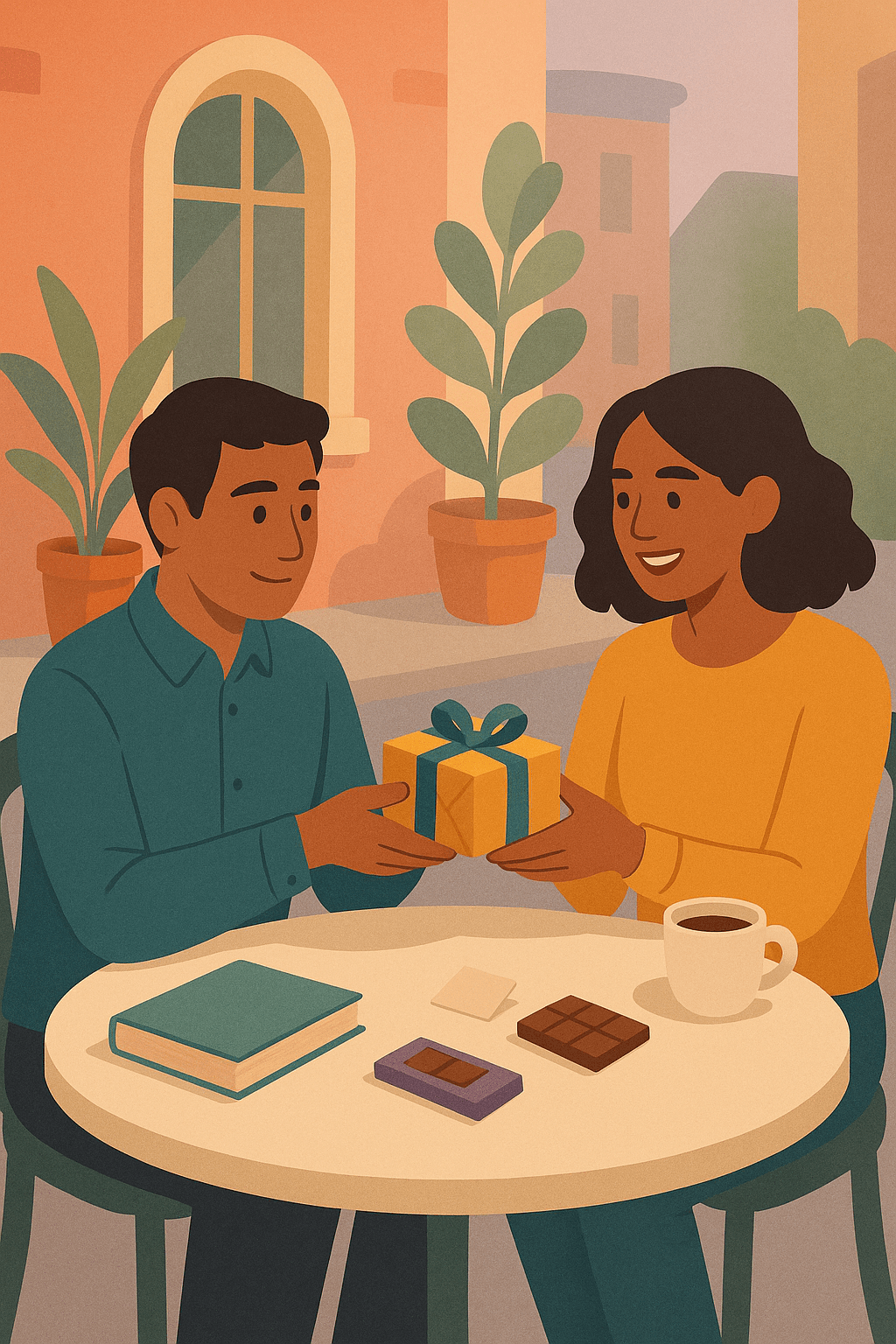
What should you gift someone you just started dating?
The best gift for someone you just started dating is specific enough to show attention, modest enough to avoid pressure, and easy to enjoy without decoding the relationship. Choose one detail they have already shared—favorite coffee, music, food, hobby, or neighborhood—and match it to the occasion and your current level of closeness.
A successful new relationship gift creates recognition, not obligation. It says, “I noticed you,” rather than, “Please interpret this as a major statement about us.”
Use Gimmie’s three-part check:
Recipient signal: What preference have they clearly expressed?
Relationship stage: How much shared history actually exists?
Occasion intensity: Is this a casual moment, birthday, holiday, or milestone?
This is the central psychology of early-dating gifts: price matters less than interpretive burden. A $20 vinyl record tied to a conversation often feels more personal than a $150 necklace that forces someone to wonder what it means.
How much should you spend on a new relationship gift?
Spend enough to make the occasion feel acknowledged, but not enough to create debt, pressure, or an implied commitment. For most early relationships, $15–$40 suits a casual gesture, while $30–$75 fits a birthday or holiday after several established dates. Match their likely comfort level, not your maximum budget.
Use these ranges as social guardrails rather than invoices:
1–3 dates — Comfortable range: $10–$25; Strong gift examples: Favorite pastry, paperback, small plant; Avoid: Jewelry, fragrance, weekend trip
A small team of friends and colleagues working together to produce useful content to help you...gift better.
3–6 months — Comfortable range: $40–$100; Strong gift examples: Concert ticket, quality cooking tool, personalized print; Avoid: Gifts that assume shared finances or travel
Birthday or holiday — Comfortable range: $30–$75; Strong gift examples: Curated bundle based on known interests; Avoid: Matching their friends’ or family’s spending
If income levels differ, choose a gift that is proportionate to the relationship, not proportionate to the wealthier person’s spending power. Thoughtfulness keeps the gesture emotionally balanced.
Which gifts work best in the first three months of dating?
The safest early-dating gifts are consumable, experiential, interest-based, or lightly personal. These categories show attention without taking over the recipient’s home, schedule, or identity. The strongest choice connects to a real clue: a favorite author, a running habit, a ramen obsession, or an artist already living in their Spotify rotation.
Reliable options include:
Consumable: specialty coffee, hot sauce trio, bakery box, loose-leaf tea, or excellent chocolate.
Interest-based: a paperback by their favorite author, film photography stock, climbing chalk, or a compact herb-growing kit.
Experiential: museum entry, comedy tickets, a pottery class, or a reservation at the taco place they mentioned.
Lightly personal: an illustrated map of their neighborhood, a playlist paired with a small speaker, or a pin connected to an inside joke.
Comfort-focused: quality socks, a candle in a scent family they already like, or a movie-night bundle.
A useful rule is one meaningful signal per gift. Combining their favorite snack, hometown, zodiac sign, pet, and an engraved date does not create five times the thoughtfulness; it creates emotional noise.
How do you personalize a gift without coming on too strong?
Personalize around a demonstrated preference, not an imagined future. A gift becomes appropriately thoughtful when it reflects something the person chose, said, wore, collected, or enjoyed. Early in a relationship, avoid personalization built around anniversaries, couple labels, permanent engraving, or assumptions about the life you will share.
Use the heard-seen-chosen test:
Heard: They said they miss Chicago-style popcorn.
Seen: You noticed they sketch in every café.
Chosen: You give a popcorn tin or a compact travel sketchbook.
This method prevents generic gifting without pretending you know them more deeply than you do. Add a short note—“You mentioned this on our third date”—and stop there; no sonnet required.
How does personality change the right early-dating gift?
Personality determines whether thoughtfulness feels like novelty, usefulness, comfort, beauty, status, connection, principle, or adventure. Gimmie’s 8-Color Consumer Psychology System profiles values, identity, love languages, and social roles, helping distinguish two people who share the same hobby but want very different experiences from a gift.
Consider two runners. Maya values precision and progress, so a running-belt upgrade or race-entry contribution fits; Jordan runs for freedom and discovery, so a trail guide or picnic after a scenic route feels better. The category is identical, but the emotional job of the gift changes.
Look for personality evidence in everyday choices:
Do they prefer useful upgrades or playful surprises?
Do they collect beautiful objects or memorable experiences?
Do they value local makers, sustainability, craftsmanship, convenience, or recognition?
Is their strongest love language quality time, words, practical care, or a tangible token?
What gifts should you avoid in a new relationship?
Avoid gifts that are expensive, intimate, corrective, permanent, or loaded with commitment before the relationship supports that meaning. The problem is not romance; it is disproportion. A gift becomes awkward when its emotional volume is louder than the relationship, especially if the recipient must reciprocate, display it, wear it, or explain it.
Common mismatches include:
Fine jewelry or watches after only a few dates.
Lingerie, skincare, or fragrance without explicit knowledge of taste and boundaries.
Fitness memberships, self-help books, or grooming tools that imply improvement.
Pets, large plants, or furniture that transfer responsibility.
Surprise travel that assumes time, money, documents, and exclusivity.
Public romantic gestures for someone who values privacy.
Also skip the “I panicked, so here is a generic gift card” move when one specific preference is available. A gift card to their favorite independent bookstore is attentive; an unexplained prepaid card is an errand wearing a bow.
What if you have not discussed exchanging gifts?
When no gift exchange has been discussed, keep the gesture small, self-contained, and free of reciprocity pressure. Present it as an optional moment rather than a test: “I saw this and remembered our conversation—no need to get me anything.” That sentence protects the warmth of the gift without turning kindness into a contract.
For Valentine’s Day, a birthday, or December holidays, ask directly if expectations feel unclear. “Do you like exchanging gifts, planning a date, or keeping it low-key?” is emotionally intelligent, not unromantic.
How can an AI gift assistant help without making the gift feel automated?
An AI gift assistant should reduce decision paralysis while preserving the giver’s judgment and the recipient’s individuality. Gimmie uses Psychology-Driven Recommendations and the 8-Color Consumer Psychology System, rather than transaction history alone, to connect relationship context, personality signals, values, love languages, budget, and occasion with emotionally relevant products.
That distinction matters in a new relationship. Search history knows that someone viewed headphones; a Recipient Profile can capture that they value minimalist design, repairability, live music, and practical gifts. The final choice remains yours, while the shortlist becomes smaller, clearer, and more human.
What are the most common questions about new relationship gifts?
New relationship gifting questions usually concern timing, reciprocity, romantic meaning, and incomplete knowledge. The consistent answer is to calibrate the gesture to evidence: what the person has shared, how established the relationship is, and what the occasion normally carries. Clear communication beats guessing when any of those signals conflict.
Should you give a birthday gift after only a few dates?
Yes, a small birthday gift is appropriate after a few dates when you know the date and have a genuine preference to act on. Choose a $10–$30 item such as their favorite pastry, a paperback, or a specialty snack. Keep the note warm, brief, and free from relationship labels.
Is a gift card too impersonal for someone you are dating?
A gift card feels personal when its destination proves you listened. Credit for the ceramics studio they follow, the neighborhood cinema they visit, or the bookstore they mentioned carries a clear recipient signal. Pair it with a one-sentence reason; avoid a generic Visa card unless flexibility is the specific kindness needed.
Should you buy the same amount they spent on you?
You do not need to match their gift dollar for dollar; match the level of care and the emotional scale. If they spent more than expected, thank them without apologizing or immediately compensating. Reciprocity works across time through attention, planning, practical care, and shared experiences—not a perfectly balanced receipt.
Are flowers appropriate early in dating?
Flowers are appropriate early in dating when the recipient likes them and the delivery does not create inconvenience or public pressure. A small seasonal bunch brought to a private date feels lighter than red roses delivered to an office. Confirm pet safety before choosing lilies, tulips, or other potentially toxic varieties.
What if you know almost nothing about their preferences?
When preference data is thin, choose a shared experience or a modest consumable connected to your conversations. Invite them to a local gallery, bring a dessert from a place you discussed, or plan coffee at a notable roaster. Do not invent intimacy; create an enjoyable moment that helps genuine knowledge grow.
The right early-dating gift does not prove how strongly you feel. It proves you paid attention with care and proportion. If you want a calmer shortlist, explore Gimmie and build a personality-aware Recipient Profile one real detail at a time.
What Should You Gift Someone You Just Started Dating? | Gimmie