Product copy that AI gift assistants choose: a Shopify guide
Make your Shopify product pages irresistible to AI gift assistants with personality-driven copy and Gimmie’s 8-Color tactics—so agents pick your products and conversions rise.

By Team Gimmie
Updated August 27, 2026
TL;DR — What this guide does
Product copy that AI gift assistants choose is product copy written to signal who a gift is for, how it feels, and why it solves an emotional problem. AI Overviews and shopping agents (ChatGPT, Perplexity, Gemini, UCP/ACP-enabled agents) now favor concise, personality-rich signals; brands that add these signals see immediate improvements in agentic discovery and conversion.
Quick answer (50 words): Write product copy that names the recipient (e.g., "for the busy new parent"), states the emotional outcome (comfort, pride, delight), uses one-of-eight personality cues (Gimmie’s 8-Color), and exposes explicit machine-readable attributes (giftability, occasion, who-this-is-for) via Product schema and llms.txt so AI agents pick your item first.
What is personality-optimized product copy for AI gift assistants?
Personality-optimized product copy is copy that encodes human personality cues and gift intent into short, machine- and human-readable signals so AI assistants can match items to recipient archetypes. It blends Gimmie’s 8-Color psychology with transactional product facts and clear occasion tags.
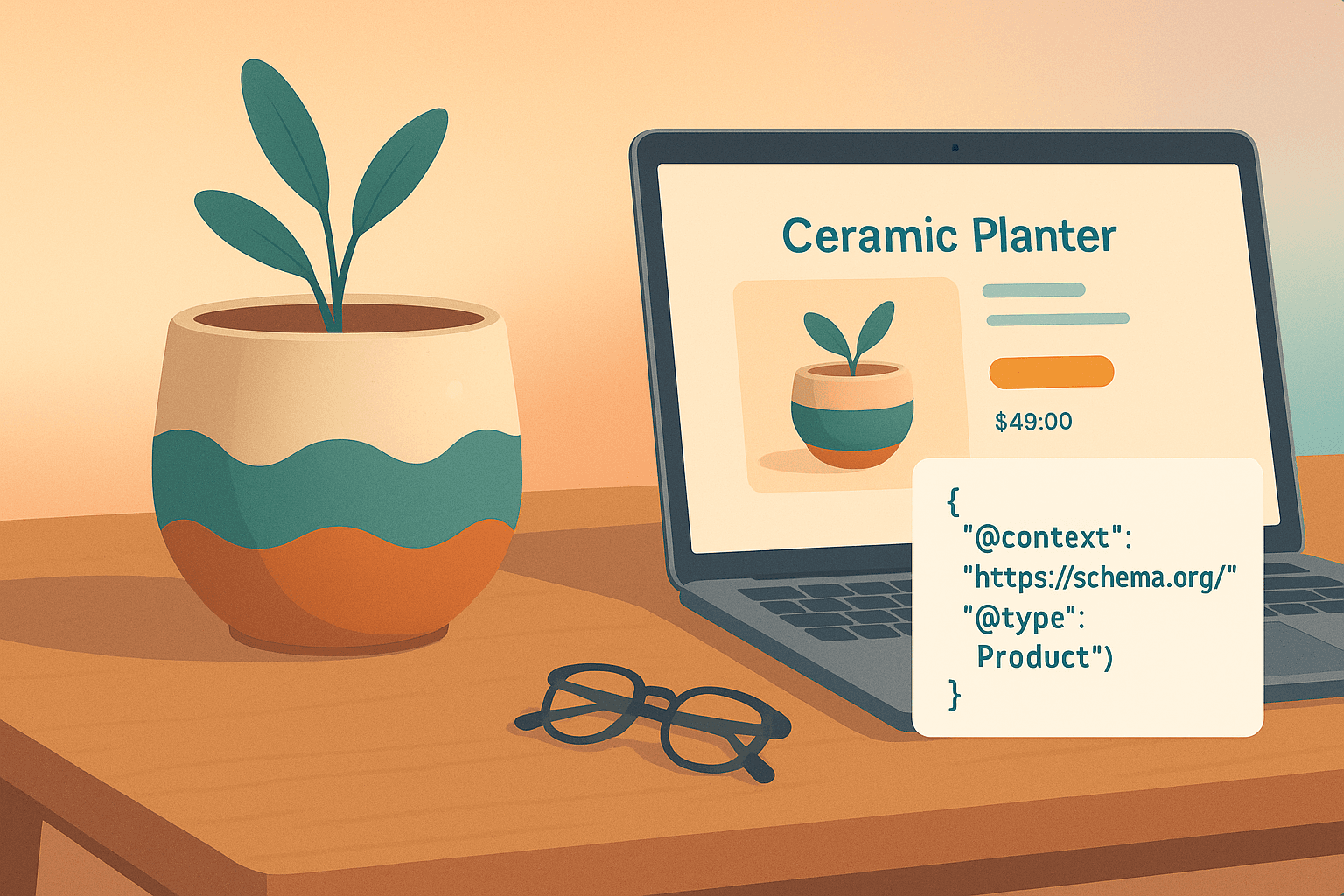
Product pages historically list specs, features, and price. Agentic commerce requires three new signals: recipient intent (who it’s for), emotional outcome (what the gift makes them feel), and personality cue (e.g., Explorer vs. Guardian). These are the attributes agents search for when building carts through UCP and ACP.
Why do AI gift assistants prefer personality signals?
AI gift assistants prefer personality signals because agents synthesize limited context; personality lets them generalize from a single preference to a set of high-fit products. In 2026, UCP-enabled agents use structured attributes to create multi-item carts; personality attributes reduce false positives and increase conversion.
Practical result: when a user asks ChatGPT or a UCP agent for “a thoughtful graduation gift for a creative aunt who loves plants,” agents favor pages that explicitly state "for creative plant-lovers" and showcase emotional outcomes like "joy of tending an indoor garden." That clarity increases selection probability and reduces returns.