Physical AI in Cars: The 2026 Shift From Screens to Sensors
Forget infotainment. Physical AI is the 2026 automotive trend transforming safety and driving dynamics. Explore sensor fusion, predictive tech, and aftermarket upgrades.

By Team Gimmie
Updated August 27, 2026
The End of the Screen Obsession: Why Physical AI is the Real Future of Your Car
For the last five years, car manufacturers have tried to convince us that the future of driving was essentially a giant iPad glued to a dashboard. We were promised that more screens, more apps, and more voice assistants would make our lives easier. Instead, we got distracted driving, finger-smudged glass, and the frustration of trying to find the climate control settings while going sixty-five miles per hour.
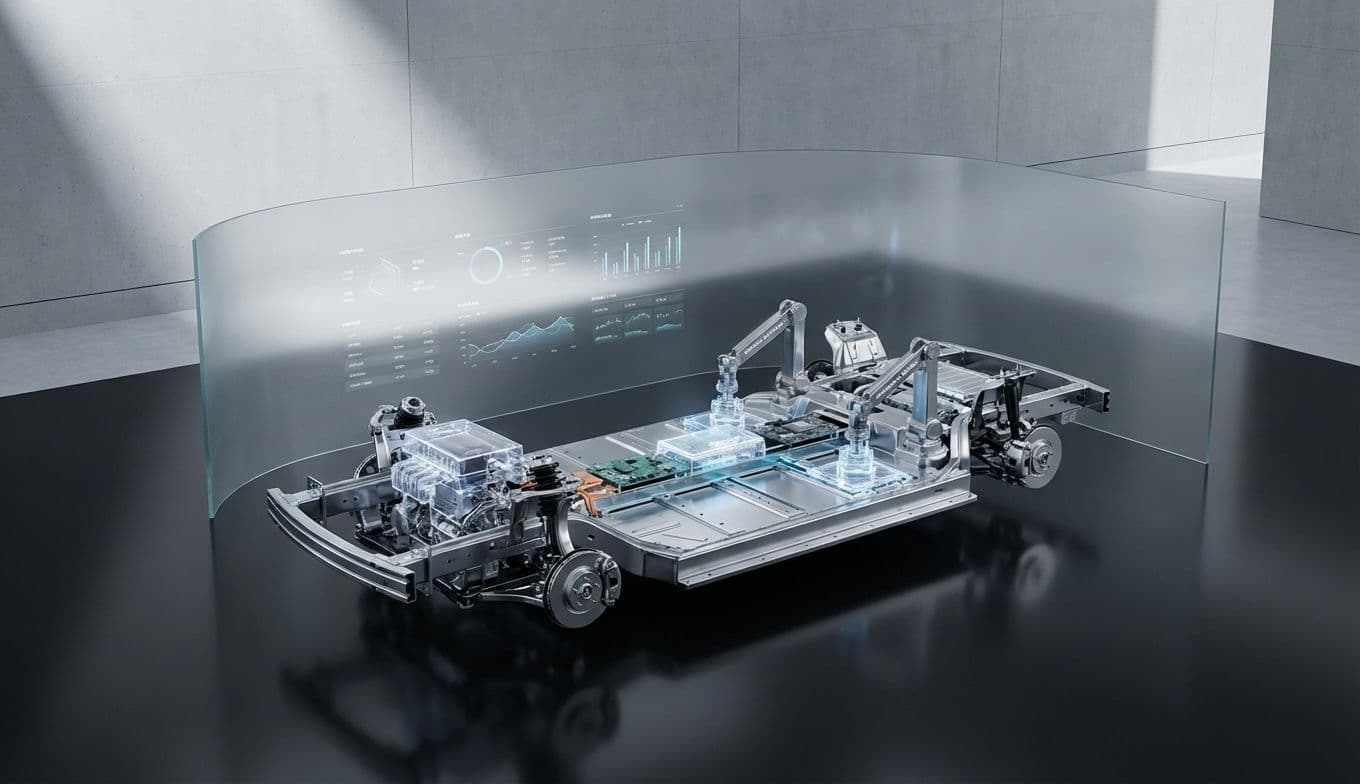
As we move into 2026, the industry is finally admitting it went down the wrong path. The buzzword of the year isn't "infotainment"—it’s Physical AI. This isn’t just another marketing term designed to sell you a subscription service. It represents a fundamental shift in how vehicles interact with the world around them. Physical AI is about moving intelligence away from the screen and into the chassis, the tires, and the suspension. It is the transition from a car that talks to you to a car that actually feels the road.
What Exactly is Physical AI?
To understand Physical AI, you have to look at the difference between a brain and a nervous system. For a long time, "Smart Cars" focused on the brain—processing maps, playing music, and handling voice commands. Physical AI is the nervous system. It is the integration of high-level machine learning with the mechanical hardware of the vehicle.
In 2026, this manifests as "Sensor Fusion." Your car is no longer just using a camera to see a lane line; it is using a combination of LiDAR, ultrasonic sensors, and high-speed cameras to create a real-time physics model of your surroundings. Physical AI takes that data and applies it to the car’s physical behavior. If the car detects a patch of black ice three vehicles ahead, it doesn't just beep at you. It pre-tensions the brakes, adjusts the torque distribution on all four wheels, and softens the suspension to maintain maximum contact with the road before you even realize there is a problem.
This is a move away from the "Nanny State" car that constantly chirps and vibrates. Physical AI is silent. It’s the invisible hand that makes a mediocre driver feel like a professional, and it’s finally making the "software-defined vehicle" feel like something worth owning.