LEGO Smart Brick Review: Features, Compatibility & Longevity Analysis
Explore the new LEGO Smart Brick: a programmable hub for STEM learning. We analyze its features, compatibility with older sets, and the risks of app dependency.

By Team Gimmie
Updated September 2, 2026
The Dragon in the Living Room: Making LEGO Move
Imagine a LEGO dragon perched on a bookshelf. In the past, that dragon moved only when a child’s hand swooped it through the air. But with the introduction of the new LEGO Smart Brick, that same dragon can now sense when someone walks into the room, track their movement with its eyes, and let out a programmed roar. This isn’t just a new set; it is a fundamental shift in how we interact with the world’s most famous plastic bricks.
Unveiled as a "remixable gizmo with infinite hacking potential," the Smart Brick is effectively a computer disguised as a standard building element. While the tech world is buzzing with excitement over this "Raspberry Pi for builders," there is a deeper conversation to be had about what happens when we trade simple plastic for sophisticated processors. Is this the ultimate evolution of play, or are we over-complicating a classic?
The Brains Behind the Bricks
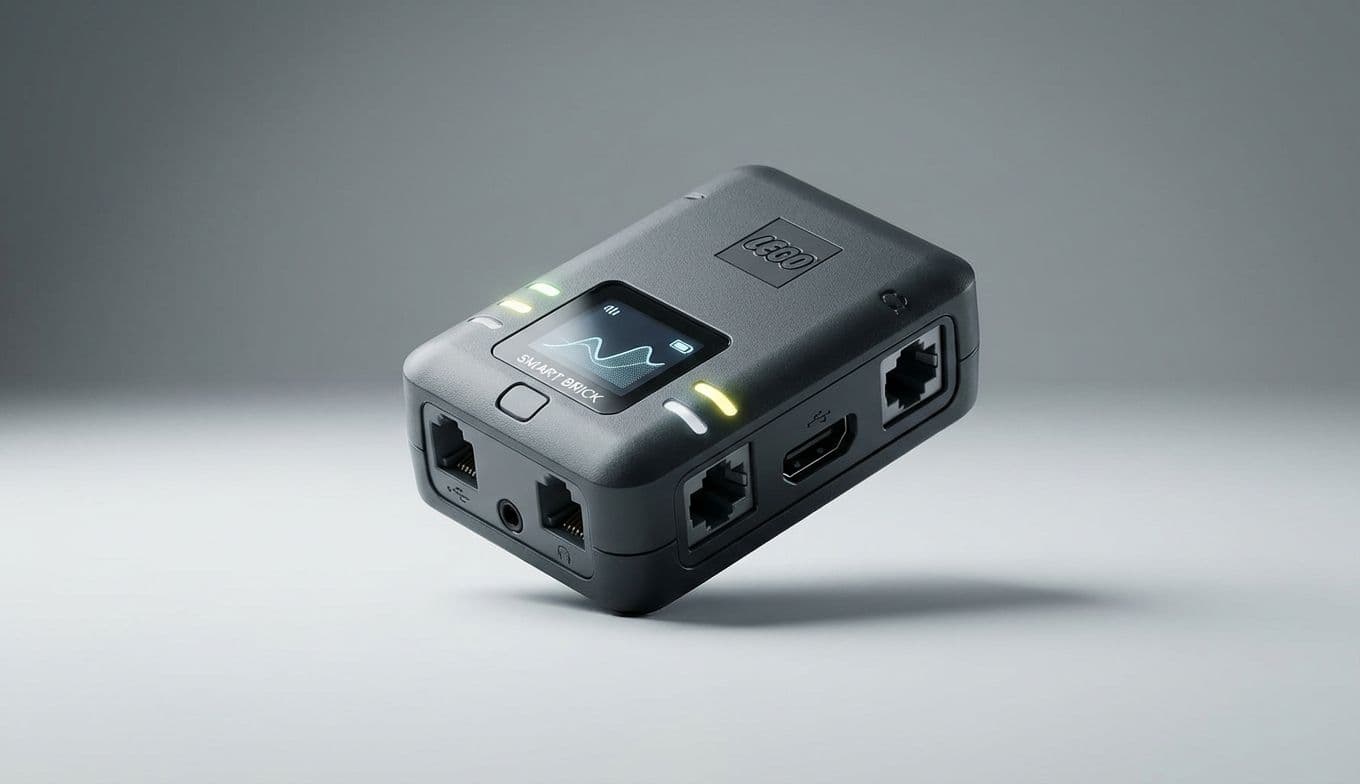
At its simplest, the Smart Brick is a self-contained hub packed with internal sensors (like accelerometers and gyroscopes), wireless connectivity, and the ability to process logic on the fly. It is designed to be the "brain" of a creation, allowing builders to connect motors and lights that respond to the environment.
For the young engineer, the appeal is obvious. This bridges the gap between the tactile world of clicking bricks together and the digital world of logic and code. Instead of just building a car, a child can now build an autonomous vehicle that navigates a hallway maze. The potential for STEM (Science, Technology, Engineering, and Math) education is massive here, as it turns abstract coding concepts into physical, visible actions.
The Question of the Old Toy Bin
One of the biggest concerns for any LEGO enthusiast is compatibility. We all have bins filled with bricks from a decade ago, and nothing is more frustrating than a new product that refuses to play nice with the old ones.
The good news is that the Smart Brick is built on the standard LEGO stud system. It will click onto a plate from 1985 just as easily as one from 2025. However, the electronic ecosystem is more specific. The Smart Brick is designed to work within the "Powered Up" family of components. If you have older "Power Functions" motors with the wide, grey infrared plugs, you will likely need adapters or newer hardware to get them talking to the Smart Brick. It is a bridge to the future, but it requires the right cables to cross it.