Keychron Q16 HE 8K Review: Ceramic Beauty vs. Fragile Risk
Review: The Keychron Q16 HE 8K combines a stunning ceramic body with 8K polling and Hall Effect switches. Is the performance worth the fragility risk?

By Team Gimmie
Updated August 27, 2026
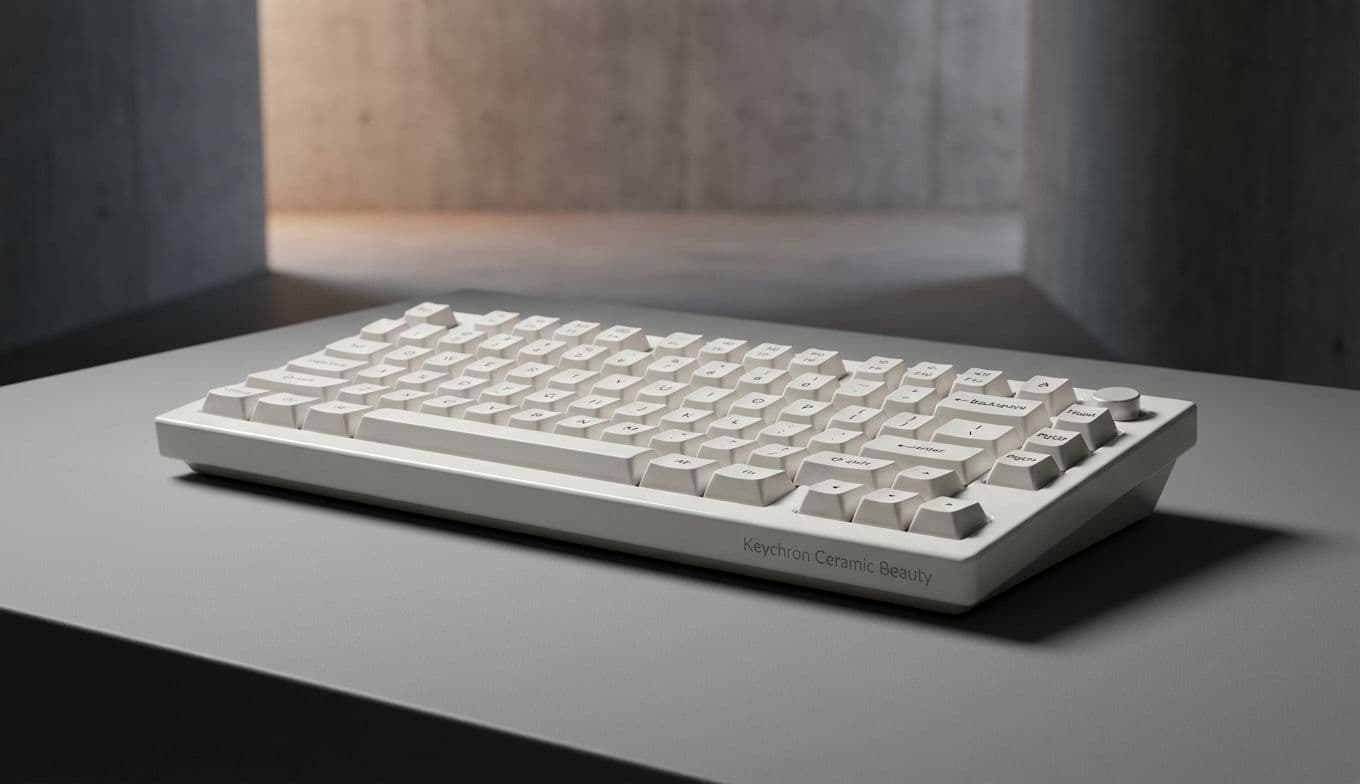
THE CERAMIC GAMBLE: WHY THE KEYCHRON Q16 HE 8K IS A BRILLIANT HEADACHE
Imagine unboxing a keyboard that feels less like a computer peripheral and more like a piece of high-end dinnerware. It is cold to the touch, surprisingly heavy, and possesses a polished, vitreous sheen that makes your standard plastic or aluminum decks look like toys. This is the Keychron Q16 HE 8K, a device that attempts to marry the bleeding edge of gaming technology with a material usually reserved for fine vases and dental implants.
On paper, this keyboard is a masterpiece. It features the latest Hall Effect magnetic switches and a blistering 8K polling rate. But in practice, Keychron has created a polarizing paradox. While the internal technology is some of the best the company has ever produced, the ceramic housing turns a high-performance tool into a fragile liability. As someone who has tested dozens of mechanical boards, I can tell you that while this is a fascinating experiment, it is a risky bet for most users and an even riskier gift.
THE MAGNETIC REVOLUTION: WHY HE TECHNOLOGY MATTERS
Before we get into the controversial shell, we have to talk about the HE in the name. HE stands for Hall Effect, and it represents the biggest shift in keyboard technology in a decade. Unlike traditional mechanical switches that rely on two pieces of metal touching to register a keystroke, Hall Effect switches use magnets.
As you press a key, a sensor measures the proximity of a magnet. This allows for a feature called adjustable actuation. With a few clicks in Keychron’s software, you can decide exactly how deep you want to press the key before it registers. You can set it to a hair-trigger 0.1mm for lightning-fast gaming reflexes or a deep 4.0mm to prevent typos while you are writing an email.
The real magic for gamers, however, is Rapid Trigger. In games like Valorant or Counter-Strike, movement is everything. With traditional switches, you have to let the key rise back up past a specific point before you can press it again. With Rapid Trigger, the key resets the instant your finger begins to lift. This removes the physical delay of the switch, making your character feel like an extension of your nervous system. Pair that with an 8K polling rate—which sends data to your PC 8,000 times per second rather than the standard 1,000—and you have arguably the most responsive input device on the market.