High-End Espresso Machine Guide: The Art of the Home Shot
Ready for the perfect home shot? Discover how to choose your first high-end espresso machine, understand boiler types, and why the grinder matters most.

By Team Gimmie
Updated September 2, 2026
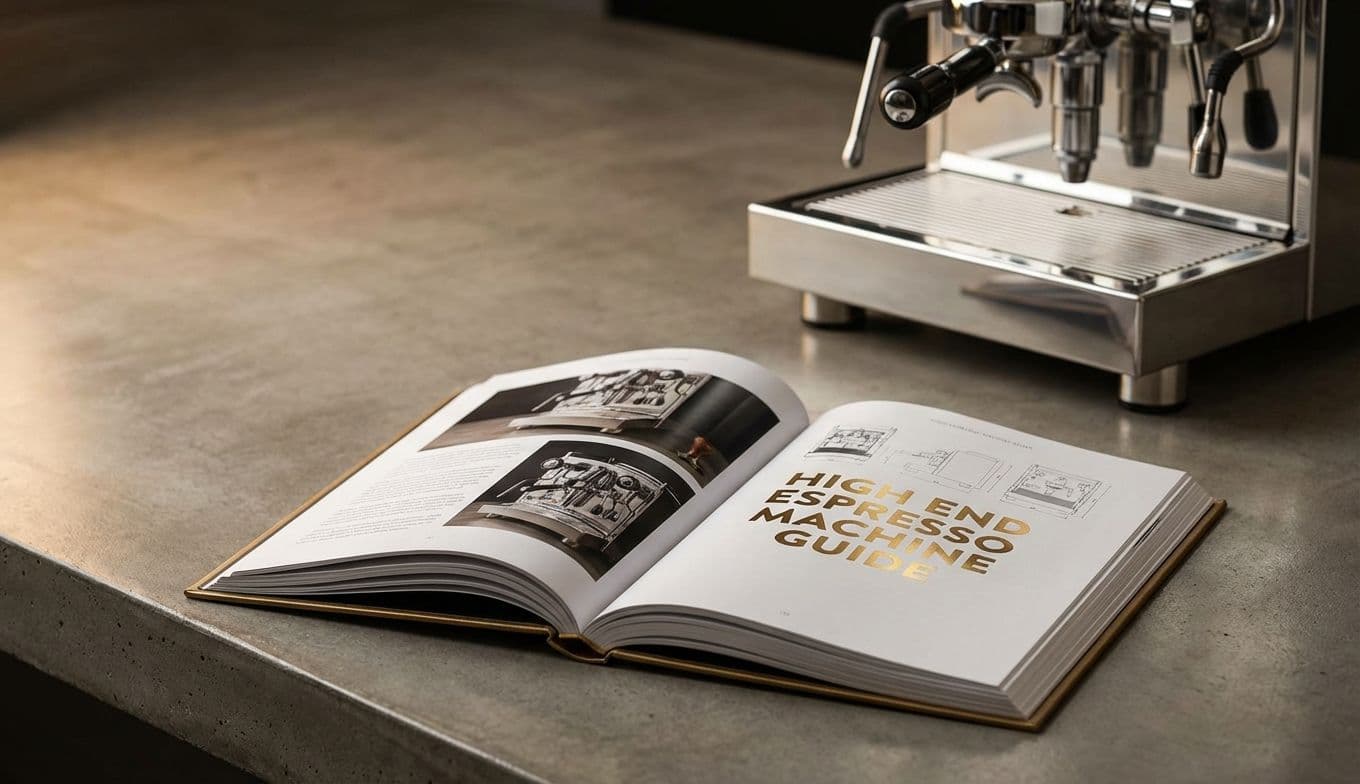
THE ART OF THE HOME SHOT: A NO-NONSENSE GUIDE TO YOUR FIRST REAL ESPRESSO MACHINE
There is a specific moment that every coffee lover experiences. It usually happens around 7:15 AM, standing in a line that is three people too long, waiting to pay eight dollars for a latte that you know, deep down, is mostly milk and prayer. You look at the gleaming Italian machine behind the counter and think, I could do that.
But then you go online. You see terms like PID controllers, heat exchangers, and burr geometry. You see price tags that rival a used car. The dream of the perfect home kitchen cafe suddenly feels like a daunting engineering project.
The truth is that buying your first high-end espresso machine is not about buying a kitchen appliance; it is about choosing a hobby. If you just want caffeine, buy a pod machine. If you want the ritual, the science, and the undeniable satisfaction of pulling a perfect, syrupy shot of espresso, then you are in the right place. Let’s break down how to navigate this world without losing your mind or your savings.
UNDERSTANDING THE SPECTRUM: FROM BUTTON-PUSHERS TO BARISTAS
The first decision you need to make is how much work you actually want to do. The espresso world is divided into three main camps: Super-Automatic, Semi-Automatic, and Manual.
Super-Automatic machines are for the person who wants the result but not the process. You put beans in the top, press a button, and the machine grinds, tamps, and brews. It is convenient, but it comes with a trade-off. These machines are notoriously difficult to repair and rarely produce the "god shot" quality you find in a boutique cafe. They are the high-end version of a microwave dinner—consistent, but limited.
Semi-Automatic machines are the sweet spot for most enthusiasts. Here, the machine handles the water temperature and pressure, but you are responsible for the grind and the tamping. This is where the craft lives. You have enough control to make the coffee taste exactly how you want it, but the machine does the heavy lifting of keeping the water at a steady 200 degrees Fahrenheit.
Manual machines, often called lever machines, are for the purists. There are no pumps. You provide the pressure by pulling a physical lever. It is beautiful, silent, and incredibly difficult to master. Unless you want your morning coffee to feel like a gym workout and a high-stakes science experiment, save the manual lever for your second or third machine.