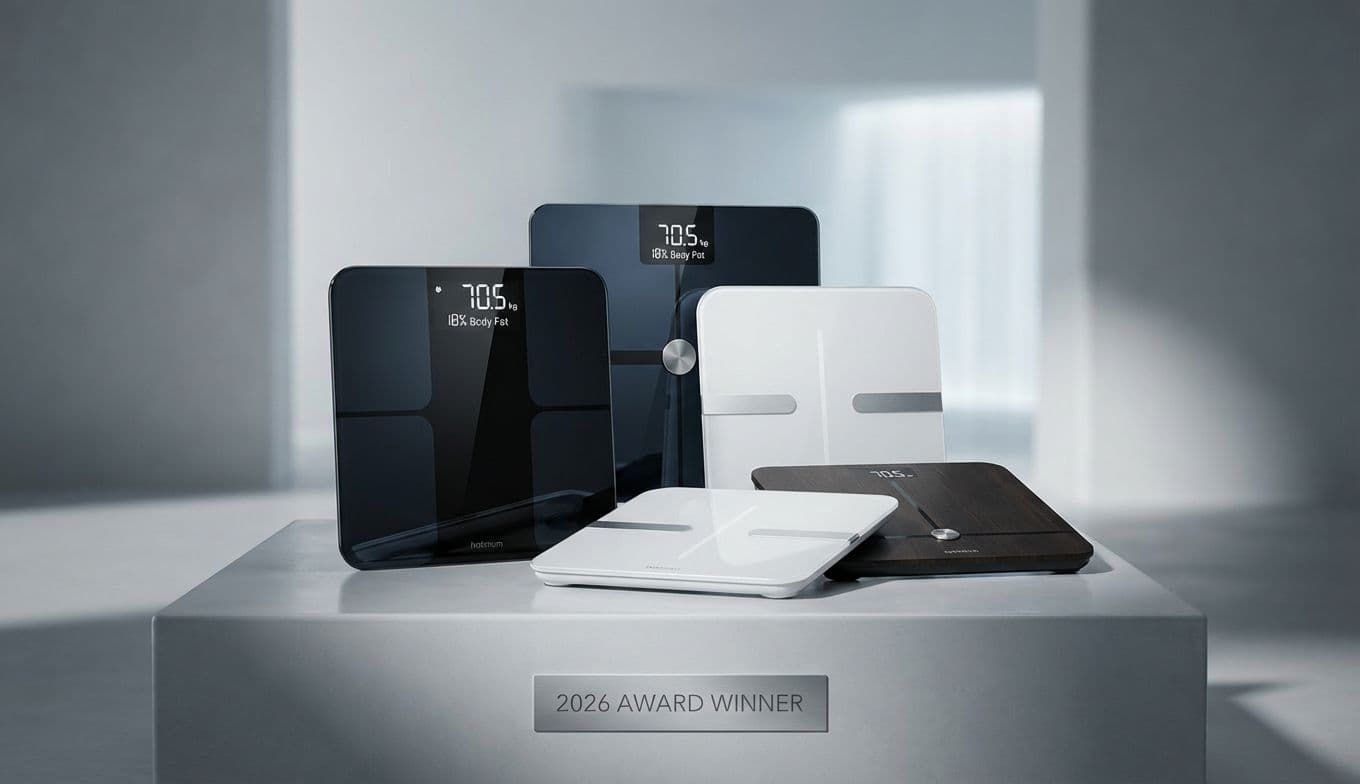
Best Smart Scales 2026: Reviews, Accuracy & BIA Technology

Best Smart Scales 2026: Reviews, Accuracy & BIA Technology

Team GimmieTeam Gimmie
Published on February 10, 2026

The Bathroom Oracle: Making Sense of the Smart Scale Revolution in 2026

Smart scales are often viewed with a healthy dose of skepticism, and honestly, they should be. For years, they promised to act as a mini-physical in your bathroom, offering insights into body fat, muscle mass, and bone density that often felt like high-tech guesswork. As a product reviewer who has stepped on more glass platforms than I care to count, I have seen these gadgets evolve from glorified calculators to genuine health companions.

The question remains: are they truly accurate, or just a fancy way to get overwhelmed by data? After digging into the latest expert evaluations and testing the current market leaders, the answer is more nuanced than a simple yes or no. If you are looking for a medical-grade diagnosis, you won't find it in a consumer scale. But if you want a reliable tool to track trends and understand how your lifestyle choices affect your body composition, a smart scale is a worthy investment.

The Science Behind the Glass

To understand if a scale is worth your money, you have to understand how it thinks. Most smart scales use Bioelectrical Impedance Analysis, or BIA. When you step on the platform, a tiny, imperceptible electrical current travels through your legs. Since muscle, fat, and bone conduct electricity differently based on their water content, the scale uses the resistance it encounters to estimate your body composition.

Here is the reality check: BIA is sensitive. If you are dehydrated, the scale might think you have more body fat than you actually do because fat contains less water than muscle. If you just finished a heavy workout or a large meal, the numbers will fluctuate. Because of this, you should never treat a single reading as absolute truth. The value of a smart scale is not in the data point from Tuesday morning; it is in the trend line from January to June.

The Top Performers: Scales That Earned Their Keep

The market is flooded with cheap imitators, but a few models consistently stand out for their sensor quality, app integration, and long-term reliability.

Withings Body Scan Best for Athletes and Data Enthusiasts

If you want the most comprehensive view of your body currently available for the home, the Withings Body Scan is the undisputed heavyweight champion. It looks like a standard scale but features a retractable handle that you hold while weighing in. This allows the scale to perform segmental body composition analysis, measuring the fat and muscle mass in your arms, legs, and torso individually.

Beyond weight, it includes a built-in ECG to monitor heart health and a nerve activity score. It is admittedly overkill for someone who just wants to lose five pounds, and the price tag reflects its premium status. However, for the biohacker or the competitive athlete, the level of detail provided is unparalleled.

Fitbit Aria Air Best for Ecosystem Integration

For many people, the best smart scale is the one that talks to the watch already on their wrist. The Fitbit Aria Air is a streamlined, user-friendly option that excels at simplicity. It does not try to overwhelm you with twenty different metrics. Instead, it focuses on the core data: weight and BMI.

The real draw here is the Fitbit app. If you are already logging your sleep, steps, and calories in the Fitbit ecosystem, the Aria Air completes the picture by automatically syncing your weight data. It is reliable, quick to set up, and perfect for the person who wants to see their progress without a steep learning curve.

Eufy Smart Scale P2 Pro Best Value and All-Rounder

If you want the high-end features of a Withings scale without the three-figure price tag, the Eufy Smart Scale P2 Pro is the smartest buy on the market. It measures 16 different metrics, including heart rate and muscle mass, and even creates a 3D model of your body to help you visualize your progress.

The P2 Pro uses high-precision sensors that rival much more expensive models, and the EufyLife app is surprisingly polished and free of the subscription "paywalls" that are becoming common in the industry. It is the perfect balance of sophisticated technology and approachable pricing.

A Note on Your Privacy

In 2026, we have to talk about where your data is going. When you step on a smart scale, you are sharing intimate health metrics with a cloud server. Before you buy, check the manufacturer’s privacy policy. Reputable brands like Withings and Eufy have made strides in data encryption and allow you to opt-out of data sharing with third parties. Always ensure the app you are using requires two-factor authentication, especially if you plan to sync your scale data with broader health platforms like Apple Health or Google Fit.

Who Truly Benefits from a Smart Scale?

A smart scale is a tool, and like any tool, it is only as useful as the person using it. It is particularly effective for:

The Dedicated Fitness Enthusiast: If you are trying to "recompose" your body—losing fat while gaining muscle—a standard scale will frustrate you. A smart scale will show you that even if your weight stayed the same, your body fat percentage dropped, which is a massive win.

The Health-Conscious Senior: Models like the Withings Body Scan that track heart health and nerve activity can provide early warning signs that are worth discussing with a doctor.

The Data-Driven Beginner: Seeing a graph move in the right direction is a powerful psychological motivator. For many, the visual representation of progress is what keeps them consistent.

A Vital Tip for Gift-Givers

Smart scales are popular gifts, but they come with a technical catch. Before you buy one for a friend or family member, confirm what smartphone they use. While most scales are cross-platform, some features might be optimized for iOS over Android, or vice versa. More importantly, ensure they actually use a health app. A smart scale is just a heavy piece of glass if the recipient isn't interested in the digital side of the experience.

Maximizing Your Accuracy

To get the most out of your investment, you need to follow a few ground rules for weighing in:

Surface Matters: Never place a smart scale on a carpet or rug. The sensors require a hard, flat surface like tile or hardwood to calibrate correctly.

Consistency is Everything: Your weight can fluctuate by several pounds throughout the day. To see a true trend, weigh yourself at the same time every morning, after using the bathroom but before eating or drinking anything.

Bare Feet are Required: BIA technology requires skin contact to send that tiny electrical current. You cannot get body composition readings while wearing socks or shoes.

The Bottom Line

Smart scales have matured into genuinely useful devices that offer more than just a number on a screen. While they aren't perfect, the best models provide a holistic view of your health that can help you stay motivated and informed. By focusing on the long-term trends rather than daily fluctuations, and by choosing a model that fits your specific needs and budget, you can turn a simple morning ritual into a powerful health strategy. Focus on the progress, stay mindful of your data privacy, and remember that you are more than just a collection of metrics.

Best Smart Scales 2026: Reviews, Accuracy & BIA Technology | Gimmie