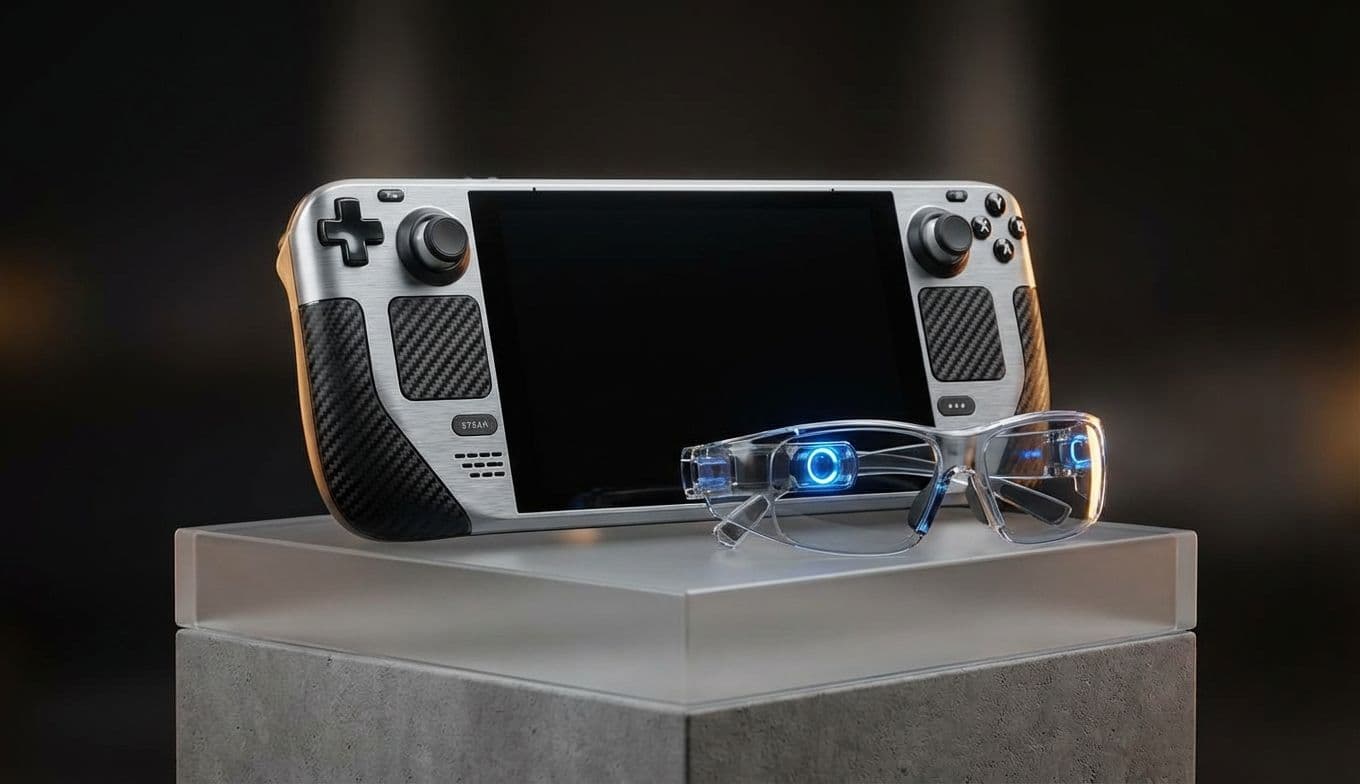
Best AR Glasses for Steam Deck & Switch: Xreal vs Viture

Best AR Glasses for Steam Deck & Switch: Xreal vs Viture

Team GimmieTeam Gimmie
Published on April 5, 2026

The Nine-Feature Wishlist for the Ultimate AR Gaming Experience

For months, I have been living a double life. By day, I am your typical product journalist, navigating the relentless tide of new gadgets. By night, I am a stealth gamer. My living room effectively disappears, replaced by a private, hundred-inch cinema thanks to a pair of augmented reality (AR) glasses. I have logged serious hours with the latest offerings from Xreal and Viture, testing them not just as professional review units, but as my primary way to play the Steam Deck and Nintendo Switch 2.

Using AR glasses as a portable display is not exactly a brand-new concept, but we have reached a tipping point. The latest generation has introduced a feature that is now non-negotiable for me: three degrees of freedom, or 3DoF. This allows you to anchor your virtual screen in a fixed point in space. Without it, the screen wiggles every time you breathe, which is a fast track to motion sickness.

While a 400-dollar price tag is a steep ask for a peripheral, these devices are becoming essential for frequent travelers or anyone tired of hunching over a small handheld screen. After putting the Xreal 1S (449 dollars), the Xreal One Pro (649 dollars), and the Viture Beast (549 dollars) through their paces, I have realized that no single pair is perfect. Instead, I have compiled a nine-point wishlist—the "holy grail" of features—that would create the ultimate gaming glasses.

Quick-Glance Comparison

Model: Xreal 1S Weight: 85g Audio: Bose-tuned Best For: The Budget-Conscious Traveler

Model: Viture Beast Weight: 96g Audio: Harman-tuned Best For: The OLED Contrast Enthusiast

Model: Xreal One Pro Weight: 91g Audio: Bose-tuned Best For: The Premium All-Rounder

The Nine Features of the Dream AR Pair

  1. Featherweight Comfort (Under 90 Grams) Even the best glasses are heavier than standard Ray-Bans. However, every gram counts when a device is resting on the bridge of your nose for a three-hour gaming session. The Xreal 1S sets the gold standard here at just 85 grams. The Viture Beast, while powerful, feels noticeably bulkier at 96 grams. My dream pair needs to stay under that 90-gram threshold with thin temple arms that do not pinch the ears.

  2. Rich, Low-End Audio Tuning Sound is half the immersion. Xreal partnered with Bose, and it shows. Their glasses deliver a balanced sound with actual bass—a rarity in this form factor. The Viture Beast, tuned by Harman, leans too heavily into high frequencies, leaving games like Elden Ring sounding a bit thin. The perfect pair needs that Bose-level depth to make explosions feel impactful.

  3. Simplified, Four-Button Control Layout When you have a screen strapped to your face, you do not want to be fumbling for buttons like you are playing a flute. Xreal’s streamlined four-button layout on the right temple is intuitive. Viture’s Beast uses six buttons spread across both arms, which feels like overkill and leads to frequent mis-clicks during intense gameplay.

  4. High-Contrast OLED Visuals This is where Viture takes the lead. The Beast delivers inky blacks and vibrant colors that rival a high-end OLED TV. While Xreal’s premium One Pro is close, the Viture Beast has a richness to its image that makes dark, atmospheric games truly pop. My dream glasses must have this level of visual fidelity.

  5. Anti-Reflective Optics for Daylight Use One of the biggest frustrations with AR is seeing your own face reflected in the lenses when you are in a bright room. The Xreal 1S struggles here; in a sunlit room, the blacks look "crushed" and grey. The Xreal One Pro and Viture Beast use superior optics that mitigate these reflections, a must-have for gaming on a train or a plane.

  6. Rugged Metal Hinge Construction If you are spending 500 dollars, the product should not feel like a toy. Xreal uses sturdy metal hinges that feel premium and stay in place. The Viture Beast uses plastic-heavy hinges that feel slightly flimsy and tend to swing open on their own. The ultimate pair needs that "built-to-last" metal click.

  7. Zero-Drift 3DoF Tracking As mentioned, 3DoF is vital for comfort. However, it only works if it is stable. In my testing, the Viture Beast’s screen would slowly "drift" to the left over time, forcing me to constantly recenter the image. Xreal’s tracking is rock-solid. The perfect pair cannot have a drifting screen; it breaks the illusion of a floating cinema.

  8. Seamless 3D Software Integration Xreal’s Real3D feature can convert standard 2D content into a 3D-like experience on the fly. While it is not as intense as a VR headset, it adds a layer of depth that makes exploration-heavy games feel more expansive. This software "magic" is the kind of value-add that justifies a premium price.

  9. A Reliable, High-Capacity Docking Ecosystem The Nintendo Switch 2 is a dream for AR, but it requires a dock to output video while charging. Viture wins this round with their 130-dollar Pro Mobile Dock. It is a 13,000mAh battery that powers the glasses and the Switch simultaneously. Xreal currently lacks a dedicated, reliable first-party docking solution, leaving users to hunt for third-party adapters. A dream pair needs a dedicated power-and-play accessory.

Which Model Should You Choose Today?

Since the "dream" pair does not exist yet, you have to pick the one that matches your priorities.

The Xreal 1S is the best choice for the budget traveler. It is the lightest and most comfortable, and while the visuals struggle in bright light, the audio is world-class. It is the most approachable entry point for someone who just wants a bigger screen for their Steam Deck.

The Viture Beast is for the OLED perfectionist. If you primarily game in dark environments and demand the best possible contrast and color, the Beast is your winner. Just be prepared to carry the extra weight and deal with a slightly more frustrating button layout.

The Xreal One Pro is the premium all-rounder. It bridges the gap by offering the comfort and audio of Xreal with the high-end visuals and reflection-handling of the Viture. It is the most expensive of the bunch, but it comes closest to hitting all nine points on the wishlist.

The Path Forward

AR glasses are no longer just a gimmick for tech enthusiasts. They are becoming a legitimate lifestyle upgrade for handheld gamers. We are not quite at the point of "one size fits all," but the progress made by Xreal and Viture in just a single generation is staggering.

If you are a frequent traveler or someone who wants to reclaim their living room while their partner watches TV, these glasses offer genuine value today. We might be waiting a little longer for that perfect, nine-feature dream pair, but the current reality is already pretty impressive.