
AI Collectibles Review: Buddyo, HeyMates & The Future of Smart Toys
Are AI collectibles the future of toys or tech trash? We review Buddyo and HeyMates, analyzing how they work, their educational value, and critical privacy risks.

By Team Gimmie
Updated August 27, 2026
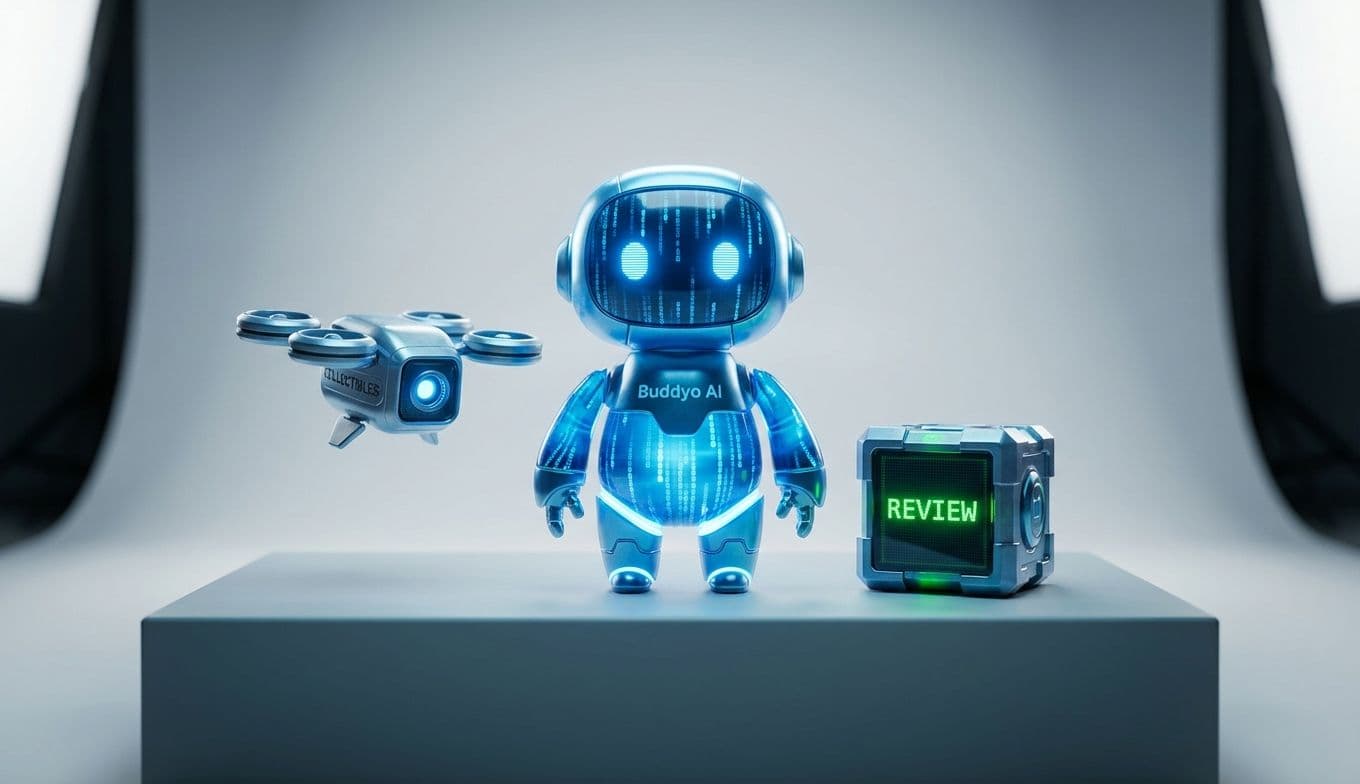
TALKING TOYS OR TECH TRASH? THE REALITY OF AI COLLECTIBLES
It seems like everywhere you turn these days, there is a new AI gadget promising to revolutionize something that probably did not need a brain in the first place. From smart home hubs that claim to fold your laundry (spoiler: they just tangle it) to AI-powered toasters that analyze the molecular structure of your sourdough, the hype train is in full, often-ridiculous swing. So, when I heard about Buddyo, a new product aiming to bring artificial intelligence to collectibles like Funko Pops, my first thought was a weary, Here we go again.
But as I sat with the idea, I realized this is not just another piece of tech clutter. While the concept of a chatbot dressed up as your favorite superhero might sound like a gimmick destined for the dusty corners of a garage sale, Buddyo and its rival HeyMates are tapping into a massive trend. We are obsessed with collectibles, and we are equally obsessed with making our tech feel personal. The question is: does a talking plastic figurine actually provide value, or are we just paying for a glorified paperweight?
THE PLASTIC IS TALKING BACK
Let’s be honest: collecting is big business. Whether it is rare trading cards or rows of designer toys, we love physical representations of our passions. Funko Pops, in particular, have become the wallpaper of nerd culture—lining the shelves of home offices and gaming dens everywhere. They are simple, recognizable, and relatively cheap.
Buddyo wants to change the passive nature of these figures. The setup is straightforward: you place your figurine on a smart base equipped with a speaker and a microphone. Using NFC tags (the same tech in your tap-to-pay credit cards), the base recognizes exactly who is sitting on it. Then, an accompanying app uses a large language model to give that figurine a voice and a personality.
Imagine asking your Albert Einstein figure to explain time dilation while you drink your morning coffee. Or, more realistically, imagine asking a Batman figure for the weather and having him growl the forecast back at you in a gravelly tone. For a collector, this transforms a static piece of plastic into an interactive companion. It is a clever blend of the tangible and the digital, but the magic depends entirely on whether that voice actually sounds like the character you love. If you put a Batman figure on the base and he sounds like a generic customer service bot or, worse, a chipper GPT-4 assistant, the immersion is instantly shattered. For this to work, the "personality" needs to be as high-quality as the sculpt of the toy.
