Zuvi ColorBox Review: Is the Hair Dye Printer Worth It?
Team GimmieThe Zuvi ColorBox Review: Why This Hair Dye Printer Isn't Ready for Your Bathroom
We have reached a strange era in beauty technology. We have smart mirrors that analyze our pores, laser caps that promise to regrow hair, and now, we have the Zuvi ColorBox—a device that claims to be a printer for your hair. The pitch is undeniably seductive: instead of messy bowls and guesswork, you use a handheld device and a smartphone app to mix and apply hundreds of custom shades with digital precision. It sounds like the ultimate solution for the DIY colorist, tapping into our collective obsession with hyper-personalization.
But after putting the Zuvi ColorBox under the microscope and looking past the sleek marketing, the verdict is clear. This is a classic case of a high-tech solution to a problem that didn't really exist—and unfortunately, it is a solution that doesn't actually work. While the promise is futuristic, the performance is stuck in the draft phase.
The High Cost of Early Adoption
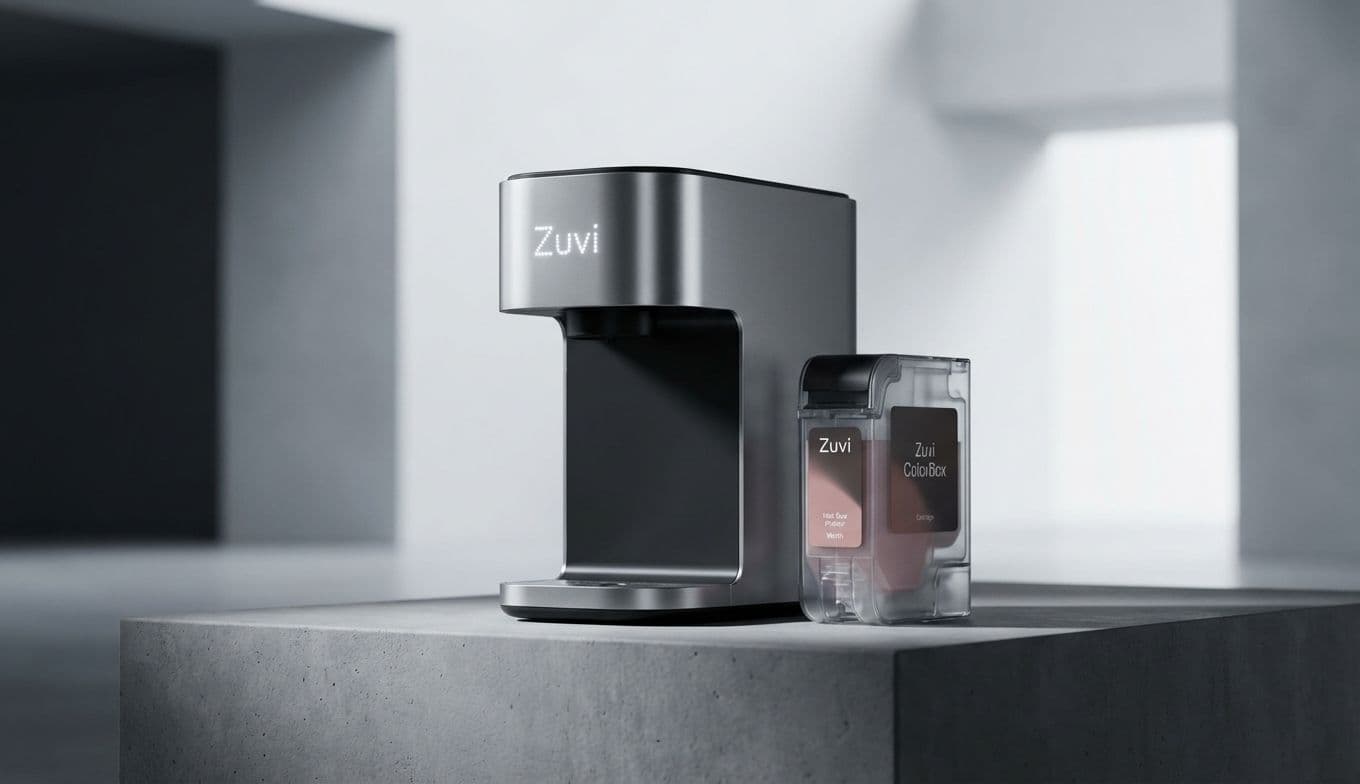
The Zuvi ColorBox is not an impulse buy. Positioned at a premium price point often exceeding three hundred dollars, it commands the kind of investment usually reserved for high-end styling tools like a Dyson Airwrap. For that price, you receive the handheld application unit, a charging base, and a set of proprietary color cartridges.
The interface is managed through a dedicated app. You scroll through a digital swatch book, pick your dream shade, and the app communicates with the device to mix the internal pigments. On paper, this solves the biggest hurdle of at-home hair color: the fear of picking the wrong box. In practice, however, the technology fails to account for the most important variable in the equation—your actual hair.
The Science of Hair vs. The Logic of Ink
The fundamental flaw of the ColorBox lies in its attempt to treat hair like a piece of white printer paper. In the world of digital printing, you use a CMYK (Cyan, Magenta, Yellow, and Black) model to create colors on a neutral background. The ColorBox attempts a similar feat with its cartridge system. However, hair is a complex biological fiber with its own underlying pigments, porosity levels, and chemical history.

If you try to "print" a light ash blonde over medium brown hair without a chemical lift, you get nothing. If you try to apply a vibrant red to hair that is highly porous from previous bleaching, the "printed" color often absorbs unevenly, leading to a splotchy, muddy mess. The device lacks the nuanced control required to navigate these variables. While the app might show you a beautiful mahogany, the physical output often results in barely-there tinting or, worse, inconsistent patches of color that look more like an accident than an innovation.
Beyond the color results, the user experience is surprisingly labor-intensive. The cartridges are small and expensive, and the device requires a rigorous cleaning cycle after every use to prevent the nozzles from clogging. For a product that claims to simplify your life, it introduces a significant amount of hardware maintenance that a standard bottle of dye simply doesn't require.
A Better Way to Color: Real-World Alternatives
If you are looking to change your look at home, you don't need a three-hundred-dollar printer. You need high-quality chemistry. The beauty market has evolved significantly in the last five years, and there are better, more reliable ways to achieve professional results without the tech-induced headache.
For those seeking permanent, salon-quality results, Madison Reed is the gold standard. They have bridged the gap between the drugstore box and the professional chair by offering "Radiant Cream Color" that is free from harsh ingredients like ammonia and PPD. Their system includes a personalized color quiz that actually works because it factors in your current hair color and percentage of gray—something the ColorBox app fails to do effectively. At a fraction of the cost of a Zuvi device, you get predictable, multi-dimensional color that actually covers grays and stays vibrant.
If you are more interested in the experimental, "change it on a whim" vibe that the ColorBox promised, Overtone is your best bet. Their Color Depositing Conditioners allow you to play with everything from pastel silver to vibrant purple while actually improving the health of your hair. There is no device to clean, no cartridges to buy, and the results are consistently saturated. Because it is a conditioner-based pigment, you have total control over the intensity by how long you leave it on.
For those who just want to refresh their current shade or add a boost of shine, the Kristen Ess Signature Hair Gloss is a game-changer. It is an in-shower treatment that mimics a professional salon glaze. It’s foolproof, affordable, and delivers the kind of "expensive hair" finish that the Zuvi ColorBox only dreams of achieving.
The Verdict: Innovation Without Execution
The Zuvi ColorBox is an ambitious attempt to disrupt the beauty industry, and for that, the designers deserve some credit. The idea of digitized, custom color is the direction the industry is heading. However, being first to market doesn't matter if the product doesn't deliver on its primary promise.
Currently, the ColorBox feels like a beta test that was released to the public too early. The color accuracy isn't there, the application is inconsistent, and the ongoing cost of proprietary cartridges makes it a poor long-term investment. It is a gadget designed for tech enthusiasts who value the "newness" of a product over its actual utility.
For the rest of us—the people who just want our hair to look great for a Saturday night or a Monday morning meeting—stick to the pros. Whether that means a visit to your local colorist or a high-quality at-home system like Madison Reed, you will save money, time, and a whole lot of frustration. The future of hair color might be digital, but for now, the best results are still found in a tube of high-quality dye and a steady hand.