Xreal Neo Review: The Ultimate Battery Dock for AR & Switch 2
Team Gimmie
1/4/2026

The End of Cable Spaghetti: Why Xreal’s Neo is the Missing Link for AR Gaming
Anyone who has spent more than twenty minutes in augmented reality knows the struggle. You put on a sleek pair of glasses, ready to disappear into a private 120-inch cinema or a high-octane game, only to be immediately tethered to a mess of cables. Between the glasses, the playback device, and the inevitable portable charger required to keep the whole thing running, you end up looking less like a futuristic tech-adopter and more like a walking science experiment gone wrong.
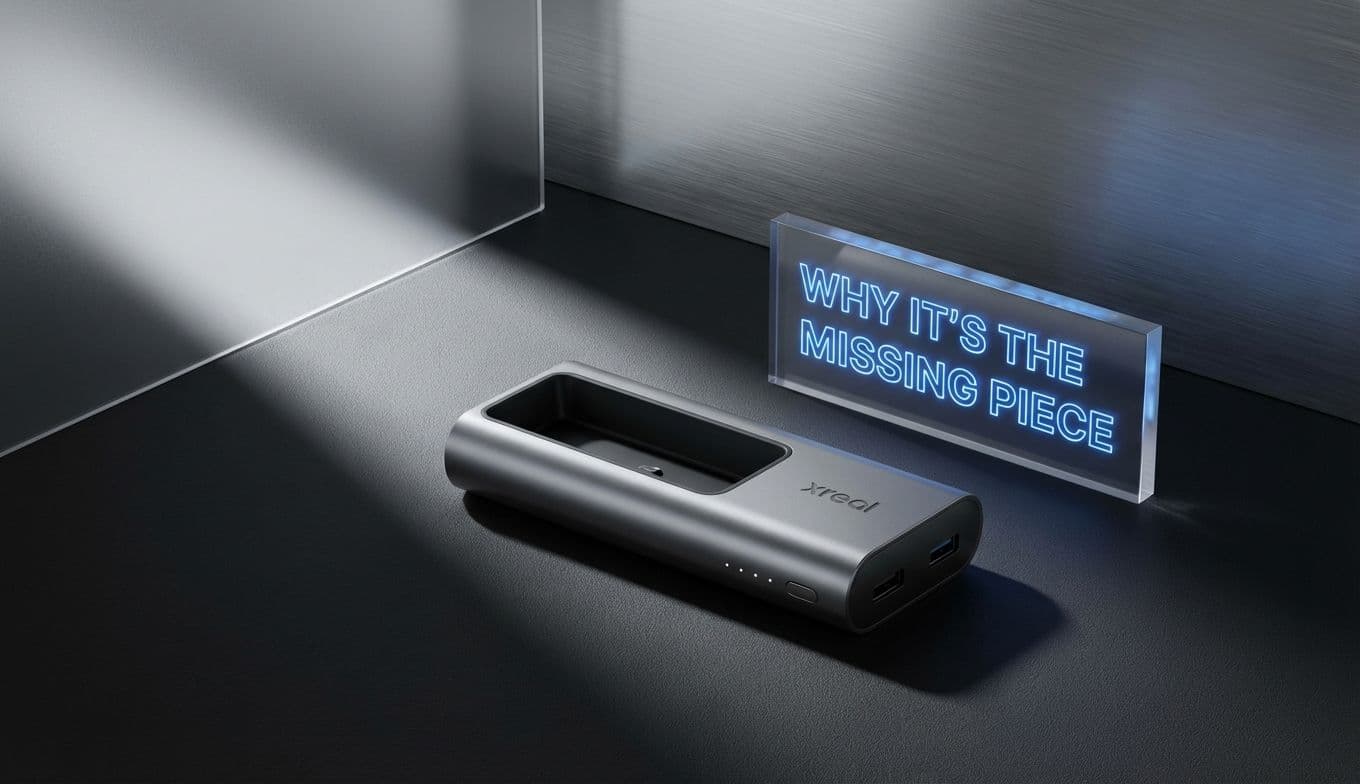
This cable spaghetti has long been the primary barrier to making AR truly portable. However, with the recent launch of the Nintendo Switch 2 and a new wave of high-performance handhelds, the demand for a clean, integrated power solution has reached a fever pitch. The Xreal Neo battery pack, recently showcased at CES 2026, isn't just another power brick; it is a tactical response to the clunky ergonomics that have plagued the industry for years.
The Magnetic Advantage
The most immediate innovation of the Neo is its magnetized ring. While it looks like a stylistic choice, it serves a critical functional purpose for mobile users. By mirroring the MagSafe standard found on modern smartphones and compatible cases, the Neo allows you to snap the battery directly to the back of your phone.
This transforms the entire user experience. Instead of having a heavy battery pack dangling from your pocket or resting awkwardly on your lap, the Neo and your phone become a single, unified unit. If you are using your phone as a controller for AR games or a touch-pad for navigation, the battery stays tucked away out of sight and out of mind. It provides a secure, tactile connection that ensures your video signal doesn't drop out just because you moved your hand too quickly. It is a rare example of a design choice that prioritizes the way people actually move in the real world.
Built for the Handheld Gaming Revolution
The timing of this release is no accident. Following the massive launch of the Nintendo Switch 2 last June, the race to provide the ultimate peripheral setup has been on. While brands like Viture were quick to offer multi-port solutions, Xreal’s Neo focuses on balancing aesthetics with raw utility.

Under the hood, the Neo houses a 10,000mAh (38.7Wh) capacity. In practical terms, this is the "sweet spot" for travel. It is large enough to nearly double the playtime of a Switch 2 or provide several full charges to a pair of AR glasses, yet it remains slim enough to slide into a jacket pocket. The inclusion of DisplayPort Alt video-out is the secret sauce here. This allows the Neo to function as a portable dock, taking the video signal from your console or phone and pushing it directly to your glasses while simultaneously feeding them power.
For the frequent traveler, this is a game-changer. Imagine a cross-country flight where you don’t have to worry about the airplane’s aging USB ports. You simply plug your Switch 2 into the Neo, the Neo into your glasses, and you have a high-definition, private gaming theater that will last until you touch down.
Compatibility and the Open Ecosystem
One of the most frustrating aspects of the tech world is the "walled garden" approach, where accessories only work with one specific brand. Xreal has taken a surprisingly refreshing path with the Neo. While it is obviously optimized for their own hardware—including the legacy Air series and the new $449 Xreal 1S—it isn't strictly exclusive.
Testing reveals that the Neo plays remarkably well with competitors, such as Viture’s Luma Pro glasses. This level of interoperability is a massive win for consumers. It means you aren't forced to stay within a single brand's ecosystem just to get a decent power solution. If you’ve invested in high-end AR optics from one company but prefer the ergonomics of Xreal’s dock, you can finally mix and match to create your perfect setup.
The Cost of a Clean Setup
At $99, the Neo is positioned as a premium accessory. You can certainly find 10,000mAh batteries for a third of that price, but that is missing the point. You aren't just buying milliamp-hours; you are buying the integrated video-out circuitry and the magnetic mounting system.
For the casual user who only puts on their glasses once a month to watch a movie in bed, a standard long cable and a cheap battery brick might suffice. However, for the power user—the person using AR for daily productivity, long-haul travel, or competitive gaming—the $99 investment pays for itself in reduced friction. It eliminates the need for extra dongles and adapters that are easy to lose and even easier to break.
Who is the Neo For?
This device is the ideal gift for the tech enthusiast who already owns a pair of AR glasses but finds themselves leaving them in the drawer because the setup is too "fiddly." It is for the Nintendo Switch 2 owner who wants the biggest screen possible without lugging around a physical monitor.
It is also a specialized tool for the mobile professional. If you use AR glasses to create a multi-monitor setup on your laptop while working in coffee shops, the Neo provides the stable power and video throughput needed to keep that virtual office running for an entire afternoon.
Final Verdict
The Xreal Neo represents a shift in the AR industry. We are moving past the era of "proof of concept" gadgets and into an era of polished, user-centric tools. By addressing the very real problems of cable management and battery anxiety with a stylish, magnetic solution, Xreal has created more than just a battery. They’ve created an enabler.
The Neo makes the AR experience feel less like a chore and more like the seamless, futuristic promise we were all sold on. If you want to actually use your AR gear in the wild rather than just at your desk, this is the bridge that gets you there.