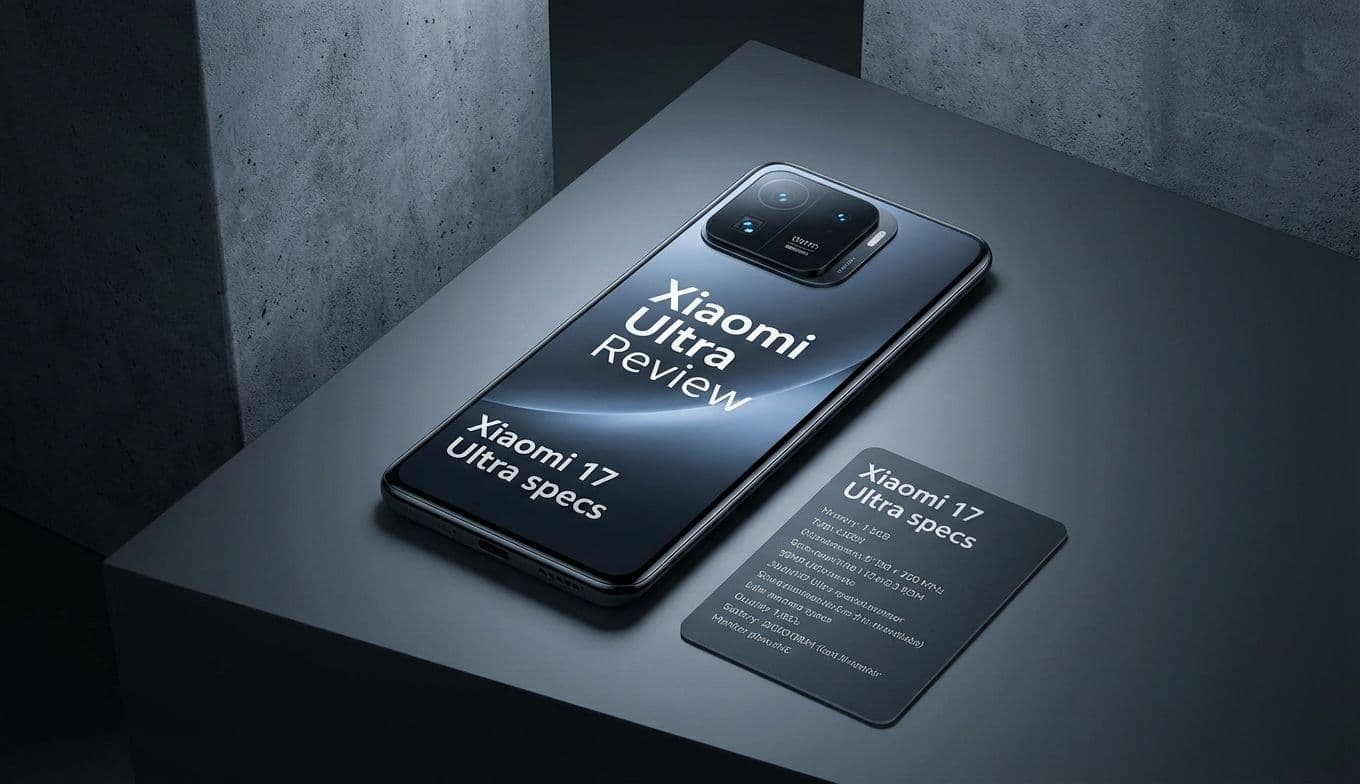
Xiaomi 17 & 17 Ultra Review: 6000mAh Battery & Leica Specs
Team GimmieThe High-Stakes Trade-Off: Can Xiaomi Finally Solve the Small Phone Battery Crisis?
For the better part of a decade, smartphone users have been forced to accept a frustrating compromise: if you want a phone that fits comfortably in one hand, you have to carry a charger. Small phones have traditionally been synonymous with small batteries, while "all-day endurance" was a luxury reserved for the massive, pocket-stretching "Max" or "Ultra" variants. At the recent Mobile World Congress, Xiaomi stepped onto the stage with the 17 and 17 Ultra, claiming they’ve finally cracked the code on the size-to-power ratio.
The headline here isn’t just that Xiaomi is releasing new flagships; it’s the technical wizardry happening inside the chassis. By utilizing high-density silicon-carbon battery technology, Xiaomi has managed to pack capacities into these devices that make their competitors look a generation behind. But at a price point that rivals—and sometimes exceeds—Apple and Samsung, the question is no longer just "is it good?" but "is it worth the premium?"
The Technical Weight of Big-ish
When Xiaomi calls the standard Xiaomi 17 "smallish," they’re talking about a 6.36-inch display. While that’s not "mini" by 2010 standards, in today’s market of 6.8-inch behemoths, it’s a breath of fresh air for one-handed use. The real shock, however, is the 5,400mAh battery tucked inside. To put that in perspective, most phones in this size class struggle to hit the 4,700mAh mark.
Moving up to the 17 Ultra, we see a jump to a massive 6,000mAh cell. This isn't just a marginal gain; it’s a significant leap that targets the "power user" who refuses to tether themselves to a wall outlet. These aren't just empty numbers, either. High-density batteries allow for more energy in less physical space, meaning the 17 Ultra doesn't have to be as thick as a deck of cards to provide two days of moderate use.
The Leica Legacy: More Than a Logo
For many, the most recognizable part of the Xiaomi 17 series isn't the battery—it’s the iconic red Leica dot. But what does that branding actually mean for someone looking to buy or gift this phone?
Xiaomi’s partnership with Leica isn't just a marketing gimmick or a filter in the camera app. It’s a deep integration of optical engineering. The 17 Ultra features a 1-inch type main sensor—the LYT-900—which is physically much larger than the sensors found in most Western flagships. A larger sensor gathers more light, creates natural depth of field without software trickery, and performs exceptionally well in low-light conditions.

When you give someone a Leica-branded Xiaomi, you aren't just giving them a high-resolution camera; you’re giving them a specific "look." The Leica Authentic and Leica Vibrant profiles prioritize color accuracy and contrast in a way that feels like traditional film photography rather than the hyper-processed, neon-bright look common in other mobile brands. For the hobbyist photographer or the parent who wants "magazine-quality" shots of their kids, this partnership is the primary selling point.
The Pricing Reality and the US Gap
Let’s talk numbers, because they are substantial. The Xiaomi 17 is launching in Europe and the UK starting at €999 (approximately $1,080), while the 17 Ultra moves into the "luxury" tier at €1,499 ($1,625). If you’re looking for the 17 Pro—the middle child with the unique secondary rear display—you’re out of luck. For reasons known only to Xiaomi’s regional planners, that model remains a China-exclusive for now.
For readers in the United States, there is a significant hurdle to consider: official availability. Xiaomi does not officially sell its smartphones in the US market due to ongoing regulatory and trade complexities. If you want to get your hands on a 17 Ultra in New York or Los Angeles, you’ll need to turn to reputable importers.
While importing is a viable path for tech enthusiasts, it comes with caveats. You’ll likely lack a domestic warranty, and you must verify that the global bands are compatible with your specific carrier (typically, they work well on T-Mobile but can be hit-or-miss on Verizon). It’s an extra layer of effort that confirms these devices are for the "discerning" user rather than the casual shopper.
Who Should Have This on Their Radar?
This brings us to the core question: Who is this phone for? At these prices, we are moving beyond the realm of the "budget alternative" that Xiaomi used to represent.
The Xiaomi 17 series is a prime candidate for the high-end gift-seeker. If you are shopping for someone who feels "iPhone fatigue" or wants a device that stands out in a sea of Samsung Galaxies, the 17 Ultra is a powerhouse alternative. It’s for the professional who spends their day in back-to-back Zoom calls and needs that 6,000mAh battery to survive until the evening commute. It’s for the traveler who wants to leave their heavy DSLR at home but won't settle for "good enough" mobile photos.
Specifically, the standard Xiaomi 17 is the "Goldilocks" phone. It targets the person who hates how big modern phones have become but refuses to sacrifice flagship features. It’s a rare bird: a compact device that doesn't feel like a "lite" version of a better product.
The Final Verdict
The Xiaomi 17 and 17 Ultra are bold statements. By shoving a 5,400mAh battery into a compact frame and a 1-inch sensor into the Ultra, Xiaomi is challenging the industry leaders on pure hardware merit.
However, hardware is only half the battle. Xiaomi’s software skin, now known as HyperOS, is a significant departure from "stock" Android. It’s fast and highly customizable, but it carries a learning curve for those coming from an iPhone or a Pixel.
If you’re in Europe or the UK and have the budget, the Xiaomi 17 series offers a compelling blend of endurance and elegance. If you’re in the US, it’s a "pro-level" import that requires a bit of technical savvy to fully enjoy. Either way, Xiaomi has proven that "small" doesn't have to mean "weak," and for anyone who has ever watched their battery percentage tick toward zero by 4:00 PM, that might be the most important innovation of the year.