Weirdest CES 2026 Gadgets: Genius Tech You Didn't Know You Needed
Team Gimmie
1/7/2026

CES 2026: The Gadgets So Weird, They Just Might Be Genius
Every year, CES rolls around and floods the tech world with a tidal wave of predictable upgrades: sleeker TVs, faster laptops, and phones that fold in more ways than a pretzel. But while those are fine for the spec-obsessed, they rarely make us stop and say, "Wait, what is that?" What really grabs my attention are the gadgets that push the boundaries of logic—the ones that make you tilt your head and wonder who greenlit the project. Nestled within the bizarre usually lies a kernel of genuine utility, and this year’s CES 2026 was no exception, offering a collection of the weird and wonderful that might actually deserve a spot on your nightstand.
When Practicality Meets Peculiarity: The Lumina AirBeam 360
Let's cut to the chase: I’m always looking for what actually works for real people, not just what looks good in a press release. The standout "wait, I actually want that" moment this year came from a company called Lumina with their AirBeam 360. At first glance, it looks like a high-end, minimalist floor lamp. But look closer, and you’ll realize it’s actually a hands-free, infrared hair dryer designed to hover over your favorite lounge chair.
The concept is simple: instead of standing in front of a bathroom mirror for twenty minutes getting arm fatigue, you sit under the AirBeam while you’re answering emails or playing a round of Elden Ring. It uses focused heat-mapping technology to dry your hair evenly without you lifting a finger. While I was skeptical about the drying speed, the prototype handled a thick head of hair in about twelve minutes. It speaks to a growing desire to reclaim those mundane, "lost" moments of the day.
Giftability: Best for: The busy professional who multi-tasks every second, or anyone with mobility issues who finds traditional dryers heavy and cumbersome. Price and Availability: Expected to retail for $449, with a launch window set for September 2026.
Beyond the Expected: L’Oréal’s MySkin Optic and Hyper-Personalization
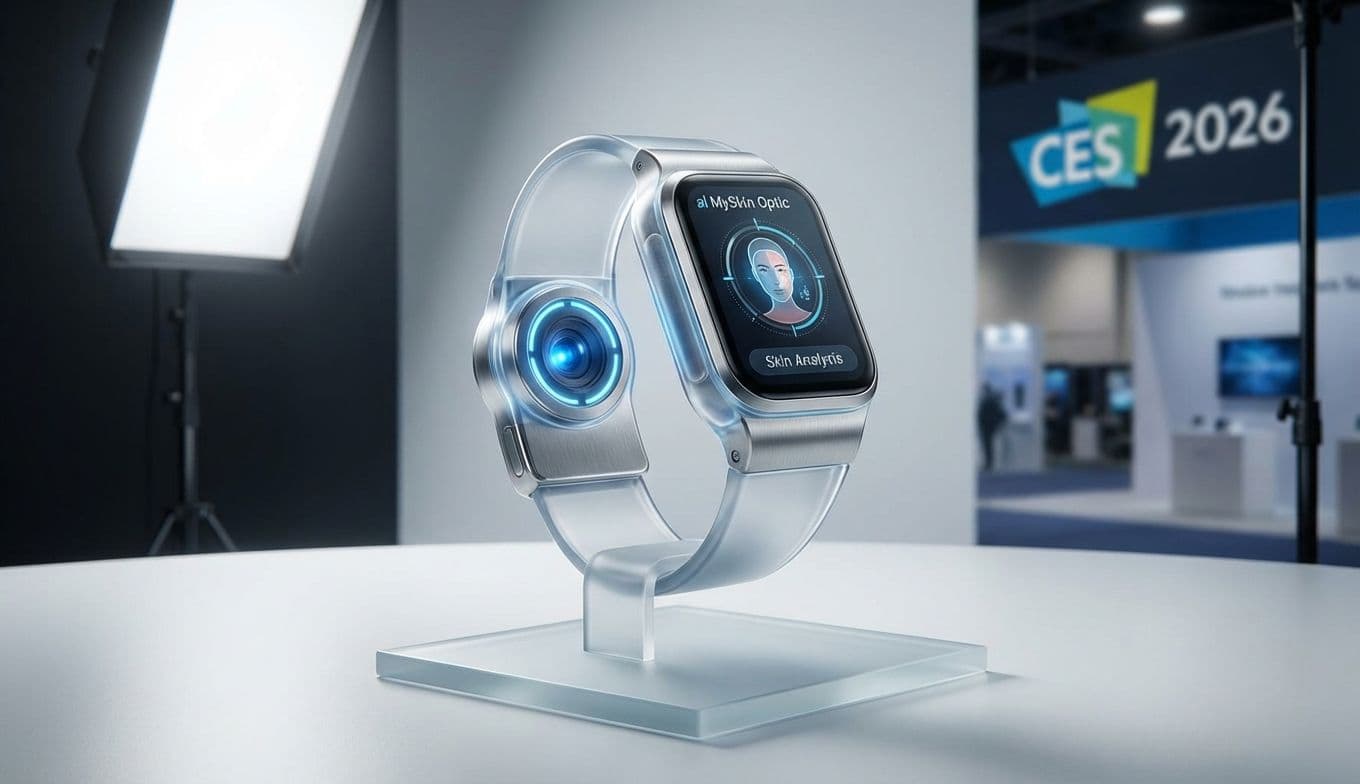
CES is a breeding ground for experimental tech, but the most memorable gadgets challenge our notions of what a product should do. This year, we moved past simple step-counting into the era of hyper-individualized wellness. The most impressive iteration was the L’Oréal MySkin Optic, a handheld scanner that looks more like a Star Trek tricorder than a beauty tool.

The MySkin Optic uses hyperspectral imaging to look beneath the surface of your skin, analyzing hydration levels, sun damage, and even early signs of inflammation before they’re visible to the naked eye. It then syncs with a countertop dispenser to mix a custom serum specifically for your skin’s needs that morning. It’s a significant shift from the "one-size-fits-all" bottles lining drug store shelves. We also saw this trend in the Ultrahuman M1 Live, a wearable bio-sensor patch that tracks minute changes in your body chemistry to tell you exactly which nutrient you're crashing on in real-time.
Giftability: Ideal for: The skincare-obsessed friend who has tried every brand on the market and is ready for a data-driven routine. Price and Availability: The MySkin Optic is slated for a Q2 2026 release at $299; the Ultrahuman M1 Live is available now via a subscription model starting at $199 per month.
The Companion We Didn’t Know We Needed: The PetPals AI Collar
Just when you thought pet tech couldn't get any weirder than a GPS tracker, along comes the PetPals AI Collar. This isn't just about finding your dog if they hop the fence; it’s about "translating" vocalizations and biometric data into actionable insights. Using a vast database of canine and feline behavioral patterns, the collar sends a notification to your phone that says things like, "Max is likely feeling anxious due to the storm," or "Bella’s activity levels suggest she’s slightly dehydrated."
Is it actually "talking" to your dog? No. But it is using AI to interpret a bark’s pitch and frequency alongside heart rate data to give pet owners a better "gut feeling" about their animal’s well-being. It’s the kind of tech that feels like a gimmick until you realize it could help you catch a health issue before it becomes a vet emergency.
Giftability: Best for: The "dog parent" who treats their Golden Retriever like a first-born child and wants every bit of data possible to keep them happy. Price and Availability: $249, hitting shelves in November 2026—just in time for the holiday rush.
Is Weird Always Wonderful? A Word of Caution
Before we all rush out to pre-order every peculiar gadget that hits the market, a dose of seasoned skepticism is in order. I've seen my fair share of "smart" inventions that were more marketing fluff than genuine innovation. Remember the smart egg carton? We have eyeballs for that. We don't need a $100 app-connected tray to tell us an egg is old.
The key is to differentiate between products that offer a novel solution and those that are just weird for the sake of being weird. When you’re considering these unusual items as gifts, ask yourself a few questions:
Does it solve a real problem? Even if the problem is a minor inconvenience—like arm fatigue from a hair dryer—is the solution elegant?
Is it practical? Beyond the initial "cool" factor, will someone actually use this after the first week? Consider the maintenance, battery life, and whether it just creates more work for the user.
Is it well-made? Just because a startup has a flashy booth at CES doesn't mean their manufacturing is up to snuff. Look for brands with a track record or solid warranty programs.
What’s the value proposition? Does the unique feature justify the price? The Lumina AirBeam is expensive, but for someone with chronic pain, that price tag represents a massive lifestyle improvement. For others, it’s just a very expensive lamp.
Embrace the Unexpected, But Buy Smart
CES 2026 has proven once again that the tech landscape is anything but predictable. While the powerful and the familiar will always have their place, it’s often the outliers and the strange that push innovation forward and capture our imaginations. These products represent a future where tech isn't just a screen in our pockets, but a subtle, helpful presence in our homes.
For gift-givers, this presents a great opportunity. Moving beyond the standard tablet or pair of earbuds can lead to a truly memorable present that shows you’ve thought about the recipient’s specific lifestyle. Just remember to temper that enthusiasm with a healthy dose of practicality. Investigate the claims, wait for the independent reviews to roll in, and consider whether the novelty outweighs the utility.
Go ahead and embrace the weird. Just make sure it’s the kind of weird that actually makes life a little better, easier, or at least a lot more interesting. That is the true test of innovation, and it’s what I’ll be watching long after the CES crowds have gone home.