Weather Underground Review 2025: The Return of the Weather King

Weather Underground Review 2025: The Return of the Weather King

Team GimmieTeam Gimmie
Published on February 28, 2026

The Return of the Weather King: Why Weather Underground is Finally Worth Your Time Again

Weather Underground is back, and for the first time in a decade, I am cautiously optimistic.

For years, Weather Underground (WU) was the undisputed home for the atmospheric elite. It was the go-to source for anyone who needed more than a cartoon sun or a generic rain cloud icon. Its secret sauce was the Personal Weather Station (PWS) network—a global army of hobbyists with sensors in their backyards providing hyper-local data that big-box meteorology simply couldn't touch. Then, the inevitable happened: IBM acquired it in 2012, and the platform slowly drifted into a corporate fog of aggressive ads, cluttered interfaces, and a general loss of soul.

But after a series of major updates throughout late 2024 and early 2025, the weather geek’s favorite app is finally acting like it wants to win again. It isn’t just a nostalgia trip anymore; it is a powerful, data-dense tool that has reclaimed its spot on my home screen.

The Data-First Renaissance

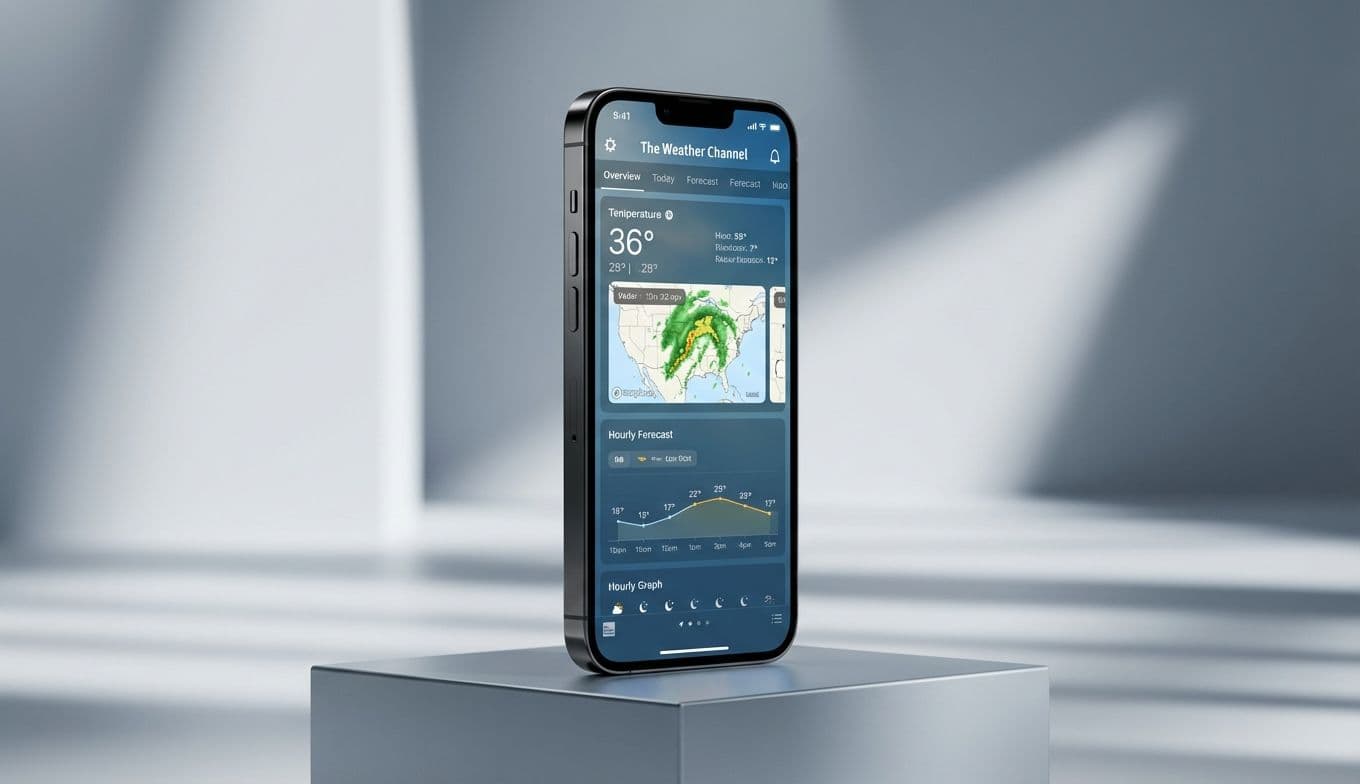
The most recent 6.14 mobile update has finally addressed the elephant in the room: the user interface. For a long time, the app felt like it was struggling under the weight of its own data. Now, the dashboard has been rebuilt around a high-frequency polling system. When you open the app, you aren’t just getting a cached forecast from the nearest airport; you are seeing real-time conditions from the PWS three doors down from your house.

One of the best technical additions is the improved Smart Forecasts feature. This allows you to set specific weather parameters for activities like cycling, photography, or even drying laundry. If you tell the app you need wind speeds below 10 mph and no rain to fly your drone, it will cross-reference the PWS network to tell you exactly when your window of opportunity opens. This isn't just a gimmick; it’s a practical application of the massive data set WU has been sitting on for years.

The Ultimate Gift for the Weather Obsessed

In the previous version of this discussion, the idea of Weather Underground as a gift felt like an afterthought. Let’s fix that. If you have someone in your life who constantly checks the dew point or complains that the local news forecast is wrong, don’t just give them a subscription to the ad-free tier. Give them a seat at the table.

The real magic of WU happens when you become a contributor. If you’re looking for a high-impact gift, look at hardware that bridges the gap between a hobby and a scientific contribution:

The Tempest Weather System: This is the gold standard for the modern enthusiast. It has no moving parts (it uses haptic sensors to measure rain and sonic sensors for wind) and syncs natively with Weather Underground. It takes about five minutes to set up and immediately begins feeding data into the WU ecosystem.

Ambient Weather WS-5000: For the traditionalist who wants a physical wind vane and a robust outdoor display. It’s a powerhouse station that turns a backyard into a professional-grade meteorological outpost.

By gifting this hardware, you aren't just giving a gadget; you're giving the recipient the ability to improve the forecast for their entire neighborhood.

How It Compares to the Modern Rivals

The weather app market is more crowded than it was in WU’s heyday. Here is how the re-emerged Weather Underground stacks up against the current heavy hitters:

Apple Weather (The Artist Formerly Known as Dark Sky): Apple has done a decent job integrating Dark Sky’s precipitation tech, but it still feels like a generalist tool. It’s great for knowing it will start raining in seven minutes, but it lacks the deep, granular data layers that WU provides.

Windy.com: If you want beautiful, sweeping visualizations of global wind currents and satellite imagery, Windy is unbeatable. However, Windy is a macro-tool. It’s for pilots and sailors looking at the big picture. Weather Underground remains the king of the micro-climate—the specific block-by-block variations that actually affect your daily life.

The Wundermap Pro-Tip: Beyond the Forecast

If you really want to get the most out of the service, you need to master the Wundermap. This isn’t just a map with some icons on it; it’s a customizable GIS (Geographic Information System) for your phone.

Pro-Tip: For hikers and drone pilots, toggle the Wind Speed and Terrain layers simultaneously. Because WU pulls from so many individual sensors, you can actually see how wind is funneling through specific canyons or over ridges in real-time. Before you head out on a trail or launch a flight, check the PWS stations at different elevations along your route. You might find that while it’s calm in your driveway, there’s a 25-mph gust front moving through the exact pass you’re planning to visit.

Where the Clouds Still Linger

Is it perfect? No. The transition back to greatness is still a work in progress. While the ads are less intrusive than they were two years ago, the free version still feels a bit noisy. And for the extreme power users, some of the legacy historical data archives—the stuff from the early 2000s—can still be clunky to navigate on a mobile device.

The Verdict

Weather Underground’s comeback is a rare win for the internet. It’s a story of a legendary utility being rescued from corporate neglect and polished for a new era. It strikes a difficult balance: it’s accessible enough for someone who just wants to know if they need a coat, but deep enough for the person who needs to know the exact barometric pressure trend over the last six hours.

It isn’t just a weather app; it’s a community-powered scientific project. If you’ve been relying on the default app that came with your phone, it’s time to upgrade. The data is better, the map is deeper, and the soul of the old Weather Underground is finally starting to shine through again.