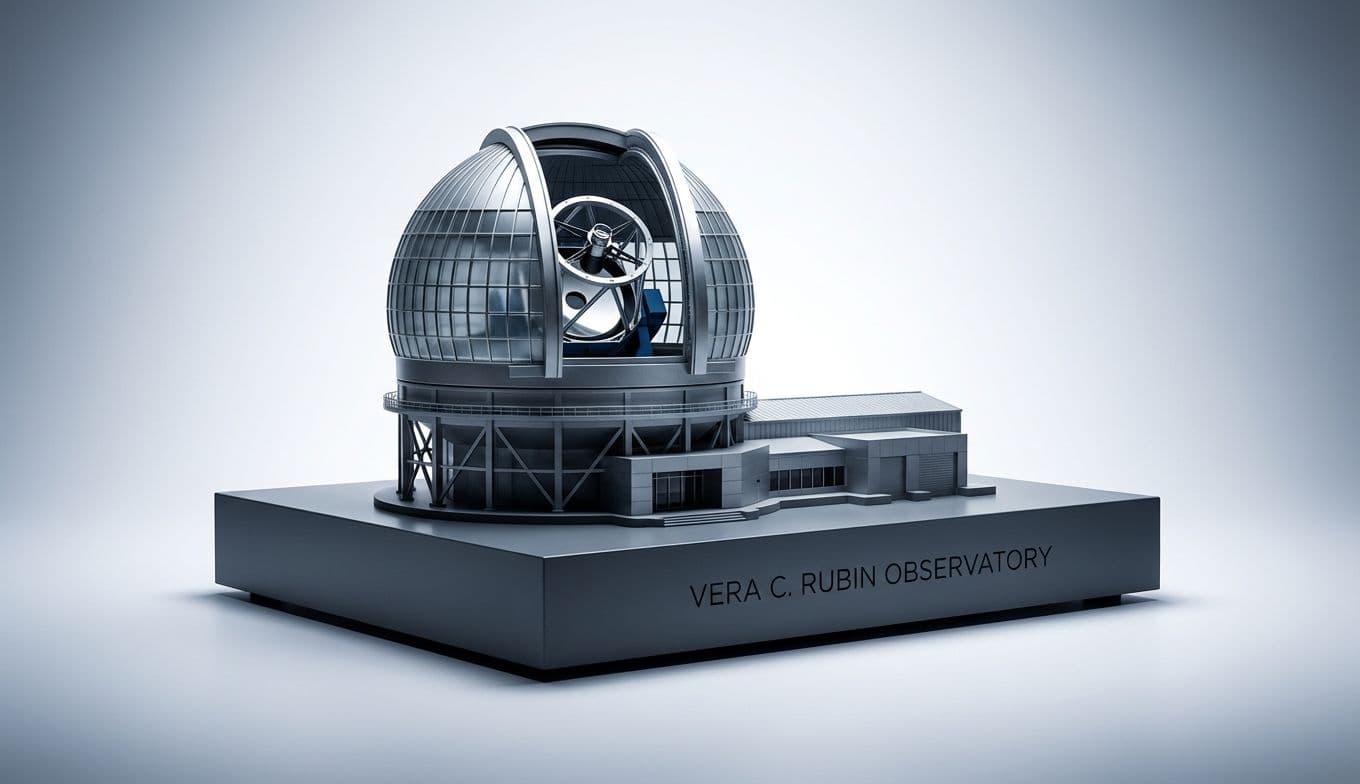
Vera C. Rubin Observatory: 800,000 Alerts & Best Telescopes to See Them

Vera C. Rubin Observatory: 800,000 Alerts & Best Telescopes to See Them

Team GimmieTeam Gimmie
Published on March 1, 2026

The Night the Sky Started Screaming

Imagine your phone buzzing with a notification. Then another. Then another. Now, imagine that happens 800,000 times in a single night. This isn't a social media glitch or a group chat gone rogue; it’s the sound of the universe finally being heard in real-time. Last week, the Vera C. Rubin Observatory officially opened its digital floodgates, and the results were nothing short of a cosmic avalanche. On its very first night of public operation, its automated system fired off nearly a million alerts, flagging everything from "near-miss" asteroids to the explosive deaths of distant stars and the messy eating habits of supermassive black holes.

For decades, astronomy was a game of patience—long nights spent staring at a single patch of sky, hoping something might move. The Rubin Observatory, equipped with a car-sized camera, has flipped that script entirely. It doesn't just look; it surveys. It’s essentially a high-speed security camera for the entire Southern sky. While professional astronomers are currently scrambling to figure out how to filter this firehose of data, the rest of us are left with a fascinating realization: the barrier between "professional science" and "backyard wonder" is officially dissolving.

From Pro Observatories to Your Patio

It’s easy to hear about 800,000 alerts and feel like it’s just noise—data points for people with PhDs. But there is a massive shift happening here that changes the way we think about the night sky. We are moving away from a static map of the stars and toward a living, breathing, and constantly changing environment. This democratization of discovery is exactly why interest in space-related tech is hitting a fever pitch.

You don’t need a multi-billion-dollar observatory to get in on the action. The technology trickling down to consumer telescopes and apps is designed to do exactly what the Rubin Observatory does: cut through the vastness of the sky to find the "signal" in the noise. For anyone looking to gift a piece of the cosmos, the goal isn't just to buy a piece of glass; it’s to provide a way to engage with this new, fast-paced version of the universe.

The "GoTo" Revolution: Hardware That Actually Delivers

The Rubin Observatory’s greatest trick is its ability to automatically identify and alert researchers to objects of interest. In the world of consumer telescopes, we call this GoTo technology. If you’re looking for a gift that mirrors the excitement of real-time discovery, this is where you start.

The Gold Standard: Celestron NexStar 4SE If you want a telescope that feels like a miniature version of a professional alert system, the Celestron NexStar 4SE is the definitive choice. It features a fully computerized operating system with a database of over 40,000 celestial objects. You don’t need to spend hours fumbling with star charts; you tell the telescope what you want to see, and it "alerts" you by slewing directly to the target. It’s perfect for the person who wants to spend their night observing rather than searching. It's compact, remarkably easy to align, and offers crisp views of planetary details that make the vastness of space feel personal.

The High-Volume Powerhouse: Orion SkyQuest XT6 Sometimes, the best way to handle a "universe of data" is with sheer aperture. While it lacks the automated motors of the NexStar, the Orion SkyQuest XT6 is what we call a "light bucket." It’s a Dobsonian telescope, meaning it’s built for one thing: capturing as much light as possible. If the person you’re buying for wants to see those distant supernovas or faint nebulae mentioned in the Rubin alerts, they need the surface area of a 6-inch mirror. It’s intuitive, rugged, and provides a raw, unfiltered connection to the sky that computerized systems sometimes mask.

The Digital Navigator: Apps as Your Personal Alert System

Not every cosmic gift needs to be a six-foot-tall tube in the living room. Some of the best ways to drink from the cosmic firehose live right in your pocket. Just as the Rubin system pings astronomers, modern sky-mapping apps use augmented reality to alert you to what’s happening above your head in real-time.

SkySafari 7 Pro This is widely considered the most powerful tool for any amateur astronomer. It’s essentially a professional-grade database disguised as a mobile app. It allows you to simulate the sky from any point on Earth, thousands of years in the past or future. Most importantly, it can sync directly with computerized telescopes like the NexStar 4SE, allowing you to control your hardware from your phone screen. It turns a casual stargazing session into a directed mission of discovery.

Star Walk 2 If you’re looking for something more visual and less "data-heavy," Star Walk 2 is the aesthetic choice. It uses your phone’s GPS and compass to identify constellations and satellites as you point your phone at the sky. It’s an excellent entry point for kids or casual enthusiasts who want to understand the "why" behind the headlines. When the news talks about 800,000 alerts, this app helps you visualize where those alerts are actually coming from.

Cutting Through the Cosmic Clutter

The Rubin Observatory’s 800,000 pings are a miracle of science, but they also serve as a warning: information is only valuable if you can actually use it. The same logic applies to choosing a gift. A telescope that’s too complicated to set up is just an expensive coat rack. An app that’s too technical is just a battery drain.

When you are looking to bring a piece of the universe home, focus on friction-less engagement. Look for products that bridge the gap between "that’s a cool headline" and "I can see that for myself." The beauty of the Rubin Observatory isn't just the sheer number of alerts it generates; it's the fact that it's making the invisible visible.

The best gifts do the same. Whether it’s a computerized telescope that finds a distant planet in seconds or an app that explains the life cycle of a star, the goal is to turn that massive cosmic signal into a personal moment of awe. The universe is finally talking to us at a volume we can't ignore—now is the perfect time to start listening.