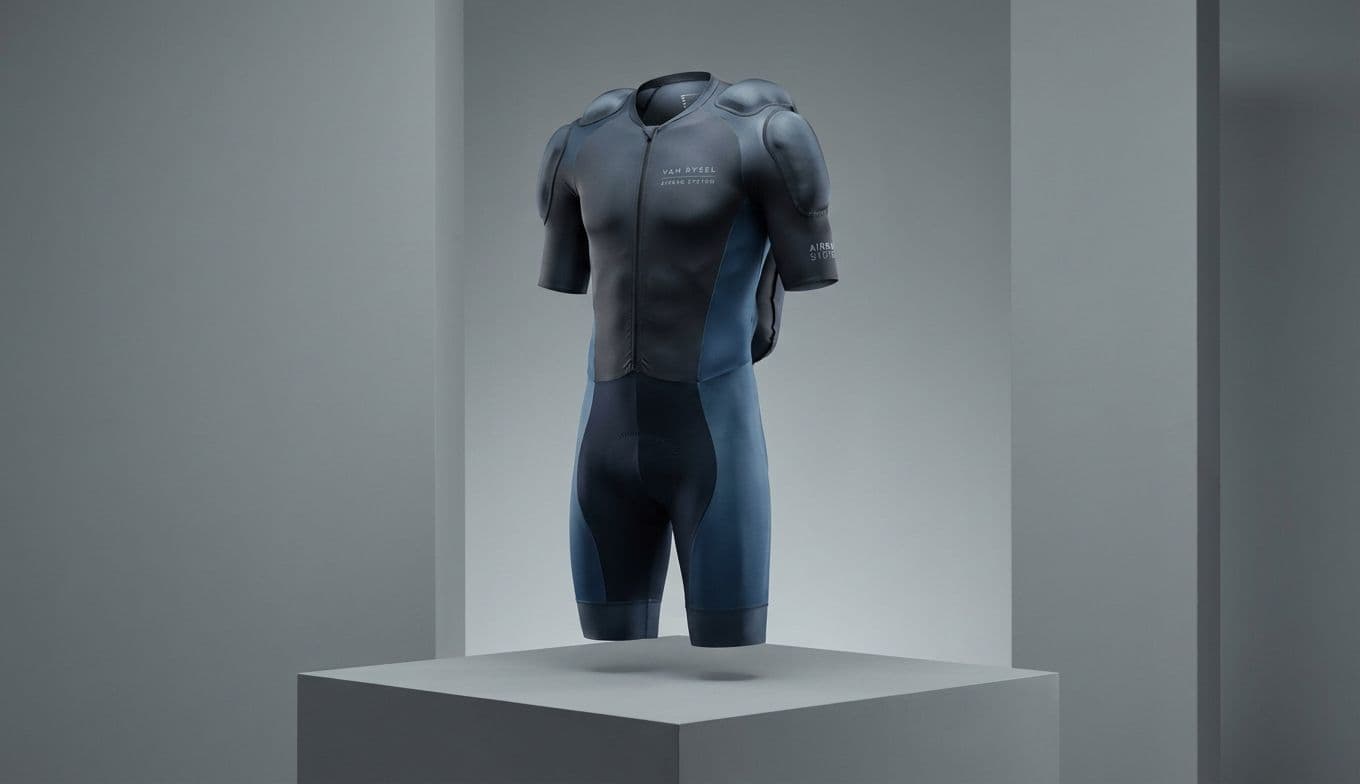
Van Rysel Airbag Skinsuit: The Future of Cycling Safety

Van Rysel Airbag Skinsuit: The Future of Cycling Safety

Team GimmieTeam Gimmie
Published on April 14, 2026

The Invisible Shield: Why Integrated Airbags are the Future of High-Speed Cycling

Imagine plummeting down a mountain pass in the Alps at sixty miles per hour. Your only protection against the asphalt is a layer of Lycra thinner than a high-end bedsheet. For decades, this has been the accepted risk of road cycling. We obsess over aerodynamic drag and carbon fiber layups, yet we’ve largely ignored the fact that when things go wrong at professional speeds, the human body is remarkably fragile.

The winds of change are blowing through the peloton, and they’re carrying a high-pressure charge of compressed gas. The Van Rysel integrated airbag skinsuit isn't just another piece of "smart" tech destined for the bargain bin. It represents a fundamental shift in how we view rider safety. Developed alongside the airbag experts at In&motion and tested by Decathlon-AG2R La Mondiale riders, this suit is designed to bring MotoGP-level protection to the world of pedal power.

The Future: Van Rysel x In&motion

While previous attempts at cycling airbags looked like bulky life vests strapped over a jersey, the Van Rysel project is different because it’s invisible. Or, at least, it’s meant to be. By integrating the airbag system directly into the construction of the skinsuit, Van Rysel has eliminated the flapping fabric and awkward silhouettes of the past.

The system uses a suite of ultra-sensitive sensors—accelerometers and gyroscopes—that analyze a rider’s movement a thousand times per second. Using a complex algorithm, the suit can distinguish between a sudden sprint for the finish line and the violent, erratic motion of a high-speed tumble. When a crash is detected, the suit inflates before the rider even hits the ground, providing a cushioned barrier around the neck, shoulders, and chest.

By the Numbers: The Spec Sheet

If you’re a weight-weenie or a data nerd, these are the figures that matter. This isn't just concept art; it’s a functional piece of engineering with hard data behind it.

700 Grams: This is the current weight penalty. While that might sound heavy to someone who spends $500 to save 50 grams on a seatpost, it is remarkably light for a full-deployment safety system.

25 Milliseconds: The time it takes from crash detection to full inflation. To put that in perspective, a human blink takes about 100 to 400 milliseconds. The suit is faster than your own reflexes.

3 Targets: The system specifically prioritizes the thorax, abdomen, and cervical spine—the areas where high-speed impacts are most likely to be life-altering.

2026: The projected window for a full consumer release. While pro riders are crashing in these prototypes today to perfect the tech, us mortals will have to wait a little longer for the retail version.

What to Buy Today: Safety You Can Actually Wear Now

We know, 2026 feels like a long way off when you have a big race or a sketchy descent planned for next weekend. If you aren't willing to wait for the Van Rysel skinsuit to hit the shelves, there are current alternatives that offer high-level protection today.

Helite Turtle 2 Airbag Vest This is the mechanical gold standard. It uses a physical tether attached to your bike. If you’re ejected, the tether pulls a key, and the vest inflates. It’s popular with long-distance commuters and ultra-endurance riders who prioritize reliability over pure aerodynamics. It’s visible and a bit bulky, but its protection is undeniable.

Alpinestars Tech-Air Systems Originally designed for the grueling world of motorcycle racing, Alpinestars has been pivoting toward high-speed cycling applications. Their systems are electronic and sensor-based, much like the upcoming Van Rysel suit, though currently more common in the downhill mountain biking and e-bike sectors.

Specialized ANGi Sensor If a full airbag feels like overkill for your local club ride, look at the ANGi sensor. It’s a small device that mounts to your helmet. While it doesn't provide physical cushioning, it detects a crash and automatically sends your GPS coordinates to your emergency contacts. It’s the "safety net" every solo rider should have.

The Trade-offs: Is Safety Worth the Sacrifice?

As much as we’d love to say this is a perfect product, every piece of performance gear involves a compromise. The most obvious hurdle for the Van Rysel skinsuit is weight. Adding 700 grams to a kit is the equivalent of carrying a full extra water bottle on your back. For a pure climber tackling the Ventoux, that might be a dealbreaker. But for a criterium racer or a classics specialist navigating cobbles and chaotic sprints, that weight is a small price to pay for a literal life-saver.

Then there’s the heat. Airbag bladders don't breathe. Even with Van Rysel’s best efforts at ventilation, wearing a non-permeable layer against your chest in 90-degree weather is going to be a challenge. The pro peloton is the perfect proving ground for this; if they can race 200 kilometers in the summer sun without overheating, the tech is ready for the rest of us.

Finally, we have to talk about the "deployment hangover." Once an airbag goes off, it needs a new canister and, in some cases, a professional reset. This isn't a "set it and forget it" piece of gear. It requires maintenance, battery charging, and a commitment to the ecosystem.

The Final Verdict

The Van Rysel airbag skinsuit isn't just hype—it’s the logical conclusion of a sport that is getting faster every year. As bike technology makes us more efficient and more aerodynamic, our speeds increase, and the consequences of a mistake become more severe.

For the gift-giver looking for the ultimate "I love you and want you to stay alive" present, keep your eyes on the 2026 horizon. For the rider who refuses to wait, look into the current sensor-based helmets and external vests. We are moving toward a future where "just wearing a helmet" feels as outdated as riding without a seatbelt in a car. Van Rysel is leading that charge, proving that you don't have to choose between going fast and staying safe. You just have to be willing to carry a little extra air.