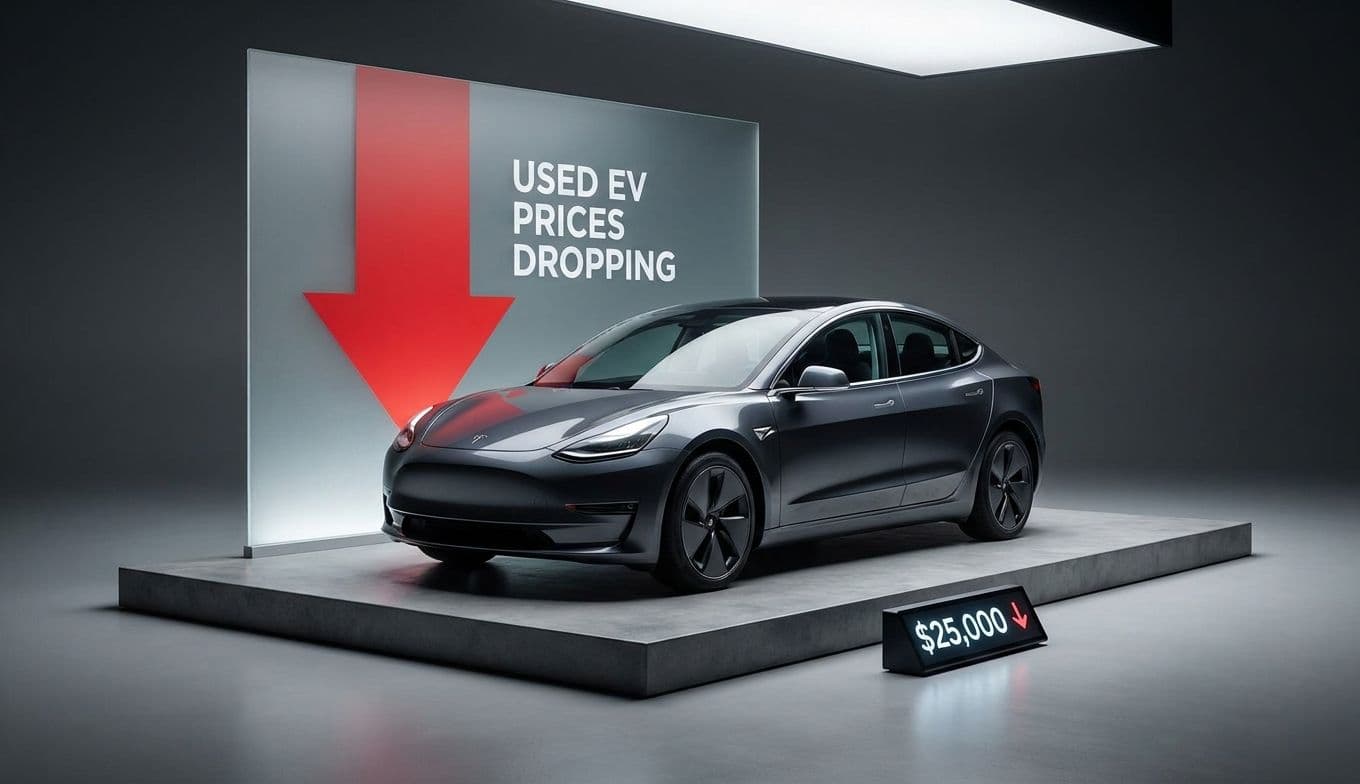
Used EV Prices Dropping: Buying Guide for Affordable EVs

Used EV Prices Dropping: Buying Guide for Affordable EVs

Team GimmieTeam Gimmie
Published on April 26, 2026

The Great EV Price Drop: How a Million Used Cars Are About to Change Your Drive

If you have been watching the electric vehicle market from the sidelines, waiting for the high-voltage prices to come down to earth, your patience is about to pay off. For years, the story of EVs has been one of early adopters and high-end luxury price tags. But we are standing at the edge of a massive shift. Between now and 2028, a staggering 1.6 million electric vehicles are expected to flood the used car market, effectively ending the era where going green required a six-figure salary.

This is not just a minor market correction; it is a fundamental restructuring of how we buy cars. According to data from Cox Automotive, the wave begins in earnest right now. While only 123,000 EV leases expired in 2025, that number is set to explode to 300,000 in 2026. By 2027, it doubles again to 600,000, followed by another 660,000 in 2028. Because the vast majority of Americans—roughly 76%—buy used rather than new, this influx of pre-owned inventory is the missing piece of the puzzle for mass adoption.

The $20,000 EV: No Longer a Pipe Dream

We are moving into an era where a high-quality, three-year-old electric car could cost less than a new base-model gas sedan. When these hundreds of thousands of leased vehicles return to dealerships, they will hit the lot as certified pre-owned units with significant depreciation already baked into the price. This makes the transition to electric driving not just an environmental choice, but the smartest financial move for the average household.

For the budget-conscious buyer, this means models like the Chevrolet Bolt, Nissan Leaf, or even the Tesla Model 3 will finally settle into price brackets that families can actually afford. You are looking at a scenario where you can snag a well-maintained vehicle that has already survived its steepest depreciation curve, leaving you with a car that is cheaper to fuel and significantly cheaper to maintain.

Buying Like a Pro: The Used EV Strategy

Transitioning to a used EV requires a slightly different mental map than buying a gas car. You aren't worried about transmission slips or oil leaks; you are focused on the health of the chemical heart of the machine. Here is how to navigate the lot like a strategist.

First, prioritize battery health above all else. This is where you need to move beyond a simple visual inspection. I highly recommend using a service like Recurrent. They provide detailed battery health reports that analyze how a specific EV’s battery has aged compared to others of its same model and year. Most modern EVs lose only a tiny fraction of their capacity annually, but having a Recurrent report in hand gives you the data to negotiate or walk away if the battery has been mistreated by frequent high-heat fast charging.

Second, understand your charging standards. As you look at cars from the 2024–2026 era, you will notice a mix of charging ports. Some will have the older CCS standard, while others will have the NACS (Tesla-style) port. Make sure you know what public chargers are most prevalent in your area and whether the car you are eyeing includes an adapter.

Finally, do not leave money on the table. Many people assume tax credits are only for new cars, but federal and state incentives often apply to used EVs as well, provided they fall under certain price caps. Always check the current IRS guidelines before you sign the paperwork—it could mean an extra $4,000 back in your pocket.

Gifting an EV: The Ultimate Power Move (With a Catch)

With prices dropping, the idea of gifting an EV to a college grad or a spouse is becoming a realistic "big gift" scenario. Imagine the look on someone's face when they realize they never have to visit a gas station again. However, gifting a vehicle is a high-stakes logistical maneuver that requires more than just a bow.

Pro Tip: Before you surprise someone with a car, you must investigate their home charging compatibility. If they live in an apartment without chargers or a house with an ancient electrical panel, your gift could inadvertently become a source of "range anxiety" stress. A smart gift-giver includes the cost of a Level 2 home charger installation in the package. Checking if their garage can handle a 50-amp circuit is just as important as checking the car's tire tread.

There are also the logistical hurdles of insurance and registration. To keep the surprise intact, you might be tempted to keep the car in your name, but this can complicate things when it comes to insurance coverage for the primary driver. My advice? Have the "dream car" conversation a few weeks early to gather the necessary info, or present a "voucher" for the specific car you’ve picked out so they can be part of the final paperwork process. It might spoil 5% of the surprise, but it saves 100% of the headache.

A New Chapter for the American Road

The coming surge of used EVs is a win for everyone. It cleans up our air, reduces our dependence on volatile fuel prices, and finally makes premium technology accessible to the middle class. We are moving away from the "luxury toy" phase of electric vehicles and into the "practical tool" phase.

As these 1.6 million cars hit the market over the next few years, the landscape of our parking lots will change. Whether you are looking for a zippy commuter like a Hyundai Kona Electric or a sleek long-range cruiser, the used market is about to become your best friend. Keep your eyes on those lease-return numbers—your next car is currently sitting in someone else's driveway, and it’s getting more affordable by the day.