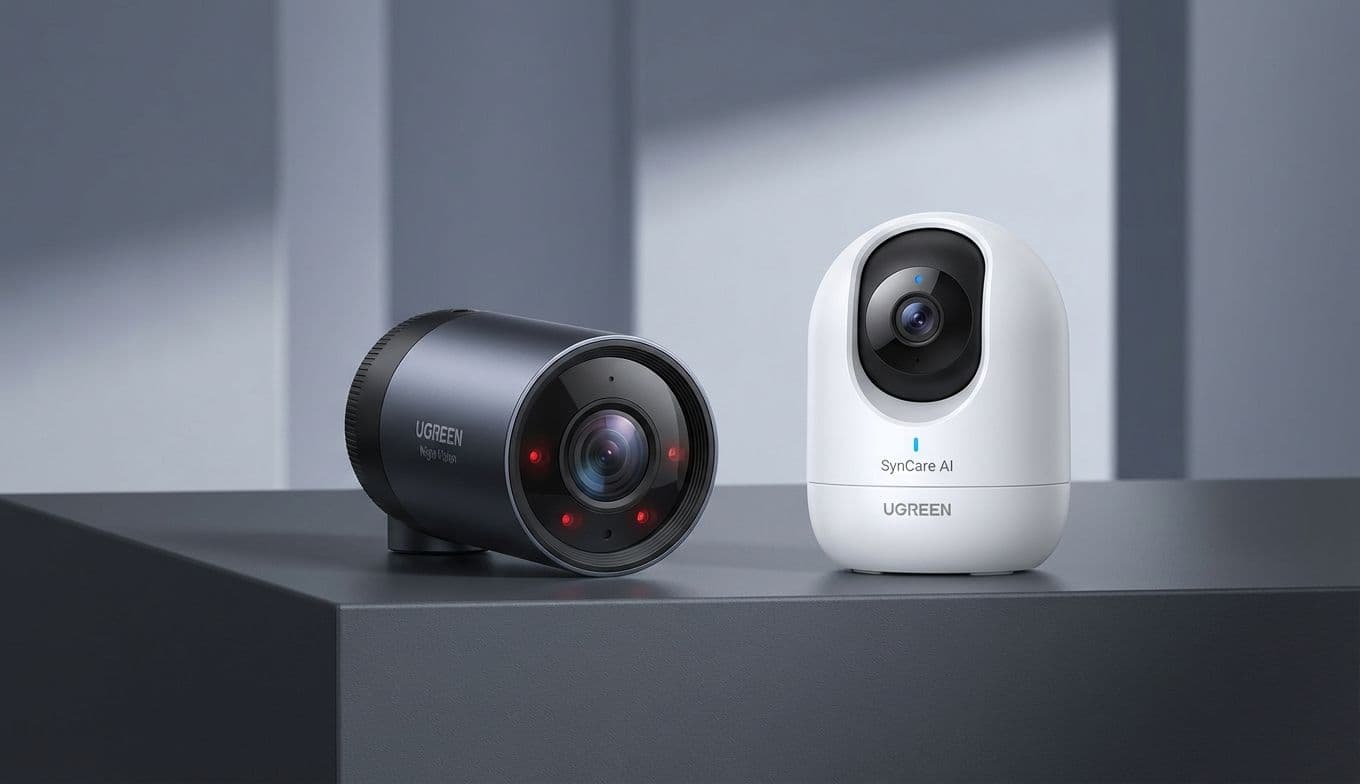
Ugreen SynCare AI Cameras: 4K Night Vision & Local Storage Review

Team Gimmie

Team Gimmie

1/6/2026

Ugreen SynCare AI Cameras: 4K Night Vision & Local Storage Review

Ugreen’s Visionary Pivot: Why Their New SynCare AI Cameras Actually Matter

When Ugreen first popped onto my radar years ago, it was all about charging cables, GaN bricks, and those reliable power banks that saved my phone on countless flights. They were the dependable workhorses of the tech accessory world. So, when the company announced at CES 2026 that they were jumping headfirst into the smart home security market with a brand-new line called SynCare, I had a moment of healthy skepticism. Moving from a USB-C cable to an AI-powered surveillance system is a massive leap in technical complexity.

However, after looking at the hardware specs and the software strategy Ugreen is deploying, I'm shifting from skeptical to cautiously optimistic. Ugreen isn't just slapping their logo on a generic white-label camera; they are attempting to solve the two biggest headaches in home security: grainy night footage and the "boy who cried wolf" syndrome of constant, false notifications.

The Hardware Advantage: Seeing in the Dark

The headline feature of the SynCare indoor models—the ID500 Pro and ID500 Plus—is the 4K capture, but the real star is the f1.0 aperture. To put that in perspective for non-photography nerds, most standard home cameras like the basic Ring or Nest models typically hover around an f2.0 or higher aperture. In the world of optics, a lower number means a wider opening. An f1.0 aperture allows nearly four times as much light to hit the sensor as an f2.0 lens.

This is the technical secret behind their promised colorized night vision. Most cameras rely on infrared (IR) sensors at night, which produce that classic, ghostly black-and-white footage. If they do offer color, they usually have to trigger a bright, intrusive white LED spotlight to see anything. By using an f1.0 lens, Ugreen is aiming to capture full-color detail in near-total darkness without blinding your neighbors or washing out the subjects. If they pull this off, they’ll have a significant leg up on established leaders who still struggle with low-light graininess.

Intelligence Beyond Simple Motion

We’ve all been there: your phone buzzes at 3:00 AM because a moth flew too close to the lens or a tree branch swayed in the wind. This is the result of basic pixel-change detection or PIR (Passive Infrared) sensors that simply notice a change in heat or light. Ugreen’s SynCare line is moving toward what they call multimodal AI.

Unlike the "dumb" sensors found in budget competitors, multimodal AI processes multiple streams of data—visual patterns, depth, and even audio—to categorize what it’s seeing. It isn't just asking, "Did something move?" It’s asking, "Is that a human, a golden retriever, or just the shadow of a passing car?" The indoor ID500 Pro is designed to recognize specific events, meaning you can set it to ignore the dog sleeping on the rug but alert you immediately if it detects the sound of breaking glass or a person entering a restricted zone. This level of nuance is what separates a useful security tool from a digital nuisance.

The Competitive Reality: Ugreen vs. The Giants

The smart home market is already crowded with heavy hitters like Google Nest, Amazon’s Ring, and Arlo. For Ugreen to win, they have to do more than just match the specs; they have to provide better value.

Compare the SynCare Video Doorbell DB600 Pro to the current market leaders. While many doorbells offer a 1:1 square aspect ratio, Ugreen is pushing a 4K "head-to-toe" capture. This is a direct shot at the Ring Video Doorbell Pro 2 and the Nest Doorbell. By offering higher resolution and a wider vertical field of view, Ugreen ensures you can see the package sitting on the welcome mat as clearly as the face of the person who delivered it.

However, hardware is only half the battle. The real test will be the ecosystem. Nest and Ring have the advantage of deep integration with Google Home and Alexa. Ugreen will need to ensure that their SynCare app is not just functional, but seamless. If the setup process requires a degree in networking or the app lag makes two-way talk impossible, the 4K resolution won't matter.

The Subscription Elephant in the Room

One of the biggest pain points for modern smart home users is the "subscription trap." Most major brands lock their best AI features and cloud storage behind a monthly paywall that can easily exceed a hundred dollars a year.

Ugreen has a history of supporting local storage on their other devices, and there is a massive opportunity here. If the SynCare line allows users to store 4K footage locally on an SD card or a home NAS (Network Attached Storage) without requiring a monthly fee for person detection, they will instantly become the darling of the privacy-conscious tech community. While we won't know the exact pricing and subscription tiers until IFA 2026, this is the single factor that could make or break their entry into the market.

Who is SynCare For? A Gift Guide Persona

If you’re considering these cameras for yourself or as a gift when they launch in late 2026, here is who will benefit most:

The Privacy-Conscious Tinkerer This user hates the idea of their footage living on a corporate cloud. They want high-end 4K hardware but want to keep their data on their own network. If Ugreen leans into local storage, this is their perfect match.

The Frustrated Pet Owner For the person who is tired of their current camera blowing up their phone every time the cat jumps on the counter, the multimodal AI’s ability to distinguish between pets and humans is a life-changer.

The 'Set It and Forget It' Parent This user just wants a nursery or playroom camera that works. The ID500 Pro’s pan-and-tilt support means they can track a crawling toddler across the whole room without needing to install multiple units.

The Bottom Line: A Space Worth Watching

Ugreen’s entry into the security space isn't just a side project; it's a bold attempt to bring professional-grade optics to the consumer market. By focusing on f1.0 apertures and smarter AI filtering, they are addressing the genuine frustrations of current smart home users.

While we have to wait until the second half of 2026 to see if the software lives up to the hardware's promise, the foundation is solid. If Ugreen can deliver these specs at a competitive price point without a mandatory, bloated subscription, they won't just be a cable company anymore—they’ll be a serious contender for the center of your smart home. Keep an eye on the IFA 2026 announcements; that’s when we’ll find out if Ugreen is ready to wear the crown.

#f1.0 aperture security camera#color night vision#multimodal AI security#Ugreen DB600 Pro#local storage security camera