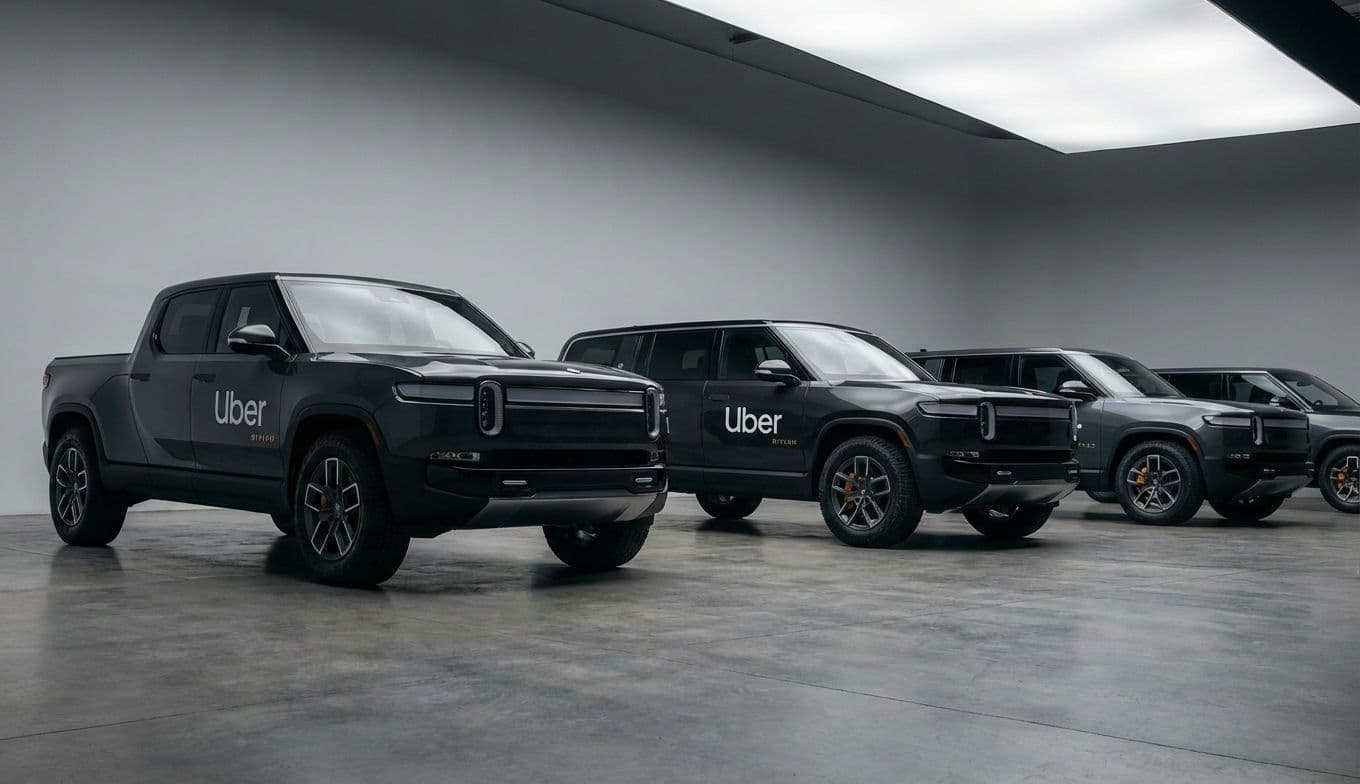
Uber Rivian Robotaxi Deal: What the $1.25B Means for You
Team GimmieTHE BILLION-DOLLAR BRAIN TRANSPLANT: WHY YOUR RIVIAN JUST BECAME A COLLECTOR'S ITEM
The electric vehicle in your driveway just got a massive, invisible upgrade. When Uber announced its $1.25 billion investment in Rivian this week, the headlines focused on the eye-popping dollar amount and the goal of 50,000 robotaxis. But for those of us who track the intersection of hardware and high-stakes tech, the real story isn’t just about a fleet of self-driving Ubers. It is a fundamental shift in what a Rivian vehicle actually is.
By committing a billion dollars to Rivian’s custom AI chip development, Uber is effectively betting that the R1 platform isn't just a car—it’s the ultimate mobile computer. For current owners and those looking to buy, this news transforms the brand from a boutique adventure-vehicle maker into the cornerstone of the autonomous era. It’s a validation that says the hardware you can buy today is robust enough to handle the brain of tomorrow.
THE PASSENGER SEAT REVOLUTION: WHAT LEVEL 4 ACTUALLY FEELS LIKE
We need to cut through the industry jargon. You have likely heard of Level 2 autonomy—that is what most of us use today. If you have driven a Rivian with Driver+ or a Tesla with Autopilot, you know the drill: the car steers and keeps its distance, but it constantly nags you to keep your hands on the wheel. It is an assistant, not a chauffeur.
The Uber-Rivian deal is aiming for Level 4. To understand the difference, imagine the Nap Test.
In a current Rivian R1S (Level 2), if you close your eyes for ten seconds, the car will beep, vibrate, and eventually pull over. You are still the pilot. In a Level 4 robotaxi, you could theoretically climb into the back seat, open a laptop, and ignore the road entirely while the car navigates through a dense city center. Level 4 means the vehicle is the boss within a specific area. It handles the four-way stops, the aggressive bike messengers, and the sudden construction zones without asking for help.
For the passenger, the experience shifts from watching the road to reclaiming time. This partnership is designed to make that transition seamless, using Rivian’s upcoming in-house AI chips to process millions of data points per second—far more than the current hardware in most consumer cars.

THE BUY NOW VS. WAIT DILEMMA
With the promise of 50,000 autonomous Rivians hitting the streets over the next decade, many potential buyers are asking: should I buy an R1T or R1S now, or wait for the robotaxi tech to trickle down to consumer models?
BUY NOW IF: You want the best electric driving experience currently available. The current R1 series is already at the top of its class for range, build quality, and off-road capability. This Uber deal ensures that Rivian will have the capital to keep its software ecosystem alive and thriving for decades. You aren't just buying a truck; you’re buying into a platform that Uber just spent a billion dollars to secure.
WAIT IF: Your primary goal is to never touch a steering wheel again. While the autonomy milestones in this deal are exciting, they are years—possibly a decade—away from being a standard feature you can use in your own driveway. The first wave of this tech will be restricted to Uber’s commercial fleet in highly mapped urban areas.
OUR ADVICE: If you’re in the market for a high-end EV, do not wait. The current hardware is already capable of significant over-the-air updates, and the infusion of Uber’s cash only makes the existing models a safer, more stable investment.
THE EARLY ADOPTER’S GIFT GUIDE: TECH YOU CAN BUY TODAY
You cannot put a robotaxi under the tree this year, but you can gift the tech that bridges the gap. If you are looking for high-end gear that matches the forward-thinking spirit of the Uber-Rivian partnership, look at these specific upgrades.
THE GOLD STANDARD FOR HOME CHARGING: CHARGEPOINT HOME FLEX An autonomous future requires a reliable power source. The ChargePoint Home Flex is our top recommendation for Rivian owners. It offers up to 50 amps of power, adding about 37 miles of range per hour. It’s sleek, UL-listed for safety, and the app integration is miles ahead of the competition. It’s the essential foundation for any EV lifestyle.
AI-DRIVEN ROAD SAFETY: NEXTBASE IQ SMART DASH CAM If you want a taste of the AI processing power Uber is investing in, the Nextbase iQ is the closest consumer equivalent. This isn’t just a camera; it’s a computer for your car. It uses AI to predict potential collisions, offers a Witness Mode that starts recording to the cloud via voice command, and provides real-time remote monitoring. It brings a layer of intelligent "eyes" to any vehicle, mirroring the sensor-heavy approach of Level 4 autonomy.
THE ADVENTURE UPGRADE: PUFFY CLOUD MATTRESS One of the most popular ways to use a Rivian today is for car camping, thanks to its flat-folding seats and climate-controlled interior. As we move toward a world where the car does the driving, the interior becomes a living space. The Puffy Cloud Mattress is specifically designed to fit the dimensions of high-end SUVs, turning the back of an R1S into a luxury lounge. It’s a nod to a future where your car is a destination, not just a tool.
A TANGIBLE GLIMPSE OF THE ROAD AHEAD
This deal is a landmark, but it is also a reality check. The road to a driverless future is long and paved with regulatory hurdles and software bugs. However, the $1.25 billion commitment from Uber proves that the industry is no longer just dreaming—it is building.
For the average consumer, the impact is two-fold. First, it solidifies Rivian as a permanent fixture in the automotive landscape, removing the "startup risk" that has lingered over the brand. Second, it sets a clear timeline for when our relationship with our cars will change forever.
We are moving from an era where we drive machines to an era where we manage mobile environments. Whether you are an early adopter charging your R1T with a ChargePoint Home Flex or someone waiting for their first robotaxi ride in 2030, the direction is clear. The future isn't just electric; it’s intelligent, and it’s arriving one software update at a time.