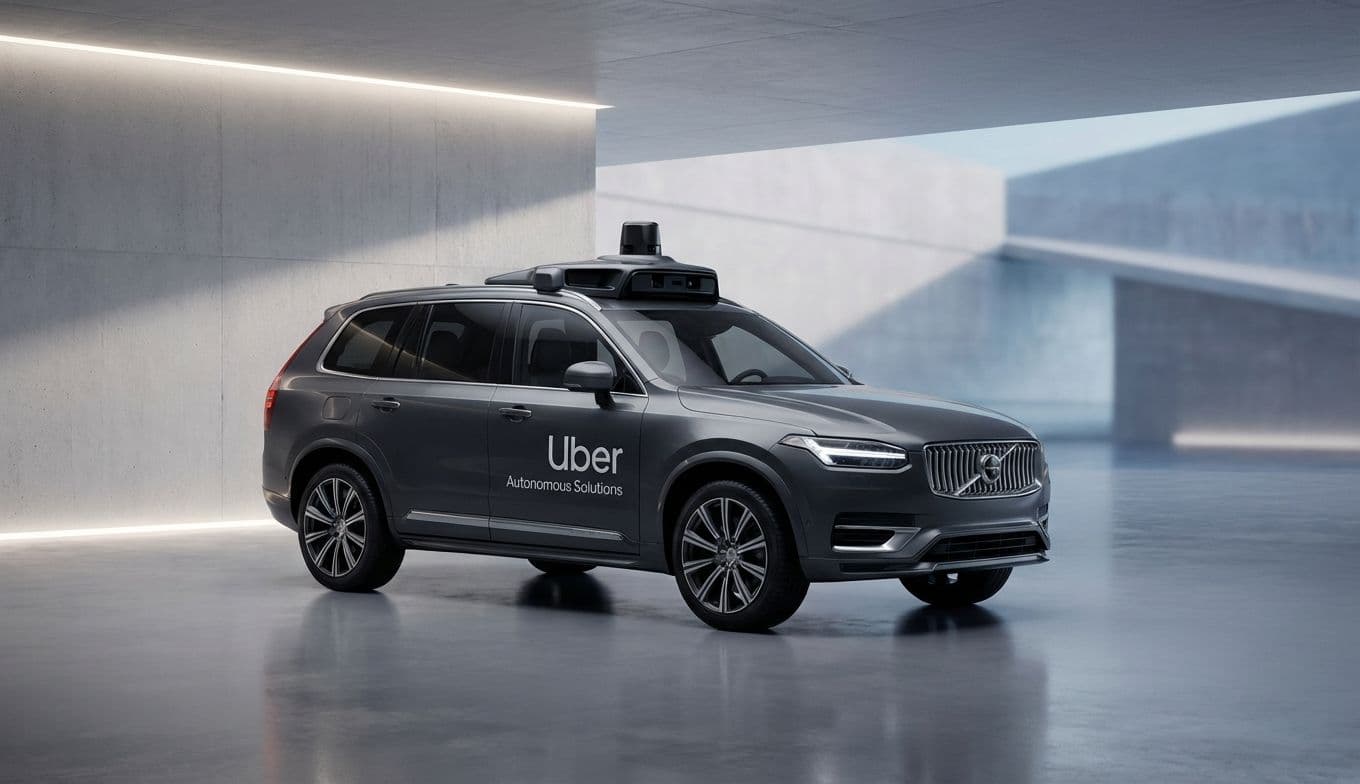
Uber Autonomous Solutions: The Future of Robotaxi Logistics

Uber Autonomous Solutions: The Future of Robotaxi Logistics

Team GimmieTeam Gimmie
Published on February 23, 2026

The End of the "Ghost Ride": How Uber’s Pivot to Robotaxi Logistics Might Finally Save Your Commute

We’ve all been there: it’s 7:45 AM, you have a flight to catch or a high-stakes meeting, and you’re watching that little car icon on your phone spin in circles. The driver accepts, then cancels. The next one is ten minutes away. Suddenly, the $800 a month you spend on a car payment, insurance, and gas starts to feel like a bargain compared to the unpredictability of human-led ride-hailing.

For years, the promise of the "Robotaxi" was supposed to solve this. No more surge pricing because a driver didn't want to work in the rain. No more awkward small talk. No more cancellations. But after a decade of hype, most of us are still clutching our steering wheels. Uber, the company that once tried and spectacularly failed to build its own self-driving car, is now trying a different tactic. They’ve launched Uber Autonomous Solutions, and while it sounds like dry corporate jargon, it’s actually the most realistic path toward getting a driverless car to your driveway before the decade is out.

Instead of trying to out-engineer Google’s Waymo, Uber is positioning itself as the "back office" for the entire autonomous industry. They are offering their logistical muscles—fleet management, financing, and regulatory expertise—to the companies actually building the hardware. For you, this means the shift from owning a car to "buying your time back" is accelerating.

The Transition from Science Fiction to San Francisco

If you live in Phoenix, San Francisco, or Los Angeles, robotaxis aren't a futuristic concept; they’re a daily traffic fixture. Waymo’s white SUVs are already clocking millions of miles, proving that the technology works. However, the problem isn't just making a car drive itself; it’s making a business out of it.

This is where Uber’s new project comes in. Developing a self-driving system is one thing, but managing a fleet of 50,000 of them is a nightmare. Who cleans them? Who fixes a sensor when a pigeon hits it? Who navigates the local city council’s permit office? By taking over these "boring" tasks for partners like Wayve and Nuro, Uber is removing the friction that keeps these services stuck in tiny pilot zones. It’s the difference between a cool science experiment and a service you can actually rely on to get to work.

The Invisible Logistics of Your Future Free Time

Uber Autonomous Solutions is essentially a toolkit for robotaxi startups. While the startups focus on the "brain" of the car, Uber handles the "body" and the "business." There are three main pillars here that directly impact the consumer experience:

  1. Optimized Fleet Management: If a robotaxi company uses Uber’s tools, they can predict demand better. For the rider, this means shorter wait times. Uber’s algorithms have a decade of data on where people want to go and when. Applying that to autonomous fleets means the cars will be exactly where they need to be before you even open the app.

  2. Scaling Through Financing: One reason Waymo and others haven't expanded to every city yet is the staggering cost of the vehicles. Uber is offering financing solutions to help these companies buy more cars, faster. This leads to more availability in suburbs and mid-sized cities that have been ignored by the first wave of tech.

  3. The Regulatory Shortcut: Every city has different rules. Uber has a "war room" of legal experts who have spent years fighting for the right to operate. By sharing this expertise with AV partners, they can clear the legal path for robotaxis to launch in your zip code months or years earlier than planned.

The Ultimate Gift: Time, Safety, and Independence

When we talk about products in this space, we usually think about the car itself. But as we move toward a service-based world, the real "product" is the benefit the service provides. If you’re looking for a gift that truly changes someone’s life, we are approaching a point where "Mobility-as-a-Service" becomes a viable option.

Think about the "Gift of Independence." For an aging parent who is losing their night vision or a teenager who isn't ready for the responsibility of a 4,000-pound machine, a dedicated, reliable autonomous transport subscription is more valuable than any gadget. It’s the ability to go to the grocery store or a doctor’s appointment without waiting for a busy relative or a flaky driver.

Think about the "Gift of Time." For the busy parent, imagine a future where a specialized, secure autonomous pod (like those being developed by Nuro) can handle the "chore" trips—picking up the dry cleaning or a grocery order—leaving you with an extra hour in your day. This isn't just about a ride; it’s about reclaiming the 300+ hours the average American spends commuting every year.

The 18-Month Watchlist: Who to Track Now

Uber’s "Autonomous Solutions" isn't a product you buy today, but it is the engine behind the companies you’ll be using tomorrow. Here are the partners to watch over the next year and a half:

Nuro: Forget people; Nuro focuses on goods. Their R3 vehicle is a toaster-shaped delivery pod designed for sidewalks and local streets. With Uber’s logistics support, expect to see "Nuro delivery" appearing as an option in your Uber Eats app in select markets soon. It’s the perfect solution for the "I forgot one ingredient" emergency.

Wayve: Based in the UK, Wayve is taking an "embodied AI" approach, teaching cars to drive using end-to-end deep learning (similar to how ChatGPT learns language). They are the "dark horse" that could scale faster than anyone else because their tech doesn't require expensive, hyper-detailed maps.

Waabi: Founded by AI pioneer Raquel Urtasun, Waabi is focusing on long-haul trucking. While you won't be riding in a Waabi truck, their success—boosted by Uber’s freight logistics—means the goods you order online will arrive faster and cheaper, with fewer human-error accidents on the highway.

A Realistic Road Map

We should still maintain a healthy level of caution. Uber’s past in the AV space was marred by tragedy and litigation. By stepping back from building the cars and moving into the "support" role, they are admitting that hardware is hard. But they are also doubling down on what they do best: being the platform that connects technology to the person standing on the sidewalk.

We aren't quite at the point where you can wrap up a robotaxi subscription and put it under the tree, but the "Ghost Ride" era—where drivers cancel and prices quintuple for no reason—is finally seeing its sunset. The future of transport isn't about owning a better car; it’s about never having to worry about a car again. Uber’s pivot to infrastructure might just be the move that finally makes that future a reality for the rest of us.