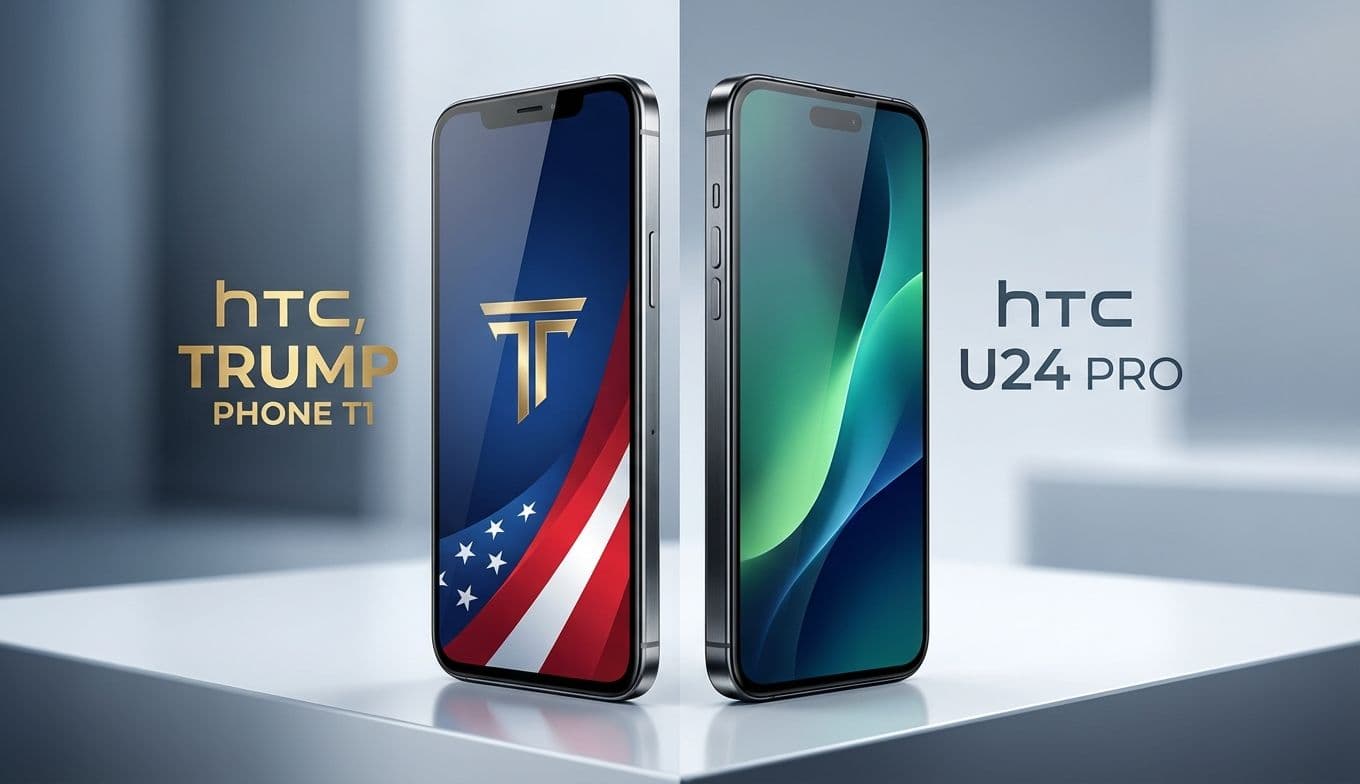
Trump Phone T1 vs HTC U24 Pro: Specs, Rebrand & Reality Check
Team GimmieThe Phantom Phone Flop: What the Trump Phone Saga Tells Us About Tech Hype
For months, a certain corner of the internet has been buzzing with the promise of the T1, more commonly known as the Trump Phone. We were promised a bespoke piece of hardware, a revolutionary device designed to disrupt the silicon valley status quo. There were whispers of high-end security and a premium aesthetic that would set it apart from the sleek glass rectangles we carry today. But as the first units have begun to surface and tech sleuths have started digging, the revolutionary narrative is hitting a hard wall of reality.
It turns out that the much-vaunted T1 isn't exactly a ground-up innovation. According to recent reporting from The Verge and independent spec-matching, the phone appears to be a rebranded HTC U24 Pro. This isn't just a blow to those expecting a unique piece of tech; it’s a textbook example of how branding and hype can be used to mask a standard, off-the-shelf product. As someone who spends all day looking at spec sheets and supply chains, I find this less of a revolution and more of a rebranding exercise.
The Specs Don't Lie: A Side-by-Side Reality Check
When you peel back the marketing stickers, the internal DNA of a phone tells the real story. To understand why experts are calling this a rebrand, you only have to look at the hardware specs. The similarity between the Trump Phone (T1) and the HTC U24 Pro isn't just a coincidence; it’s a mirror image.
Let’s look at the numbers:
The Processor: Both devices run on the Qualcomm Snapdragon 7 Gen 3 chipset. This is a solid mid-range processor, but it’s a far cry from the flagship power found in the latest iPhones or Samsungs.
The Memory and Storage: Both phones come standard with 12GB of RAM and 256GB of internal storage.
The Display: Both feature a 6.8-inch OLED screen with a 120Hz refresh rate and a resolution of 1080 x 2436.
The Battery: Both are powered by a 4,600mAh battery with support for wireless charging and 60W wired fast charging.
The Camera System: Both utilize a 50-megapixel main sensor, a 50-megapixel telephoto lens, and an 8-megapixel ultrawide lens.

Even the physical dimensions and the placement of the buttons are identical. While the T1 might come with a different logo on the back or a specific wallpaper on the screen, the engine under the hood is pure HTC. This is what the industry calls white-labeling: a company buys a finished product from an original equipment manufacturer (OEM), slaps their own brand on it, and sells it as something new.
The Consumer Survival Guide: How to Spot a Tech Rebrand
This saga is a perfect teaching moment for anyone shopping for gadgets. In an era of global manufacturing, it is easier than ever for a company to buy an existing design and market it as a bespoke creation. Here is how you can spot a rebrand before you open your wallet:
-
Check the FCC ID: Every wireless device sold in the U.S. must have an FCC ID. If you search that ID in the FCC’s public database, it will often list the original manufacturer. If your revolutionary new phone is registered to a massive factory in Taiwan or China that produces mid-range handsets, you have your answer.
-
Reverse Image Search the Chassis: If the phone looks familiar, it probably is. Take a screenshot of the phone from the side or back and use a reverse image search. You will often find the exact same shell being sold under a different name in international markets.
-
Match the Spec Profile: Manufacturers rarely change the core specs for a rebrand. If the screen size, processor, and battery capacity perfectly match a device released six months ago by a major brand, it is likely the same phone in a new coat of paint.
-
Look for the Software Skin: Rebranded phones often run a lightly modified version of the original manufacturer's software. If the icons or settings menus look like a specific brand’s interface (like HTC’s Sense or Xiaomi’s MIUI), that’s a dead giveaway.
The Gifting Angle: Better Ways to Spend Your Money
When you are looking for a gift, you want to give something that offers genuine value, not just a novelty factor that wears off after a week. If you were considering the Trump Phone because you wanted a reliable, high-performing device, there are much better ways to spend your money that don’t involve a "hype tax."
For the Value Hunter: The Google Pixel 8a If you want a phone that punches way above its weight class, the Pixel 8a is the gold standard. Unlike the mid-range specs of the HTC-based T1, the Pixel 8a uses the same Tensor G3 chip found in Google’s flagship models. You get a world-class camera, seven years of guaranteed software updates, and a clean Android experience for a fraction of the cost of a hyped-up boutique phone.
For the Tech Enthusiast: The Samsung Galaxy S24 Ultra If you want a phone that actually feels like a piece of the future, this is it. It features a titanium frame, a built-in stylus, and one of the most powerful processors on the planet. It is a genuine piece of engineering that earns its premium price tag through performance, not just branding.
For the Reliable Daily Driver: The iPhone 15 You can’t go wrong with the base model iPhone 15. It offers incredible build quality, a processor that outperforms almost every Android mid-ranger, and an ecosystem that just works. For a gift, it’s a safe bet that will hold its value for years.
The Verdict: Look Beyond the Bluster
The story of the Trump Phone and its HTC roots is a reminder that in the tech world, substance should always come before the story. It is easy to get swept up in the narrative of a "disruptor" or a "special edition" gadget, but at the end of the day, you are buying a tool. That tool needs to work, it needs to be supported, and it needs to be worth the price you paid.
Is the HTC U24 Pro a bad phone? Not at all. It’s a perfectly capable mid-range device. But when it’s sold under a different name with the implication of being something more than it is, the value proposition shifts. You are no longer paying for the silicon; you are paying for the bluster.
As consumers and gift-givers, our best defense is curiosity. Don’t take a marketing campaign at face value. Do a little digging, compare the specs, and ask yourself if you’re buying a breakthrough or just a rebrand. Usually, if a piece of tech sounds too good to be true—or more revolutionary than the laws of manufacturing allow—it probably is. Save your money for the products that earn their reputation through innovation, not just an expensive paint job.