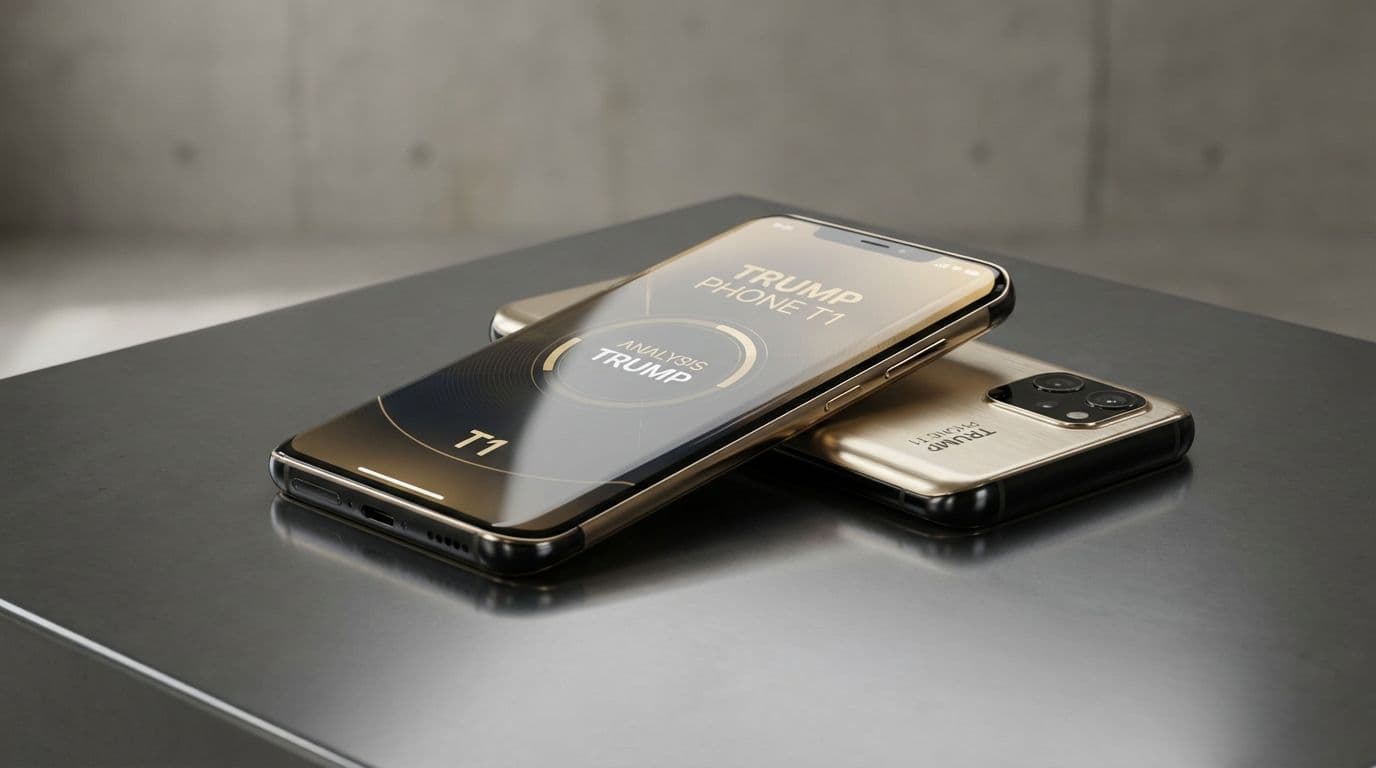
Trump Phone T1 Analysis: Hardware Risks, Specs & Release Delays
Team GimmieThe Trump Phone: Why the T1 is Currently a Case Study in Hardware Red Flags
In the high-stakes world of consumer electronics, a delay isn't just a scheduling hiccup—it is often a death sentence. When a new smartphone missed its launch window multiple times, as the much-discussed T1 (or Trump Phone) has, we aren’t just looking at a slow production line. We are looking at a product that is fighting for its life before it even hits the shelves.
The T1 has moved from being a whispered rumor to a device shown off by executives Don Hendrickson and Eric Thomas via video call. But as a tech reviewer, seeing a phone on a screen is miles away from holding a finished product. For a new hardware player to succeed, they need a stable supply chain, a locked-in spec sheet, and a clear launch window. Right now, the T1 has none of those things. If you are considering this device as a gift or a daily driver, the reality is that the red flags are currently outnumbering the features.
The Fatal Flaw of Shifting Specifications
One of the most concerning revelations from the recent executive interviews is that the T1’s spec sheet continues to change. In the tech industry, "shifting specs" this late in the game is the ultimate warning sign of supply chain instability.
When a manufacturer changes the processor, the RAM, or the screen technology during the production phase, it usually means they cannot secure a steady supply of the original parts. This is a massive long-term risk for the consumer. If a company can’t guarantee which components are inside the phone today, they won’t be able to provide reliable software updates or replacement parts tomorrow.
A smartphone is a complex marriage of hardware and software. If the hardware is a moving target, the software—especially the security patches required to keep your data safe—will be buggy and inconsistent. For any buyer, and especially for a gift-giver, purchasing a device with an unstable hardware foundation is an invitation to a year of technical support headaches and "planned obsolescence" that starts on day one.
The Giver's Verdict: Novelty vs. Functionality
If you are thinking about buying the Trump Phone for a friend or family member, you need to be brutally honest about why you are buying it. There are two very different ways to view this device, and only one of them holds water right now.

The Novelty Case: If you are buying this strictly as a piece of political memorabilia—a conversation starter that will sit on a shelf or be used as a secondary device for light browsing—the delays might not matter to you. In this scenario, you are buying the brand, not the tool.
The Functional Reality: If you expect the T1 to be someone’s primary phone—their lifeline for work, family communication, and banking—then this is an incredibly risky bet. A primary phone needs to be reliable. It needs a proven track record of hardware durability and a manufacturer that can honor a warranty. At this stage, there is no evidence that the T1 can meet the basic performance standards of a $500+ modern smartphone.
The "Surprise Factor" of a gift quickly sours when the recipient realizes the phone doesn't support their favorite apps, crashes during video calls, or can't be repaired at a local shop. Until the T1 is in the hands of independent reviewers who can stress-test its build quality, it remains a gamble, not a gift.
Better Ways to Spend Your Tech Budget Today
You don’t have to wait for a "maybe" phone to give a great piece of technology. If you need a reliable, high-performing smartphone right now, there are established options that offer better value, guaranteed security, and a much more polished user experience.
For the Value-Focused Buyer: The Google Pixel 8a. If you want a phone that punches way above its weight class, the Pixel 8a is the gold standard. It offers an incredible camera, years of guaranteed security updates directly from Google, and a clean, fast interface. It is a "safe" gift that will actually improve the recipient's daily life without the risk of hardware failure.
For the Reliability-Seeker: The iPhone 15. If you want a device that "just works" and has the best resale value on the market, the iPhone 15 is the logical choice. Its hardware is the result of decades of refinement, and the support network—from Apple Stores to third-party repair shops—is unmatched. You aren't just buying a phone; you're buying peace of mind.
For the Power User on a Budget: The Samsung Galaxy A54. Samsung’s mid-range champion offers a beautiful screen and solid battery life at a fraction of the cost of a flagship. It’s a proven entity with a massive global support system, making it a far more practical choice than an unproven newcomer.
A Watch-and-Wait Conclusion
The story of the T1 phone is currently more about the drama of its creation than the quality of its components. While the executives involved seem eager to prove the skeptics wrong, the history of the tech industry is littered with "vaporware" that promised the world and delivered a paperweight.
True value in technology isn't found in a press release or a video demo; it’s found in the months and years after you take the device out of the box. Until the T1 can prove it has a stable supply chain and a functional, secure operating system, our advice remains firm: Watch the headlines, but keep your wallet closed. There are far better ways to show your support or treat a loved one than by buying into a hardware project that is still struggling to define itself.