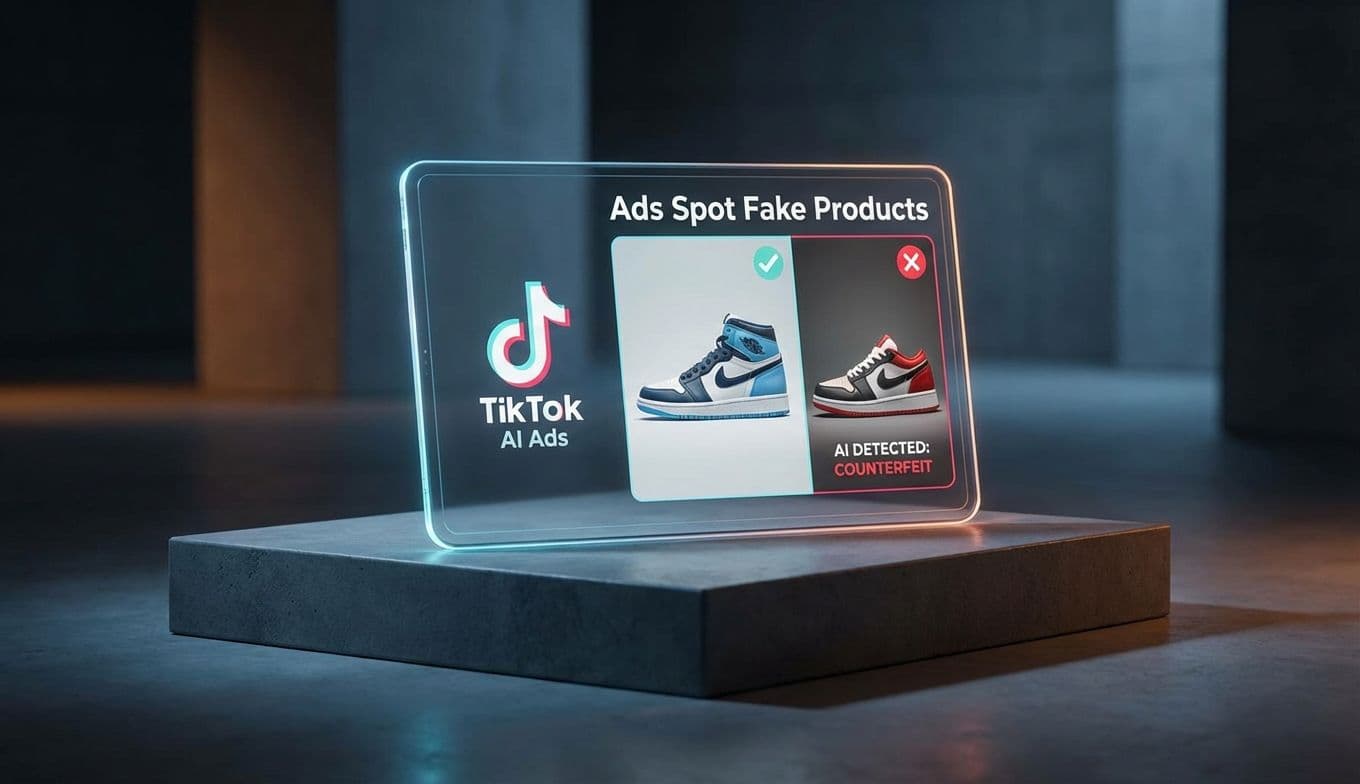
TikTok AI Ads: How to Spot Fake Products & Undeclared Tech
Team GimmieTHE GHOST IN THE FEED: WHY YOUR NEXT TIKTOK PURCHASE MIGHT BE A DIGITAL MIRAGE
I spend my professional life hunting for the glitch. Whether it is a subtle blur around a product’s edge, a shadow that doesn’t quite follow the laws of physics, or a reflection that reveals a room that doesn’t exist, my brain is hardwired to spot the "tells" of synthetic media. It used to be a niche skill, something reserved for deepfake debunks and high-end visual effects analysis. But lately, that skill has become a mandatory survival tool for anyone scrolling through TikTok.
The platform has become a digital Wild West for generative AI. Brands are no longer just using filters; they are conjuring entire realities to sell us everything from skin serums to portable projectors. The problem isn’t the technology itself—AI is a fascinating tool for creativity—but the lack of honesty. When a brand like Samsung, a titan we usually look to for tech leadership, gets flagged for failing to label AI-generated ads, it signals a shift in the consumer landscape. The line between a real product demonstration and a synthetic fantasy is being erased, and as a shopper, you are the one bearing the risk.
BEYOND THE GLITCH: THE NEW ARCHITECTURE OF DECEPTION
For weeks, I have been tracking ads that feel "off." They have that uncanny smoothness, a hyper-saturated perfection that real-world cameras rarely capture. TikTok’s official policy requires brands to disclose when content is AI-generated, but the enforcement is currently a whisper in a hurricane. We are seeing ads that are clearly synthetic, yet the disclosure labels are nowhere to be found.
This isn't just a technical oversight; it’s a strategy. Someone, somewhere in a marketing department, knows exactly how these images were made. They chose to omit the label because they know that an AI tag breaks the spell. It reminds the viewer that what they are seeing isn't a real person using a real product in a real room. It’s a calculated arrangement of pixels designed to trigger a dopamine hit and an impulse buy. When the transparency goes, the trust follows.
THE HIGH-RISK ZONES: WHERE AI MASKS MEDIOCRITY
If you are looking to avoid a bad purchase, you need to know where the AI "beautification" is most prevalent. Certain product categories are ripe for AI manipulation because their value is tied entirely to visual results that are difficult to achieve in reality.

Take skincare, for example. We are seeing "glass skin" serums advertised with models whose complexions aren't just clear—they are mathematically perfect. There are no pores, no fine lines, and the way light bounces off the cheekbones is literally impossible for human skin. When AI generates the result of a beauty product, it isn't advertising; it’s a promise the physical product can never keep.
Portable projectors and home theater gear are another high-risk area. I’ve seen ads showing tiny, palm-sized projectors casting 100-inch, crystal-clear images in broad daylight. As a gear reviewer, I can tell you that physics doesn't work that way. To get that kind of brightness and contrast in a lit room, you need a unit the size of a toaster and a price tag to match. AI allows brands to bypass these physical limitations in their marketing, leaving the buyer with a dim, blurry reality once the box arrives.
Even kitchen gadgets have entered the fray. Viral vegetable choppers or "miracle" cleaning solutions are being depicted in AI-enhanced environments where every cut is perfect and every stain vanishes in a single, jitter-free frame. These aren't demonstrations; they are digital animations of a best-case scenario that may not exist.
THE UNBOXING LETDOWN: THE EMOTIONAL COST FOR GIFT-GIVERS
There is a specific kind of sting that comes with buying a gift that fails to live up to the hype. We’ve all been there: you see a TikTok of a "levitating" speaker or a "smart" mood lamp that looks like a piece of high-end art. You spend your hard-earned money, wait for the shipping, and present it to a friend or loved one with excitement.
Then comes the Unboxing Letdown.
The speaker doesn't levitate; it wobbles on a cheap magnet. The mood lamp looks like translucent plastic rather than the frosted glass suggested in the ad. The "smart" features require a buggy app that crashes every five minutes.
When you buy a product based on an AI-fueled fantasy, the gap between the expectation and the reality is massive. For a gift-giver, this is more than just a lost twenty dollars—it’s an embarrassing moment. It makes you feel like you’ve been duped, and it leaves the recipient with a piece of tech that will likely end up in a junk drawer by next month. AI ads are designed to sell the feeling of a product, but they often forget to represent the actual object.
THE GIMMIE AI INSIDER CHECKLIST: HOW TO SPOT THE SHADOWS
Since we can’t rely on platforms or brands to always tell the truth, we have to become our own best advocates. Here is my personal checklist for vetting any viral product before you hit the checkout button.
-
The Shadow and Reflection Audit. AI often struggles with consistency. Look at the shadows cast by the product. Do they match the light source in the rest of the room? Look at reflections in windows or mirrors behind the subject. Often, the AI forgets to "render" the product in the reflection, or the reflection shows a completely different scene.
-
The Physics Reality Check. If a product seems to defy gravity, light, or common sense, it probably does. Be especially wary of "all-in-one" gadgets that claim to do ten different things perfectly for under $30. If the demo looks too smooth—no stumbles, no mess, no effort—you are likely looking at a synthetic recreation.
-
The "Hands" Test. While AI is getting better at hands, it still struggles with fine motor interaction. Watch how a person in an ad holds the product. Does the grip look natural? Do the fingers clip through the object or look slightly blurred compared to the item itself? If the interaction between the person and the product looks "soft," be cautious.
-
The Third-Party Search. This is the most important rule. Never buy directly from a TikTok ad without a secondary search. Go to a trusted, independent review site like Consumer Reports or Best Products. If the "viral" item has no presence on these sites, or if the only reviews you can find are other TikToks that look suspiciously similar, walk away.
A CALL FOR HONEST ALGORITHMS
The rise of AI in advertising is an inevitability, and in many ways, it’s an exciting frontier. It can lead to more personalized, creative, and entertaining content. But that creativity shouldn't come at the expense of the truth. We deserve to know when we are looking at a digital construct, especially when our wallets are involved.
As shoppers, we have more power than we think. By demanding transparency and refusing to reward brands that hide behind synthetic "perfection," we can shift the market back toward authenticity. Don't let a well-prompted algorithm dictate your gift list. Look for the substance, find the independent voices, and remember: if it looks like a digital dream, it might just be a real-world nightmare. Stay skeptical, stay informed, and always look for the glitch.