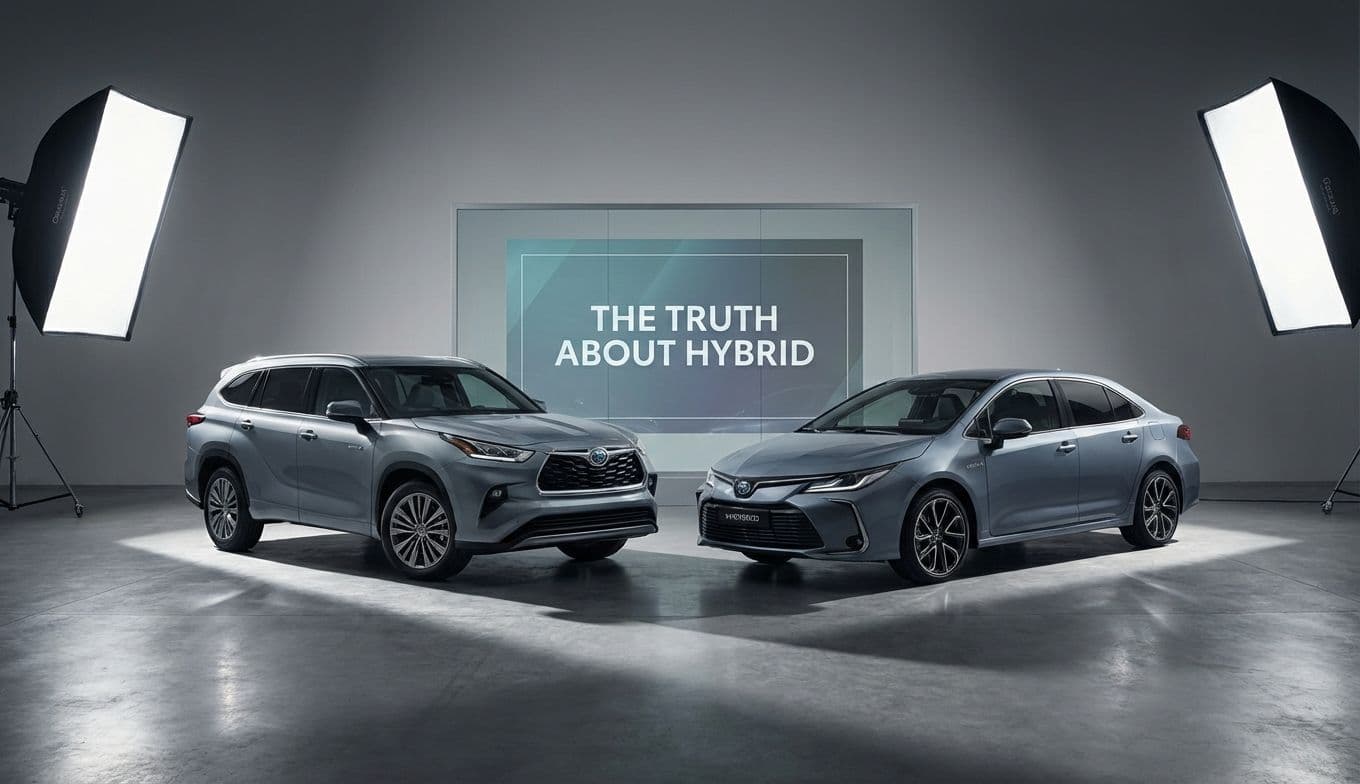
The Truth About Hybrid Vehicles: Are They Worth It?

The Truth About Hybrid Vehicles: Are They Worth It?

Team GimmieTeam Gimmie
Published on March 9, 2026

The Middle Ground Dilemma: Finding the Truth in the Hybrid Craze

As a product journalist who has spent years watching "revolutionary" tech fads evaporate faster than a software update, I tend to view mainstream hype through a lens of extreme skepticism. When it comes to cars—likely the second most expensive thing you will ever buy—the truth needs to be more than a glossy marketing brochure.

Lately, the conversation has shifted. The initial gold rush toward pure electric vehicles (EVs) has hit a bit of a plateau, and suddenly, the hybrid is the belle of the ball again. But after digging into what experts call the uncomfortable truth about hybrid vehicles, I’ve realized that while they are an essential bridge to the future, they come with a specific set of strings attached. If you are weighing a hybrid as a major family purchase or a long-term investment, you need to look past the fuel economy stickers.

The Complexity Tax: Two Engines, Double the Trouble?

The standard pitch for a hybrid is that you get the best of both worlds: the efficiency of an electric motor and the range of a gasoline engine. But the uncomfortable reality is that you also get two of everything.

Inside a hybrid, you aren’t just maintaining a car; you’re maintaining a dual-identity machine. You have the internal combustion engine (ICE) with its spark plugs, oil filters, timing belts, and cooling systems. Right alongside it, you have a high-voltage battery pack, sophisticated power inverters, and electric traction motors.

From a maintenance perspective, this is the hybrid’s hidden burden. While regenerative braking helps save your brake pads, you still have an engine that requires traditional service. If a sensor fails in the complex handoff between gas and electric power, or if the battery begins to degrade after a decade, the repair bills can be eye-watering. It is a brilliant piece of engineering, but it is also a masterclass in mechanical density. We aren't just buying a cleaner car; we're buying a more complicated one.

The Urban Commuter’s Gold Standard: The Toyota Prius

If you are looking for the absolute benchmark of this technology, you cannot ignore the Toyota Prius. For years, the Prius was the poster child for sensible, if slightly boring, environmentalism. However, the latest iteration has undergone a radical transformation. It’s no longer just efficient; it’s actually a car you might want to be seen in.

For the daily commuter who spends forty minutes a day in stop-and-go traffic, the Prius remains the gold standard. It shines in the "city crawl," where the electric motor handles the heavy lifting of frequent starts, and the regenerative braking captures energy that would otherwise be lost to heat. With an EPA-estimated 57 MPG, it’s a financial win for anyone whose primary driving involves suburban streets and urban congestion. It’s the safe, predictable choice for a family looking to slash their monthly fuel bill without the "range anxiety" of a full EV.

The Family Workhorse: Honda CR-V Hybrid

When the conversation shifts from solo commuting to a family investment, the priorities change. You need vertical space, safety tech, and enough room for a Costco run. This is where the "gift" of a hybrid becomes a practical household decision. The Honda CR-V Hybrid has emerged as the most balanced option for families who want to go green-ish without sacrificing utility.

Unlike some hybrids that feel "glitchy" when switching between power sources, the CR-V offers one of the smoothest transitions in the business. It’s a pragmatic solution for the family that takes frequent road trips. You get the benefit of improved city mileage (around 40 MPG) without having to map out every charging station between here and the mountains. However, keep in mind that on long highway stretches at 75 mph, the hybrid advantage shrinks. If your family mostly does long-distance interstate driving, the added cost of the hybrid powertrain might take years to "pay back" in fuel savings.

The Budget-Friendly Utility: Ford Maverick Hybrid

Perhaps the most surprising entry in the hybrid landscape is the Ford Maverick. For the buyer who needs a truck for weekend projects or light hauling but doesn't want to pay $100 at the pump every week, the Maverick Hybrid is a game-changer.

It is one of the few vehicles that makes the "uncomfortable truth" of hybrid pricing feel manageable. Typically, hybrids carry a significant price premium over their gas-only counterparts. The Maverick keeps that entry point low, offering a compact truck that gets roughly 40 MPG in the city. It’s the "budget" pick that doesn’t feel like a compromise, making it a perfect first major vehicle purchase for a young professional or a sensible addition to a multi-car household.

How to Navigate the Hybrid Landscape

If you’ve decided that a hybrid is the right middle ground for your life, don’t just walk onto a lot and pick the one with the best paint job. There are three critical factors you need to verify before signing the paperwork.

First, look at the battery warranty. Most manufacturers offer eight years or 100,000 miles, but some states (like California) and certain brands offer even more. Given that a battery replacement is the single most expensive repair a hybrid can face, the length of this warranty should be a deal-breaker.

Second, ignore the "combined" MPG and look at the "city" versus "highway" breakdown. Hybrids are built for traffic. If your life is 90 percent highway driving at high speeds, you might be better off with a highly efficient, smaller gasoline engine. You have to be honest about your driving habits to see if the hybrid math actually works in your favor.

Finally, trust your gut on the test drive. Some hybrids use a Continuously Variable Transmission (CVT) that can feel "rubbery" or produce a droning noise during acceleration. Others, like the Honda and Toyota models mentioned above, have refined this significantly. If the car feels sluggish or disconnected to you, the fuel savings won’t make up for a miserable driving experience.

The Verdict: A Step, Not a Destination

So, what is the final word? Hybrids are a brilliant, imperfect solution to a very modern problem. They allow us to participate in the transition to cleaner energy without demanding that we rewire our garages or change how we plan our summer vacations.

They aren't the "zero-emission" miracles that some advertisements suggest. They still burn gas, they still require oil changes, and they are mechanically more complex than almost anything else on the road. But for the vast majority of drivers who aren't ready to go full electric, a well-chosen hybrid like the Prius, CR-V, or Maverick represents a smart, tangible improvement over the status quo.

Think of a hybrid as a well-considered step. It isn’t the final destination of automotive technology, but for right now, it’s a step that makes a lot of sense for a lot of people. Just make sure you’re walking into it with your eyes wide open to the complexity under the hood.