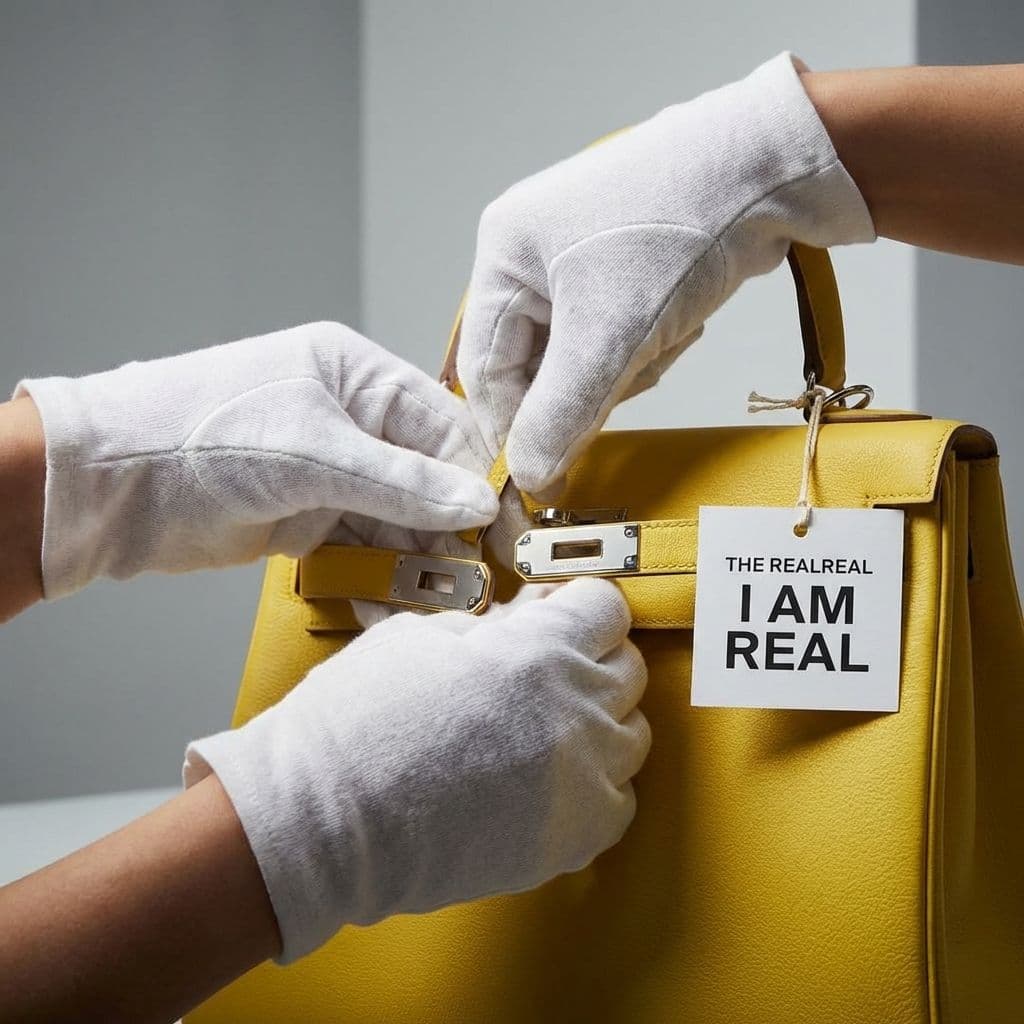
The RealReal 'I Am Real': Combating AI Fakes in Luxury Resale
Team GimmieBeyond the Superfakes: A Gift-Giver’s Guide to Navigating the New Age of AI Counterfeits
Imagine the scene: You’ve spent months researching the perfect vintage Hermès scarf or a pre-owned Louis Vuitton Keepall for someone special. You’ve saved the money, tracked the shipping, and watched their face light up as they unwrap it. It’s a moment of pure connection. Now, imagine that same person visiting a boutique a year later for a simple repair, only to be told—discreetly and devastatingly—that the item is a counterfeit.
The heartbreak isn’t just about the lost money. It’s about the breach of trust and the tarnished memory of a significant gesture. In the past, avoiding a fake was mostly about staying off sketchy street corners and avoiding "too good to be true" prices. But today, the threat has evolved. We have entered the era of the AI fake, and the stakes for luxury gift-shoppers have never been higher.
What Exactly is an AI Fake?
For years, the luxury industry has battled "superfakes"—high-quality counterfeits that look nearly identical to the real thing. But AI fakes represent a new, more dangerous frontier. These aren't just handmade copies; they are the result of sophisticated machine learning.
Counterfeiters now use AI to analyze thousands of high-resolution images of authentic goods to identify the exact stitch count, grain pattern, and hardware placement of a specific season's production run. They use AI-driven manufacturing to replicate the chemical composition of dyes and the specific weight of metal alloys. Perhaps most insidious, AI is used to generate fake "proof of authenticity" documents, receipts, and even digital footprints that make a counterfeit item appear to have a legitimate history.
In short, an AI fake is designed to bypass the standard visual checks that used to satisfy a casual buyer. It’s a counterfeit with a digital brain, making it harder to spot than anything we’ve seen before.
The Human Firewall: Why Managed Marketplaces Matter
In response to this digital arms race, The RealReal recently launched their I Am Real initiative. While the campaign features a film, the real story isn’t on the screen—it’s in the authentication centers. The core message is a direct challenge to the rise of AI-driven deception: you cannot automate the soul of a luxury item, and you certainly shouldn't automate its verification.

When you’re buying a $2,000 bag, you aren’t just paying for the leather; you’re paying for the peace of mind that it is what it claims to be. This is where the distinction between a managed marketplace and a peer-to-peer site becomes critical.
On peer-to-peer platforms like eBay or Poshmark, you are essentially buying from an individual. While these sites have made strides in buyer protection, the responsibility of verification often falls on the user or a third-party photo-review service. AI fakes are specifically designed to fool photos.
A managed marketplace like The RealReal acts as a physical gatekeeper. Every item is sent to a central location where it is touched, smelled, and inspected by a human expert before it ever touches the website. In an age of digital deception, the most powerful tool against an AI fake is a pair of human hands and a decade of experience.
The Trust Checklist: What the Experts Look for (That AI Misses)
Authenticators at The RealReal look for "tells" that a machine or a photo-based algorithm simply can't detect. If you’re inspecting a luxury item—whether it’s in your hands or you’re reviewing a seller’s description—here is the trust checklist the experts use:
The Scent of the Material: Real luxury leather has a distinct, earthy, and rich aroma. Synthetic dyes and glues used in even the best fakes often carry a faint chemical or "plasticky" scent that an AI can't hide in person.
The Hardware Weight and Sound: High-end zippers and clasps are made of solid brass or gold-plated steel. They should feel heavy and cool to the touch. When you click a Chanel lock or pull a YKK zipper on a luxury bag, the sound should be a muted, solid thud, not a hollow, tinny "clink."
The "Hand" of the Fabric: Experts talk about the "hand" of a textile—how it drapes and reacts to heat. Real silk feels almost like liquid and warms to your skin temperature instantly. Synthetic blends used in fakes often feel slightly "bouncy" or remain cool.
Stitch Tension, Not Just Count: AI can replicate the number of stitches per inch, but it struggles with tension. Human-guided or high-end machine stitching on an authentic bag has a slight, consistent angle and depth. Fakes often have "flat" stitching that looks too perfect, or tension that varies, causing the leather to pucker slightly.
Interior Integrity: Counterfeiters spend 90% of their effort on the outside. Experts look at the places most people don’t: the lining of the interior pockets, the underside of the brand stamps, and the consistency of the serial number fonts.
Choosing Your Platform Wisely
If you’re shopping for a gift, the platform you choose is your first line of defense.
Peer-to-Peer (P2P) sites are great for deals on mid-range contemporary brands, but they are the primary playground for sophisticated counterfeiters selling "luxury" items. If you use these, you must be prepared to do your own heavy lifting—requesting extra photos, vetting the seller’s history, and potentially paying for your own independent authentication.
Managed Marketplaces offer a "set it and forget it" level of security. Because the platform takes possession of the item, they bear the risk. If a fake gets through, it’s their reputation on the line, not just a random seller's account. This is why brands like The RealReal are leaning so heavily into the "human" element. They know that in a world of AI-generated everything, the only thing that still carries weight is a physical guarantee.
Authenticity is the Ultimate Luxury
At the end of the day, luxury is about more than just a logo. It’s about the heritage, the craftsmanship, and the story behind the object. A counterfeit—no matter how perfectly an AI has replicated its stitch pattern—has no story. It’s a hollow shell.
When you give a gift, you want it to be a source of joy, not a source of anxiety. By understanding the shift from traditional fakes to AI-driven counterfeits, you can make more informed decisions. Don’t be blinded by a "verified" badge that was generated by an algorithm. Look for the human element, trust your senses, and remember that when it comes to luxury, if the process of authentication isn't rigorous, the product probably isn't real.
The RealReal’s pivot toward highlighting their human experts isn't just a marketing move; it’s a necessary response to a changing world. As gift-givers, our job is to ensure that the things we give are as genuine as the feelings behind them. Stick to the experts, use the checklist, and give with confidence.