The OpenAI Orb Hoax: Debunked & Real AI Hardware Alternatives

The OpenAI Orb Hoax: Debunked & Real AI Hardware Alternatives

Team GimmieTeam Gimmie
Published on February 9, 2026

THE OPENAI ORB HOAX: WHY WE WANT TO BELIEVE IN THE FUTURE OF AI HARDWARE

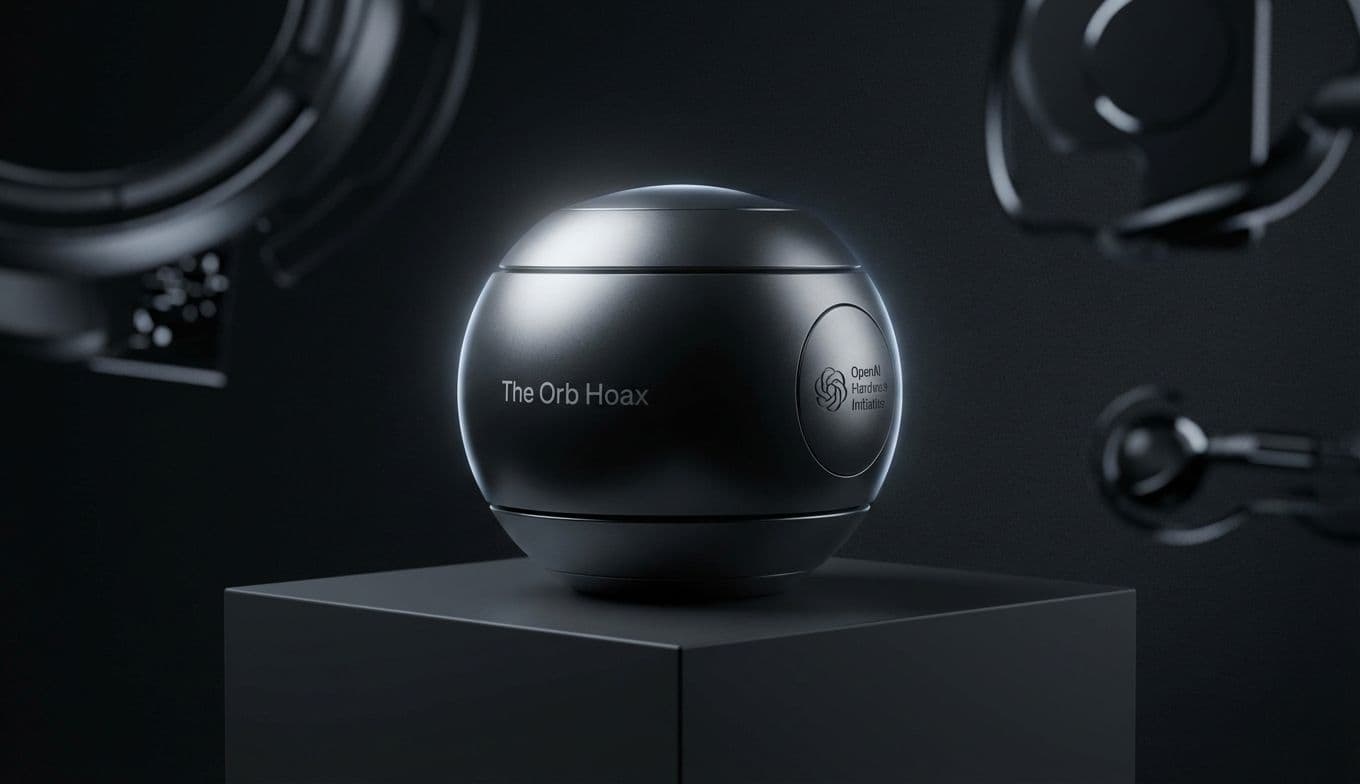
Imagine Alexander Skarsgård—cool, detached, and cinematic—holding a polished, glowing chrome orb while wearing a pair of seamless, wraparound earbuds. As the Super Bowl clock ticked down, this imagery flooded the internet, accompanied by a frantic story about a disgruntled OpenAI employee who accidentally leaked the company’s first hardware debut. It was the perfect storm of high-fashion aesthetic and bleeding-edge tech gossip.

The only problem? It was a total fabrication. OpenAI President Greg Brockman eventually confirmed that the ad was a hoax, likely the work of a clever creator using the very AI tools the company is known for. But while the "OpenAI Orb" doesn't exist, the collective gasp from the tech world tells us something important. We are desperate for AI to move out of our browsers and into our hands.

As a consumer advisor, I’ve seen my fair share of vaporware, but this hoax was particularly effective because it tapped into our desire for tangible tech. We’re tired of chatting with a box on a screen; we want the sci-fi dream. However, for those looking to gift or own the next big thing, the lesson here isn't just to be skeptical—it's to know where the real innovation is actually happening.

BEYOND THE SMOKE: AI HARDWARE THAT ACTUALLY EXISTS

The OpenAI hoax succeeded because it felt plausible. We are currently in the middle of a hardware gold rush, with companies trying to figure out what a "native AI device" looks like. If you were disappointed that the Skarsgård orb wasn't real, you don't have to wait for a fictional leak to experience the future. There are three major players currently defining this space, each with their own set of promises and pitfalls.

The most successful implementation so far is the Ray-Ban Meta Smart Glasses. Unlike a glowing orb you have to carry around, these look like standard Wayfarers but house a surprisingly capable AI. You can ask them what you’re looking at, have them translate signs in real-time, or take photos with a voice command. They deliver on the promise of the "leak" because they are discreet and stylish. They don't dominate your life; they enhance it. If you’re looking for a gift that feels like the future without the "tech-bro" baggage, this is the current gold standard.

Then there is the Rabbit R1. With its bright orange casing and nostalgic "Teenage Engineering" design, it looks like something out of a Wes Anderson movie. It’s a dedicated AI handheld intended to use your apps for you. While the launch was rocky and the software is still catching up to the ambition, it’s a tangible, affordable piece of AI hardware that actually exists. It’s for the early adopter who enjoys the "beta" lifestyle and wants a conversation piece on their desk.

Finally, we have the Humane AI Pin. This is perhaps the closest thing to the spirit of the OpenAI hoax—a high-end, screenless wearable that projects information onto your hand. It’s ambitious, expensive, and has faced significant criticism for battery life and heat issues. However, it represents a bold swing at a post-smartphone world. It’s a luxury item for the person who wants to be at the absolute bleeding edge, even if that edge is still a little sharp.

THE GIMMIE AI HYPE-CHECK

In an era of deepfakes and viral marketing, how do you tell the difference between a revolutionary product and a well-rendered hoax? Before you hit "pre-order" on the next viral gadget, run it through these three questions:

  1. Is there a live, unedited demo? Hoaxes rely on high-production renders and "leaked" videos that look like movies. Real hardware companies—even the secretive ones—eventually have to show the device working in a non-controlled environment. If all you see is a cinematic trailer with a celebrity, keep your wallet closed.

  2. Does it solve a problem or just look cool? The OpenAI "Orb" looked amazing, but what did it actually do? If a device’s primary value is that it "has AI," that’s a red flag. The best AI hardware solves a specific friction point, like the Ray-Ban Meta glasses helping you stay heads-up while navigating or taking photos.

  3. Is the company hardware-ready? Building physical products is infinitely harder than writing code. OpenAI is a software giant. While they may one day release a device, a sudden "leak" of a polished, mass-market consumer product without a massive manufacturing partner involved is highly unlikely.

NAVIGATING THE NEW FRONTIER OF GIFT-GIVING

When you're looking for a tech gift, it’s easy to get caught up in the "next big thing" narrative. We want to be the person who gives the gift that changes everything. But the reality of the AI revolution is that it will be iterative, not instantaneous.

Instead of chasing the phantom orb, focus on the AI integration within proven categories. For the audiophile, look at the latest noise-canceling headphones from Sony or Bose, which use AI to map the acoustics of your specific ear canal and adjust sound in real-time. For the home chef, look at smart ovens that use computer vision to identify food and cook it perfectly. These aren't just "gadgets"; they are established tools made better by artificial intelligence.

The danger of the OpenAI hoax wasn't just that it lied to us; it's that it created unrealistic expectations for what AI hardware should be. We expect magic, but we should be looking for utility. A device that works 100 percent of the time is a much better gift than a beautiful chrome sphere that only works in a rendered video.

CHOOSING SUBSTANCE OVER SHINE

The Alexander Skarsgård "leak" will eventually be forgotten, a tiny blip in the history of internet culture. But the trend it represents—the merging of celebrity, high-end design, and AI hype—is only going to accelerate. As we move closer to the 2026 holiday seasons and beyond, we will see more "orbs," more "pins," and more "wearables" competing for our attention.

The best way to navigate this landscape is with a healthy dose of curiosity tempered by skepticism. Don't be afraid of the new, but don't be blinded by the shiny. The future of AI hardware is incredibly exciting, and there are brilliant engineers working right now to make the "sci-fi dream" a reality.

When you’re ready to buy, look for the products that have survived the scrutiny of reviewers and the frustrations of real-world use. The most futuristic gift you can give isn't a hoax; it's something that actually works when the box is opened. Stick to the innovators who are shipping real units, and leave the glowing orbs for the movies.

The OpenAI Orb Hoax: Debunked & Real AI Hardware Alternatives | Gimmie