Tesla Cybertruck Price Cut: Is the $60k AWD Model Worth It?
Team GimmieThe Tesla Cybertruck: Still a Head-Scratcher, Even at a Lower Price
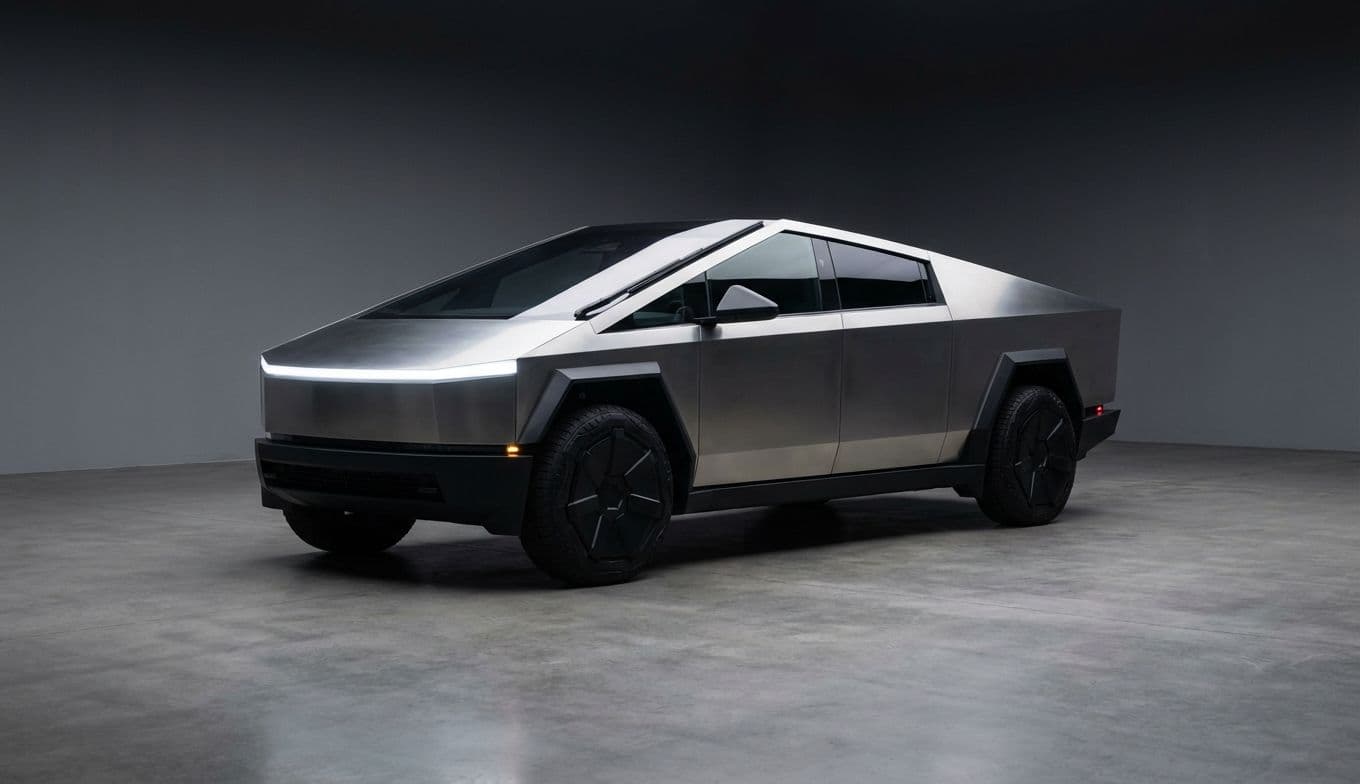
The Cybertruck is the automotive equivalent of a Rorschach test. To some, it’s a brilliant, polygon-shaped middle finger to a century of boring truck design. To others, it looks like a kitchen appliance that’s had a very stressful day. Since its first polarizing reveal, the conversation has always centered on two things: the design and the price. For years, we were promised a futuristic workhorse for under forty thousand dollars. That promise eventually evaporated, replaced by a rollout of high-priced early-adopter models that pushed six figures.
But now, Tesla is pivoting. With the introduction of a new dual-motor, all-wheel-drive (AWD) model starting at $59,990, the company is finally trying to bring the truck down from the stratosphere. They’ve also slashed $15,000 off the top-tier Cyberbeast, bringing it down to $99,990. These are big numbers, but are they enough to turn this sci-fi experiment into a mainstream staple? Let’s break down whether this new price point makes the truck a smarter buy, or if it’s just a cheaper way to buy into a complicated legacy.
GIMMIE AI VERDICT
The Buy It If: You are a tech-first driver who prioritizes the Tesla software experience and Supercharger network over traditional truck utility. It’s for those who want to drive a conversation piece and don't mind the occasional ergonomic trade-off.
The Skip It If: You genuinely need a truck for heavy-duty job sites, easy dent repair, or if you prefer a vehicle that blends into a parking lot. At $60,000, there are more practical, comfortable, and proven electric alternatives.
The New Middle Ground: All-Wheel Drive for Sixty Grand
The headline here is the new $59,990 AWD model. For a long time, the cheapest way into a Cybertruck was a short-lived rear-wheel-drive version that felt more like a placeholder than a product. This new AWD variant is a much more serious contender. Unlike the early bare-bones concepts, this version comes with features that actually make it feel like a truck: a powered tonneau cover to keep your gear dry and integrated bed outlets to power your tools (or your blender).
Tesla’s decision to cut $15,000 from the Cyberbeast is equally telling. It’s a clear admission that the initial rush of "must-have-it-at-any-cost" buyers has started to cool. By moving the AWD model into the sixty-thousand-dollar range, Tesla is positioning itself to compete with the meat of the electric truck market. However, "affordable" is a relative term. When you consider that $60,000 was once the price of a luxury SUV, the Cybertruck still carries a significant premium for its "cool factor."

The Tale of the Tape: Cybertruck vs. Lightning vs. Rivian
To understand if $60,000 is actually a good deal, we have to look at the neighbors. The electric truck market isn't the empty field it was when the Cybertruck was first announced.
The Tesla Cybertruck AWD starts at $59,990. For that, you get an estimated 340 miles of range and an 11,000-pound towing capacity. It’s fast, it’s stainless steel, and it’s unlike anything else on the road.
The Ford F-150 Lightning XLT starts around $62,995 for the standard range model. While its range is lower (about 240 miles on the base battery), it offers a much more familiar "truck" experience. It has a massive front trunk (frunk), a traditional bed, and a ride quality that won't make you feel like you’re piloting a lunar lander. It’s the choice for the person who actually needs to haul lumber or tow a boat without learning a new user interface.
The Rivian R1T Dual-Motor starts higher, around $69,900. It offers roughly 270 miles of range in its base form but delivers a much more premium, "adventure-luxury" feel. The Rivian is smaller and easier to park than the Cybertruck, making it a favorite for urban dwellers who head to the mountains on weekends.
When you look at these side-by-side, the Cybertruck’s $60,000 price point is actually quite competitive on paper, especially regarding range-per-dollar. But a truck is more than a spec sheet; it's a tool, and that’s where the Cybertruck’s unconventional design starts to raise questions.
More Than a Truck: The Tesla Ecosystem Advantage
If you're considering the Cybertruck, you probably aren't just looking at the steel and the tires. You're looking at the ecosystem. This is where Tesla still holds a massive lead over Ford and Rivian. The Supercharger network remains the gold standard for electric vehicle travel. While other manufacturers are finally getting access to Tesla’s plugs, the native integration in a Cybertruck—where the car handles all the routing and pre-conditioning seamlessly—is still the best in the business.
Then there’s the software. The Cybertruck’s interior is a minimalist’s dream (or a traditionalist’s nightmare). Everything is controlled via the massive central touchscreen. From adjusting the mirrors to checking the blind-spot cameras, the UI is fast, fluid, and regularly updated over-the-air. For the tech enthusiast, this isn't just a vehicle; it’s a rolling computer. The ability to watch Netflix while charging or play video games using the truck's steering wheel as a controller is a gimmick, sure, but it’s a gimmick that Tesla fans love.
Gifting the Cyber-Vibe: When $60,000 Is Over Budget
Let’s be real: most of us aren't putting a $60,000 truck under the Christmas tree with a giant red bow. But the "Cyber" aesthetic has created a massive secondary market for fans who want a piece of the future without the monthly car payment. If you have a Cybertruck enthusiast in your life, there are better ways to satisfy their craving than a down payment.
For the collector, the 1:18 Scale Cybertruck Die-cast model is a surprisingly high-quality desk piece. It’s designed by the Tesla Design Studio and features the same angular lines as the real thing. For the entertainer, the Tesla CyberBeer and Steins set—which comes with two bottles of limited-edition lager and two matte-black ceramic mugs—is a heavy-hitting gift that leans into the "brutalist" design language.
If you want something functional, the CyberCooler is a literal cooler shaped like the truck's bed, designed to fit perfectly into the vehicle's storage areas. These items allow fans to buy into the brand's identity at a fraction of the cost of the vehicle itself. They aren't just "merch"; they’re extensions of the lifestyle Tesla is trying to build.
The Practicalities: A Niche Player, Not a Game-Changer
Despite the price cut, the Cybertruck remains a difficult recommendation for the average consumer. The stainless-steel exterior is undeniably cool, but it’s a fingerprint magnet and a potential nightmare for body shops. If you get a door ding in a Ford F-150, any shop in town can fix it. If you dent the Cybertruck’s "exoskeleton," you might be looking at a very expensive and specialized repair process.
Visibility also remains a concern. The massive A-pillars and the sharply raked windshield create blind spots that take time to get used to. While Tesla’s camera system helps mitigate this, the sheer physical presence of the truck makes it feel out of place in tight parking garages or narrow city streets.
Conclusion: The Long Road to the Mainstream
Tesla’s move to lower the barrier of entry for the Cybertruck is a smart business play. It acknowledges that even the most hyped products eventually have to compete on price. At $59,990, the AWD model is no longer just an expensive toy for tech billionaires; it’s a legitimate alternative to high-end gas and electric trucks.
However, a lower price doesn't solve the fundamental "head-scratcher" nature of the vehicle. It is still a truck designed by people who seem to think the primary purpose of a truck is to look cool in a cyberpunk movie. For the early adopters, the tech-junkies, and the bold stylists, this price cut is the green light they’ve been waiting for. For the rest of us, the Cybertruck remains a fascinating curiosity—a glimpse into a future that is getting more affordable, even if it hasn't quite figured out how to be practical yet. For now, it’s a statement piece. Whether that statement is worth sixty thousand dollars is entirely up to you.