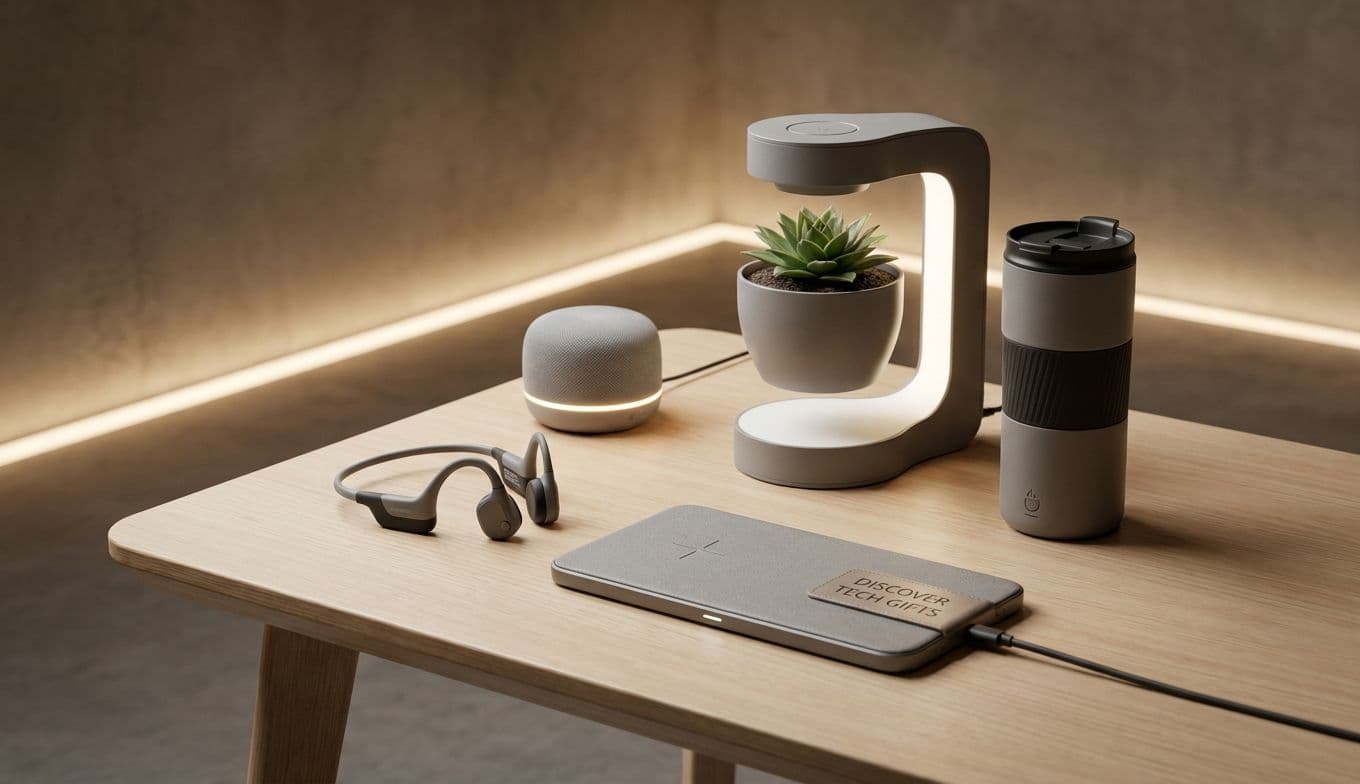
Tech Gifts for Better Conversations: Reclaiming the Human Voice
Research shows we speak 28% less than we used to. Discover the best tech gifts, from smart displays to pro mics, designed to spark better conversations.
The Quiet Revolution: Reclaiming the Human Voice in a Silent World
We are getting quieter. It is a fact that feels anecdotal until you see the hard data. Researchers at the University of Missouri-Kansas City and the University of Arizona recently tracked a startling shift in human behavior: between 2005 and 2019, the number of words we speak aloud to one another dropped by nearly 28 percent. In the years since the pandemic, that gap has likely widened into a canyon. The daily average of spoken words, once a vibrant stream of communication, has slowed to a trickle, replaced by the silent tap of thumbs on glass and the sterile efficiency of app-based life.
As a product reviewer who spends my days evaluating the latest tech, I usually look for things that make life more efficient. But efficiency is often the enemy of conversation. We have optimized our lives so thoroughly that we have accidentally engineered out the messy, beautiful act of talking. We order coffee through an app to avoid the barista; we Slack a colleague three feet away to avoid the interruption. This is the quiet revolution. It is not a loud disaster, but a slow fading of the human voice. As we look toward gifting, we have a unique opportunity to use products not just as gadgets, but as tools to break the silence and bring back the warmth of the spoken word.
The Statistics of Silence: Why We Stopped Talking
The research reported by The Verge paints a clear picture. By analyzing audio recordings from over 2,000 people over a decade and a half, scientists found that as our digital world expanded, our verbal world contracted. This is not just about the hours spent on smartphones. It is about a systemic shift in how we navigate our daily existence. We have traded the richness of tone, inflection, and spontaneous laughter for the convenience of text.
Modern work environments have played a massive role. Remote work offers incredible flexibility, but it has killed the spontaneous water-cooler debate. Even in physical offices, the culture of "productivity" often discourages verbal check-ins in favor of searchable, digital trails. We are becoming a society of editors rather than speakers. We polish our thoughts in text boxes rather than letting them breathe in real-time. To fight this, we need to be intentional. We need gifts that do not just sit there—we need gifts that demand to be talked about, and talked through.
About Team Gimmie
A small team of friends and colleagues working together to produce useful content to help you...gift better.
Reclaiming the Long-Distance Call: The Hardware of Connection
For a long time, the phone call was the gold standard of connection. But as call quality stayed stagnant and spam calls skyrocketed, we retreated to texting. If we want to bring back the "long phone call," we need to make the experience comfortable and crystal clear. High-quality audio hardware is the first step in reclaiming the voice.
If you are looking for a gift for the person who hates the "hollow" sound of a typical cell phone call, consider the Shure MV7+. This is a professional-grade microphone that plugs directly into a phone or computer. Why give a mic for casual chatting? Because when you sound like a radio host, the psychological barrier to talking disappears. It turns a quick check-in into an event. It encourages storytelling because the listener can hear every nuance of your voice.
For those on the move, the Sony WH-1000XM5 headphones are the industry standard for a reason. Their microphone array is specifically designed to isolate the human voice while suppressing wind and background noise. By gifting these, you are telling the recipient that their voice matters more than the noise of the city around them. It makes a forty-minute walk-and-talk with a sibling feel as intimate as sitting in the same room.
Closing the Word Count Gap with Smart Displays
In the Arizona research, the data showed that a healthy verbal life often hovered around 16,632 words per day. For many of us, especially those living alone or working remotely, we are falling thousands of words short of that mark. This is where smart displays, like the Google Nest Hub Max or the Amazon Echo Show 15, become surprisingly vital tools.
While these are technically "screens," their primary value lies in frictionless vocalization. You do not type on these devices; you speak to them. More importantly, they facilitate video calls that feel more like a "presence" than a "task." For a family spread across different states, a Nest Hub in the kitchen allows for spontaneous, hands-free conversation while cooking dinner. Its auto-framing camera follows you as you move, keeping the focus on the interaction. It is about closing that 16,632-word gap by making it easier to say "hello" than it is to send a text. When the barrier to entry is just a voice command, the word count naturally begins to climb.
Games that Force the Conversation: Social Deduction and Deep Dives
If you want to truly break the silence, you need activities that make verbal negotiation a requirement for success. Most board games allow for quiet contemplation, but "Social Deduction" games do the exact opposite.
Consider gifting The Resistance or Secret Hitler. These are not games you can play in silence. They require players to lie, defend themselves, accuse others, and build verbal alliances. You cannot win without talking your way out of a corner. They are the perfect antidote to a quiet household, sparking loud debates and high-stakes storytelling that can last for hours. These games force us to use our voices as tools of persuasion, reminding us how much fun verbal sparring can actually be.
For a more emotional connection, move away from traditional games and toward conversation decks like We’re Not Really Strangers or Table Topics. These are not just "icebreakers." They are carefully curated sets of questions designed to bypass small talk and get people talking about things that actually matter. They give us permission to be vulnerable and curious, providing a structured path back to deep, meaningful dialogue. When you give a deck like this, you are not just giving cards; you are giving the gift of a four-hour conversation that might never have happened otherwise.
Investing in Shared Experiences and Vocal Learning
Finally, the most effective way to combat the quiet revolution is to place people in environments where they are forced to collaborate verbally. Shared learning is a powerful catalyst for this. Instead of a silent spa day, consider a gift certificate for a local workshop—something like a glass-blowing class or a high-intensity cooking course.
These environments require constant verbal feedback. You have to ask for help, coordinate movements, and encourage your partner. The shared challenge creates a natural need for communication. For couples, a ballroom dance class is a fantastic way to improve non-verbal and verbal sync. You have to talk through the steps, laugh at the mistakes, and find a common rhythm. It is an investment in the "we" that requires a constant stream of dialogue.
Reclaiming Our Voices
It is easy to look at the 28 percent decline in speaking and feel a sense of inevitability. We live in a world that is increasingly designed for the silent consumer. But we do not have to accept that silence as the new default.
When you are choosing a gift this year, look past the specs and the "cool factor." Ask yourself: Will this make them talk? Will this help us hear each other better? Will this turn a quiet evening into a loud, laughter-filled night? The best products are the ones that serve as a bridge, not a barrier. Whether it is a high-end microphone that captures the warmth of a voice or a game that sparks a heated debate, the goal is the same. It is time to reclaim those lost words and remind ourselves that the most powerful thing we own is our voice. Let us start using it again, one conversation at a time.
Tech Gifts for Better Conversations: Reclaiming the Human Voice | Gimmie