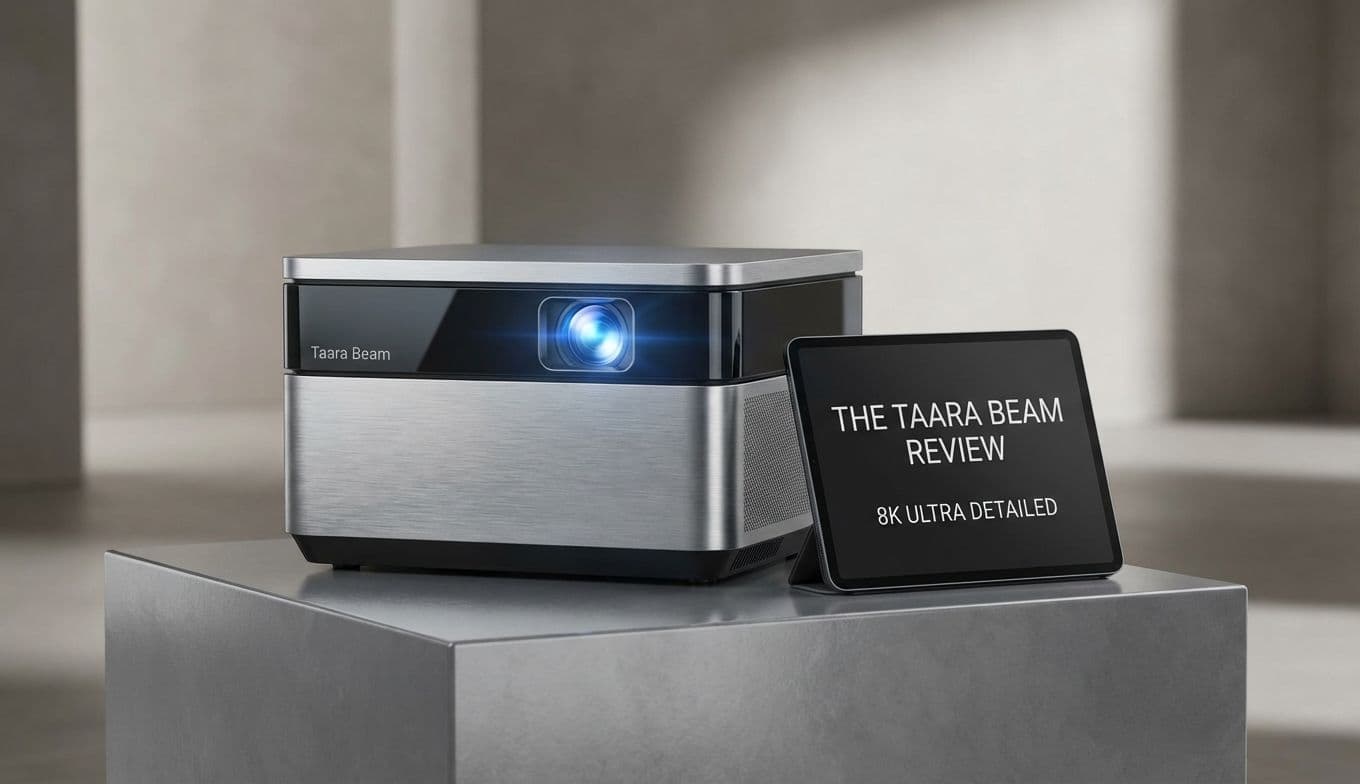
Taara Beam Review: The 25Gbps Invisible Internet Solution

Taara Beam Review: The 25Gbps Invisible Internet Solution

Team GimmieTeam Gimmie
Published on February 23, 2026

THE INVISIBLE SOLUTION TO THE URBAN LAG TRAP

You know the feeling. You live in a thriving city, surrounded by shimmering glass towers and cutting-edge infrastructure, yet your home internet feels like it’s being delivered via a rusty tin can and some damp string. You’re paying for "Gigabit" speeds, but as soon as the sun goes down and your neighbors start streaming, your connection turns into a stuttering mess of buffering circles and dropped Zoom calls. It is the great urban irony: being at the center of everything, yet stuck in a digital dead zone.

The problem isn't always your service provider; it's the physical world. Digging up city streets to lay new fiber optic cables is a bureaucratic and financial nightmare. This is why "Taara Beam" is suddenly the most interesting thing in the world of connectivity. Spun out of Alphabet’s X (the "Moonshot" factory that dreams up things like self-driving cars), Taara Beam isn't trying to dig through the ground. Instead, it’s looking to the sky—using invisible beams of light to deliver internet speeds that make your current setup look like a dial-up modem from 1996.

SPEED BEYOND COMPREHENSION: THE 25GBPS REALITY CHECK

Let’s talk numbers, because the specs on the Taara Beam are, frankly, ridiculous. We are looking at 25Gbps connectivity. For those who don't spend their weekends reading networking whitepapers, let’s put that into perspective. The average high-speed home internet in the United States hovers around 200 to 300 Mbps. Taara Beam is roughly 100 times faster than that.

What does that actually look like in your daily life? It means you aren't just "streaming 4K." It means you could download a massive 100GB modern AAA video game—the kind that usually takes an entire evening of waiting—in about 32 seconds. It means a household of six people could all be wearing VR headsets, streaming high-definition metaverses, and downloading operating system updates simultaneously without a single millisecond of lag.

The tech itself is remarkably elegant. The device is roughly the size of a shoebox, weighs less than 20 pounds, and sips about 90 watts of power—less than some high-end lightbulbs. It’s designed to be bolted onto street poles or rooftops, creating a web of light that blankets a city in high-speed data.

THE CATCH: WHY YOU CAN'T BUY IT ON AMAZON (YET)

Before you head to Amazon to add a Taara Beam to your wishlist, we need to manage some expectations. This is not a consumer gadget. You won’t be mounting one of these to your balcony to steal Wi-Fi from the Starbucks three blocks away.

Taara Beam is a B2B (business-to-business) infrastructure play. It is designed for Internet Service Providers (ISPs) and massive enterprises. Think of it as the heavy-duty "plumbing" for the internet. Instead of your ISP spending three years and ten million dollars to tear up a boulevard to lay fiber, they can just pop a few of these shoeboxes on existing poles and light up an entire neighborhood in a weekend.

There is also the "Line of Sight" rule. Because this technology uses light—essentially a very precise, invisible laser—it cannot bend around corners or blast through solid brick walls. If a new skyscraper goes up or a particularly leafy oak tree grows into the path of the beam, the connection breaks. This is why Taara Beam isn't a "magic bullet" for everyone, but rather a strategic tool for dense urban areas where clear paths between rooftops are easy to find.

FUTURE-PROOFING YOUR HOME: THE GIFTS TO BUY INSTEAD

While you can’t buy the Taara Beam itself, its arrival signals a massive shift in how we need to think about our home hardware. If your ISP eventually uses this tech to pump multi-gigabit speeds into your building, your current "off-the-shelf" router is going to become an immediate bottleneck. You’d be trying to drink from a firehose through a cocktail straw.

If you are looking for the perfect "future-proof" gift for the tech enthusiast in your life (or yourself), you shouldn't be looking at the beams—you should be looking at the hardware that can handle them.

First, let's talk about Wi-Fi 7. While Wi-Fi 6E is the current standard, Wi-Fi 7 is the only thing that will truly do justice to a 25Gbps backbone. Routers like the TP-Link Deco BE85 or the Netgear Nighthawk RS700S are built for this new era. They are designed to handle massive throughput and dozens of devices without breaking a sweat.

Second, consider 10GbE (10-Gigabit Ethernet) networking gear. Most homes are still wired for 1Gbps. If the internet coming into your house is 25Gbps, your standard yellow Ethernet cable is useless. Gifting a 10GbE switch or a Thunderbolt 4 to 10GbE adapter for a creative professional’s laptop is the kind of forward-thinking move that makes a real difference when these infrastructure upgrades hit your neighborhood.

THE GIMMIE AI VERDICT

Taara Beam is a fascinating glimpse into a world where "slow internet" is a relic of the past. It solves the "last mile" problem of urban connectivity with elegance and raw power. However, it remains a technology that happens to you, rather than something you buy.

GIFTABILITY: 0/10 You literally cannot buy this for someone. If you try to bolt one to your friend's roof, you’ll probably be arrested for interfering with telecommunications infrastructure. Stick to Wi-Fi 7 routers.

LIFE IMPACT: 9/10 When this tech rolls out in your city, the "dead zone" disappears. It paves the way for truly seamless remote work, lag-free gaming, and a world where we stop thinking about bandwidth altogether.

For now, keep your eyes on the rooftops. If you see a small, sleek shoebox-shaped device appearing on the poles in your neighborhood, get ready—your digital life is about to get a whole lot faster. Just make sure your router is ready to handle the heat.