Supreme Court Tariff Ruling: Impact on Tech Prices & Your Wallet

Supreme Court Tariff Ruling: Impact on Tech Prices & Your Wallet

Team GimmieTeam Gimmie
Published on February 21, 2026

The Supreme Court Just Handed a Win to Your Wallet: Navigating the New Trade Landscape

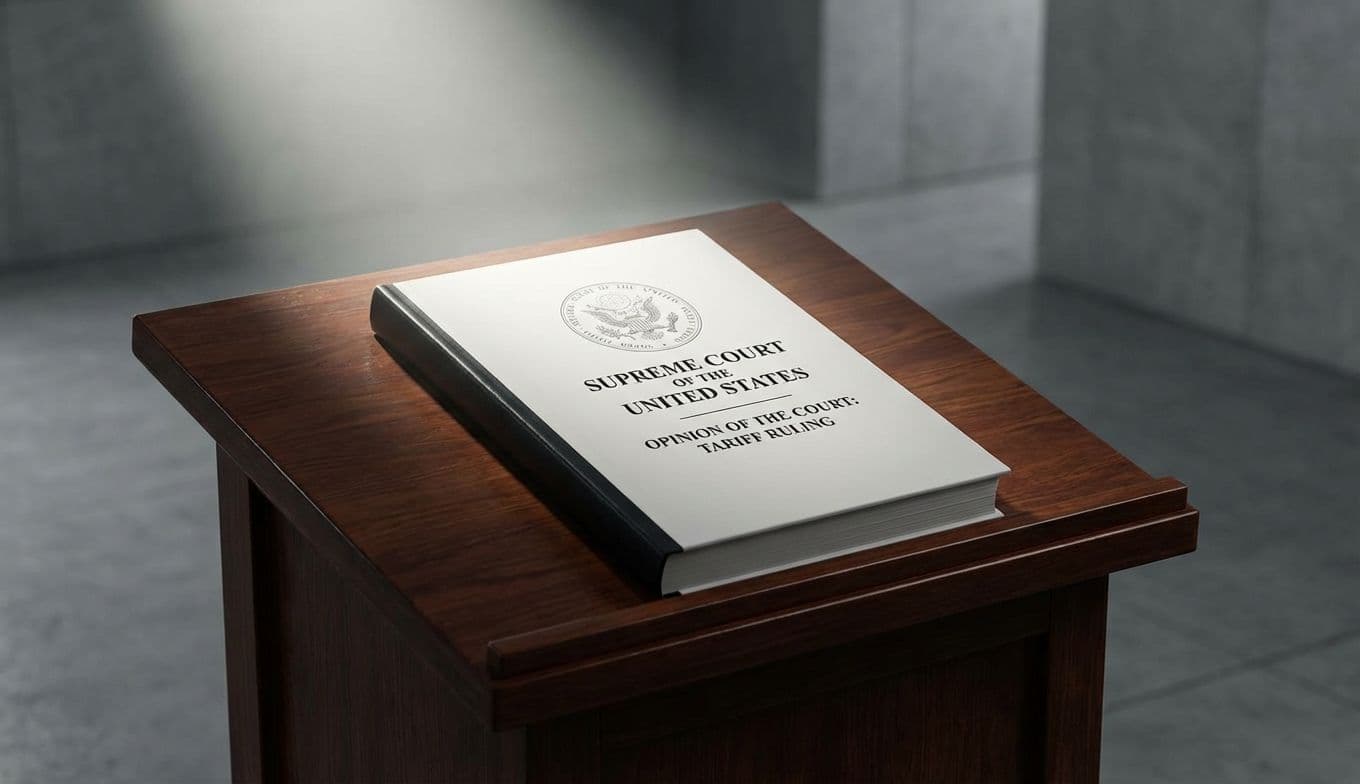
The high court just handed a potential win to your wallet. In a move that caught the attention of economists and holiday shoppers alike, the Supreme Court recently struck down a series of aggressive tariffs, ruling that the executive branch overstepped its legal boundaries. For anyone who has winced at the rising cost of a new laptop, a pair of designer sneakers, or even basic household appliances, this decision signals a possible reprieve from the upward climb of import-driven price hikes.

The ruling doesn't just change the legal books; it changes the math for your next major purchase. While trade policy often feels like a distant game played by politicians in suits, the reality is that these decisions live in your bank statement. By checking the government's power to unilaterally tax imports, the Court has introduced a much-needed layer of price stability into a market that has been volatile for years.

The End of Emergency Pricing

To understand why your next tech upgrade might cost less, you have to look at a 1977 law called the International Emergency Economic Powers Act (IEEPA). This law was originally designed to give presidents the power to handle genuine national security threats—like freezing the assets of a hostile foreign power during a crisis. However, it was recently repurposed as a blunt economic tool to levy heavy taxes on common goods like electronics and apparel under the guise of a national emergency.

The Supreme Court essentially decided that a trade dispute isn't the same thing as a national security emergency. By striking down these specific duties, the court has signaled that the executive branch cannot simply bypass Congress to raise prices on consumers. While this doesn't mean all tariffs are gone—Congress still holds significant power to regulate trade—it does mean that the specific "emergency" taxes that have been inflating the price of consumer goods are on shaky ground. For the average shopper, this is a victory for transparency. It means the path to a price hike must now go through a much more public and scrutinized legislative process rather than a sudden executive order.

Strategies for the Tech Enthusiast

The tech sector is where these trade wars hit hardest, and it's where you'll likely see the most immediate impact. If you're planning your next big tech purchase, you need to look beyond the brand name and consider the component level.

High-end electronics like laptops, gaming consoles, and professional cameras are heavily dependent on semiconductors and specialized components that are frequently targeted by import duties. When a 25 percent tariff is slapped on these parts, the manufacturer doesn't just absorb the cost; they pass it directly to you. If you’ve been holding off on a $2,000 MacBook or a high-end Sony camera, the removal of IEEPA-based tariffs could lead to significant price corrections or at least more aggressive promotional discounting as retailers find their margins widening.

However, keep in mind that the impact varies by category. Consumer-ready smartphones, for instance, often have incredibly complex global supply chains that allow manufacturers to shift production between different countries to avoid specific duties. While a laptop might see a price drop because its core processors are no longer taxed at an emergency rate, your next phone might see a more modest change. When shopping, your best bet is to look for brands that maintain diverse manufacturing hubs. Companies that aren't tied to a single country of origin are generally better at keeping their retail prices stable regardless of the current political climate.

Smart Shopping in a Shifting Market

Even with a favorable court ruling, the global economy remains a bit of a rollercoaster. Being a discerning gift-giver or shopper today requires a more tactical approach than it did five years ago.

For those focused on value, this is the time to embrace the artisanal and the local. While the Supreme Court is busy debating the legality of international taxes, local makers are entirely insulated from that drama. A hand-thrown ceramic mug from a local potter or a piece of custom jewelry from a neighborhood shop carries a level of price certainty that mass-produced imports simply can't match. Plus, these gifts offer a narrative and a personal touch that a box from a big-box retailer lacks.

If you must go with a major imported brand, pay attention to the manufacturing labels. Products manufactured in countries with established free-trade agreements with the U.S. are far less susceptible to sudden price hikes. If you're comparing two similar television sets, and one is manufactured in a country currently caught in a trade dispute while the other is made in a stable trade-partner nation, the latter is much more likely to have a price tag that sticks.

The Reality Check: The Fight Isn't Over

While we should celebrate the Court's decision to provide more price stability, it’s important to stay grounded. The ruling doesn't eliminate the possibility of future tariffs; it simply changes how they must be implemented. The administration is already looking for alternative legal pathways to maintain protectionist measures, and Congress has its own set of tools to influence trade.

We are entering a period of "wait and see." Retailers are currently evaluating their inventories and deciding how much of these potential savings they will pass on to the consumer versus how much they will keep to pad their own bottom lines. You might not see a 20 percent price drop tomorrow morning, but you should expect to see more frequent sales and a cooling of the rapid inflation we’ve seen in the electronics and apparel sectors over the last few years.

Your Add-to-Cart Checklist

Before you make your next significant purchase or start your holiday shopping list, keep these three pro-tips in mind to ensure you’re getting the best value in this new post-ruling landscape:

  1. Check the Origin: For items over $500, take thirty seconds to look at where the product is actually assembled. Diversified brands (those that manufacture in multiple countries) are less likely to hit you with a "surprise" price hike mid-season.

  2. Monitor the Mid-Tier: Keep a close eye on mid-tier electronics. While flagship products often maintain high prices for branding reasons, the mid-tier market is where competition is fiercest. This is where retailers will first pass on the savings from reduced tariffs to grab market share.

  3. Value Experiences Over Imports: If you're worried about price volatility or the ethics of global trade, pivot your gift-giving toward experiences. Concert tickets, restaurant vouchers, or local classes are 100 percent tariff-proof and often leave a more lasting impression than a piece of plastic that traveled halfway around the world.

The Supreme Court has cleared the air, but the economic weather is always changing. By staying informed and looking past the headline, you can ensure that your hard-earned money goes toward the quality of the gift, not a hidden tax from a trade war.