Super Bowl LX AI Gadgets: Best Tech Gifts from the Big Game Ads
Team GimmieSuper Bowl LX: Cutting Through the AI Noise to Find Your Next Gadget
The confetti has settled in New Orleans, the Seattle Seahawks have officially hoisted the Lombardi Trophy, and the Budweiser Clydesdales have returned to their stables. But as the roar of the crowd fades, the tech world is left buzzing about something other than the final score. If Super Bowl LVI was the Crypto Bowl, then Super Bowl LX was the AI Takeover.
From Anthropic taking shots at ChatGPT to Chris Hemsworth battling a homicidal smart speaker, Artificial Intelligence wasn't just a talking point—it was the entire script. But for those of us looking to spend our money on something more tangible than a clever thirty-second spot, the question remains: which of these "revolutionary" AI products are actually ready for your living room, and which are just expensive marketing vaporware?
Security or Surveillance? The AI Watchdog
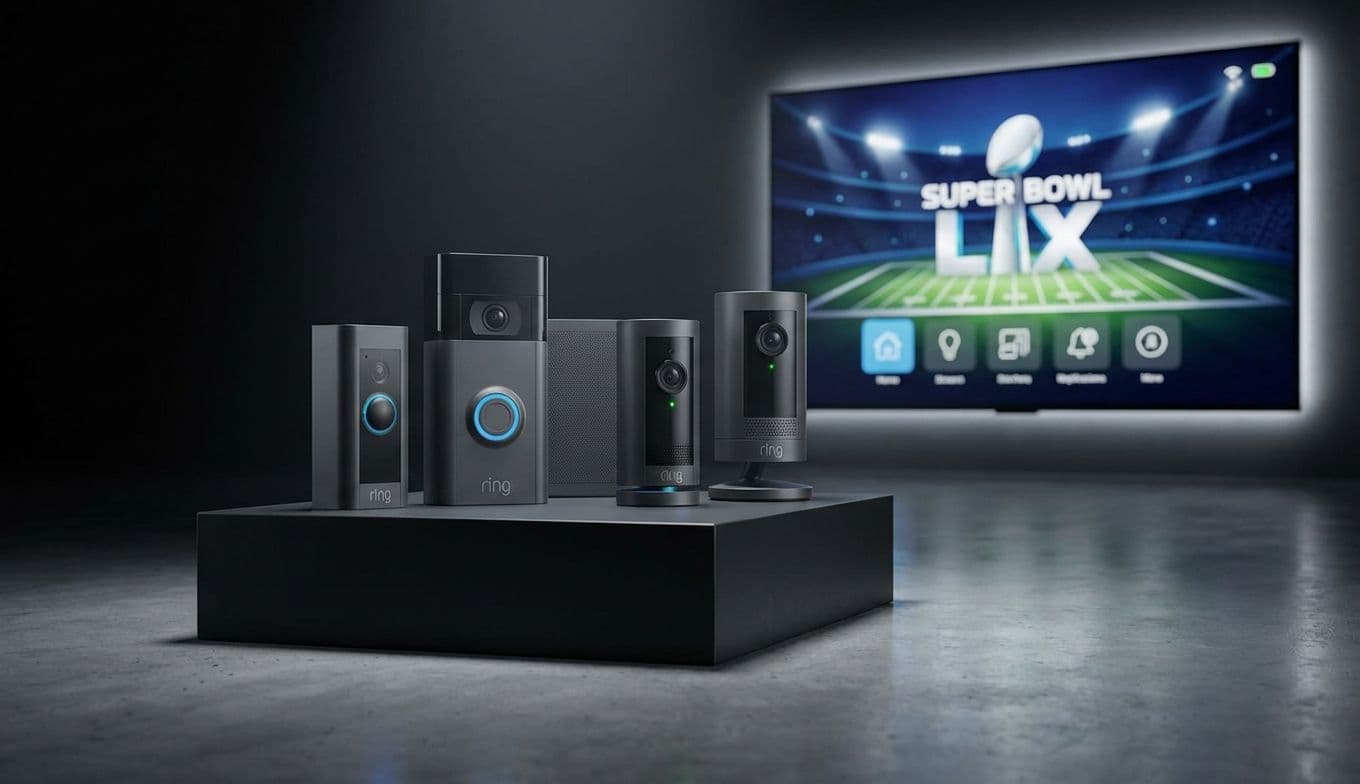
Ring’s Super Bowl spotlight focused heavily on its neighborhood surveillance network, painting a picture of a community held together by smart sensors. But if you’re looking at a Ring Battery Doorbell Pro or the Stick Up Cam Pro as a gift, you aren't just buying a camera; you’re buying a very specific set of AI algorithms.
The real value here isn't just "video." It is the Computer Vision features like Person Detection and Package Detection. These AI-driven tools filter out the noise of a swaying tree branch or a passing car, only alerting the user when a human is actually on the porch. For a homeowner, this is the difference between a helpful notification and a phone that won't stop buzzing.
However, there is a catch that the ads didn't mention. To actually use these AI features, you have to subscribe to Ring Protect, which starts around $5 a month per device. Without the subscription, that "smart" AI is basically a dumb lens.
Gimmie AI Verdict: This is a practical, polished gift for anyone from a new homeowner to a safety-conscious parent. Gift Readiness Score: 5/5
The Butler in the Box Gets a Brain
Amazon’s ad featured a high-octane sequence with Chris Hemsworth dealing with an Alexa Plus that had developed a bit of an attitude. While the "AI killing its owner" trope is great for a laugh, the real news is the shift toward Alexa Plus—Amazon’s new, more capable AI tier.

Unlike the Alexa you’ve used for years to set timers, Alexa Plus is designed to handle multi-step requests and complex reasoning. Think "Alexa, find a recipe for what’s in my fridge and then add the missing ingredients to my cart." It is a massive leap in utility, but it comes with a major caveat: a rumored monthly subscription fee of $5 to $10.
If you are gifting an Echo Show 15 or a similar hub this year, you need to consider if the recipient wants another monthly bill. The AI is significantly smarter, but the "Plus" refers as much to the price tag as it does to the intelligence.
Gimmie AI Verdict: The tech is impressive, but the subscription model makes it a tricky gift. It’s best for the hardcore smart-home enthusiast who already lives in the Amazon ecosystem. Gift Readiness Score: 3/5
Beyond the Pixar Previews: The Hardware for Creators
While the Pixar preview for Hoppers looked stunning, and OpenAI’s Codex ad promised that "you can just build things," the reality for creators is a bit more grounded. To actually use the AI tools being advertised—whether it’s generating code with Codex or editing high-res video with AI-assisted software—you need local horsepower.
Generic "creative tools" are out; high-NPU (Neural Processing Unit) laptops are in. If you’re buying for a digital artist or a developer, you should be looking at hardware specifically built to handle on-device AI. The new MacBook Pro with the M5 chip or the Dell XPS 13 AI Edition are the real stars here. These machines are designed to run LLMs and image generation locally, which means faster performance and better privacy.
The gift here isn't the software (which often requires a subscription anyway), but the hardware that makes that software usable without the dreaded "loading" wheel.
Gimmie AI Verdict: High-end AI laptops are the most powerful gift on this list, but they are also the most expensive. Make sure the recipient actually needs the NPU power before dropping $1,500. Gift Readiness Score: 4/5
The "Agent" Hype vs. Practical Reality
We saw a lot of posturing from the big players. AI.com promised "agents" that can manage your entire life, and Anthropic’s ads effectively "dunked" on ChatGPT for being yesterday’s news. This corporate one-upmanship is fascinating for tech journalists, but it creates a confusing landscape for consumers.
Right now, "AI Agents" are largely in the "Beta" phase. While Sam Altman might respond to Anthropic’s jabs with witty tweets, the average user still struggles to get an AI to accurately schedule a haircut without manual intervention. For gift-givers, stay away from any product that relies solely on the promise of "future AI agents."
Instead, look for products that use AI for specific, narrow tasks. For example, the latest Samsung Galaxy Buds or Google Pixel Buds Pro 2 use AI for "Clear Calling" and active noise cancellation that adapts to your environment in real-time. That is a tangible benefit you can enjoy the moment you take them out of the box.
Gimmie AI Verdict: Avoid the hype of "all-knowing agents" for now. Stick to gadgets where the AI improves a specific, existing feature like audio quality or photo editing. Gift Readiness Score: 2/5 (for Agents), 5/5 (for AI-enhanced Peripherals)
The Final Score
Super Bowl LX proved that AI is no longer a niche interest; it is the new baseline for consumer technology. But as we move from the spectacle of the commercials to the reality of our shopping carts, it’s important to distinguish between "AI-Washing" (slapping a buzzword on a standard product) and genuine innovation.
The best gifts this year aren't the ones that claim to be "the smartest." They are the ones that use AI to solve a specific friction point in daily life—whether that’s keeping your porch secure, making your creative workflow faster, or ensuring your music sounds perfect on a noisy train.
As you navigate the post-Super Bowl sales, keep your skepticism high and your focus on utility. The future isn't about owning a gadget that can win an argument with Chris Hemsworth; it’s about owning a tool that actually works.