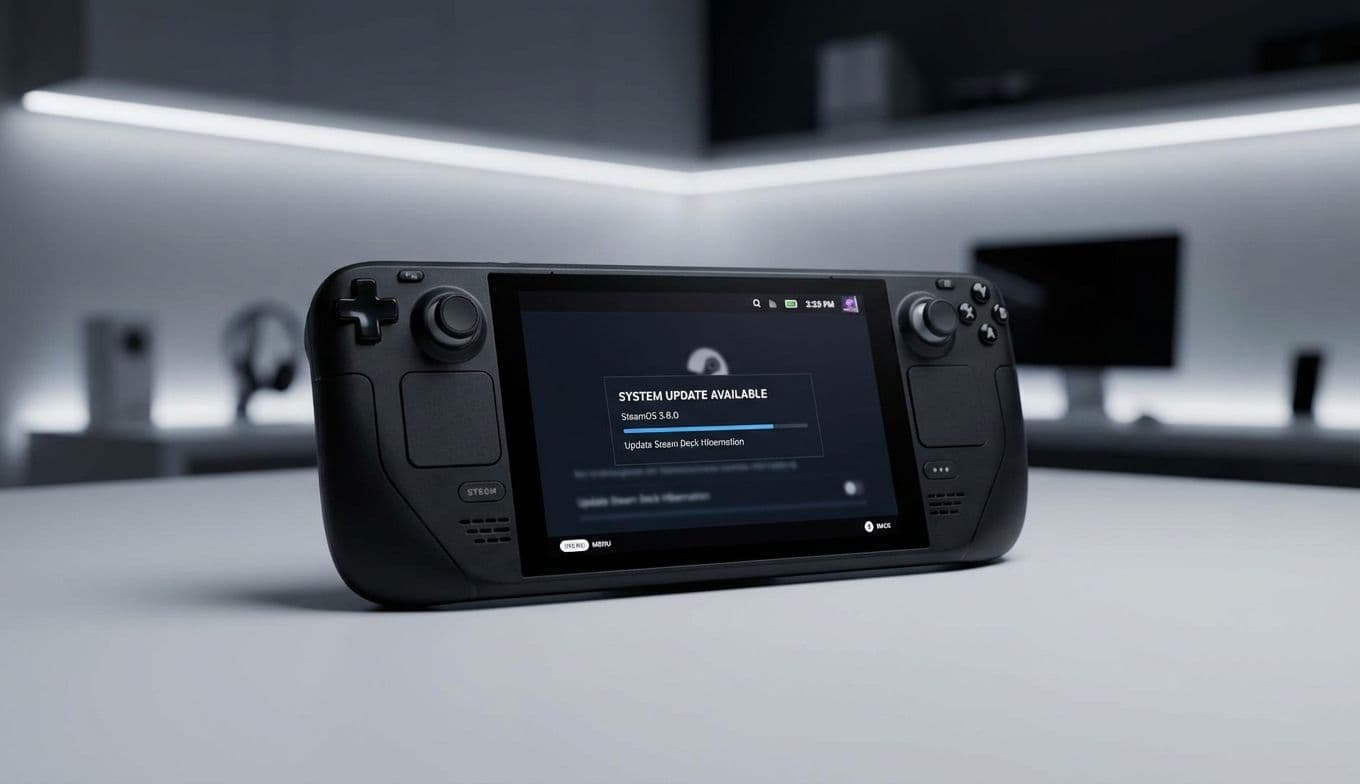
SteamOS 3.8.0 Update: Steam Deck Hibernation & ROG Ally Support

SteamOS 3.8.0 Update: Steam Deck Hibernation & ROG Ally Support

Team GimmieTeam Gimmie
Published on March 20, 2026

The Battery Anxiety Cure: Why Valve’s Latest Update Changes Everything for Handheld Gamers

There is a specific kind of heartbreak known only to the handheld gamer. You finally find twenty minutes of peace, you grab your device from the nightstand, and you press the power button—only to find a black screen and a dead battery. Even in sleep mode, these pocket-sized PCs have historically sipped power until there was nothing left. It turns your "portable" console into a device that is permanently tethered to a six-foot charging cable.

Valve’s latest update, SteamOS 3.8.0, isn’t just a list of technical fixes; it’s an assault on that specific frustration. By introducing genuine hibernation and better support for a massive range of third-party hardware, Valve is signaling that the era of the "fiddly" handheld PC is ending. Whether you are holding an original Steam Deck or looking at a high-end competitor like the ROG Ally, the rules of the game just changed.

The LCD Steam Deck is Officially the Best Budget Gift in Tech

For the last year, the tech world has been obsessed with the Steam Deck OLED. It’s flashier, faster, and has a better screen. But Valve just gave the original LCD model a massive shot in the arm that makes it the smartest "value" purchase on the market right now.

The headline feature is "memory power down" and true hibernation. To understand why this matters, you have to understand the difference between sleep and hibernation. Until now, "sleeping" your Steam Deck was like leaving your car idling in the driveway—it was ready to go instantly, but it was still burning fuel. Hibernation is different. It saves your exact game state to the internal drive and shuts the power off completely.

Buyer Tip: If you are looking for a gift for a student or a casual gamer who might not play every single day, the LCD Steam Deck is now a powerhouse. You can leave a game paused, throw the device in a backpack for three days, and pick it up with the exact same battery percentage you left it with. It turns the "budget" model into the most reliable travel companion in the lineup.

Making Competitor Handhelds a Safer Bet

Until recently, buying a handheld PC that wasn't made by Valve felt like a gamble. Devices like the ASUS ROG Ally or the Lenovo Legion Go have incredible screens and more raw power than the Steam Deck, but they run on Windows. And frankly, Windows is a nightmare to navigate on a seven-inch touchscreen with joysticks. It’s clunky, the updates are intrusive, and the battery management is often abysmal.

SteamOS 3.8.0 changes the calculus for gift-givers. Valve is aggressively expanding support for the Xbox Ally series, the Legion Go 2, and even niche powerhouses like the OneXPlayer X1 and Zotac’s hardware.

This update effectively bridges the gap between Valve’s superior software and the competitors' superior hardware. It makes the ROG Ally a "safer" gift because the recipient isn't stuck with a frustrating Windows interface anymore. They can now potentially enjoy the slick, console-like experience of SteamOS on a device with a 1080p, 120Hz screen. Valve is essentially saying: "Buy the hardware you like; we’ll provide the brain that makes it work."

The Return of the Steam Machine: Rescuing the Living Room PC

For those who have a PC tucked behind their TV, you know the struggle. You want to play a quick round of a racing game, but first, you have to find the wireless mouse, squint at the tiny desktop icons to launch Steam, and hope a Windows update doesn't pop up mid-race. It’s the opposite of the seamless experience you get with a PlayStation or Xbox.

Valve’s confirmation of support for the upcoming Steam Machine in this update is a massive nod to the "couch PC" crowd. We aren't just talking about a small PC; we are talking about a dedicated gaming appliance. Imagine a box that is as quiet and small as a console but has access to your entire Steam library, with an interface designed specifically for a controller.

This is the "Show, Don't Tell" moment for Valve’s ecosystem. A new Steam Machine would replace the clunky, overheating tower in your living room with something that "just works." For the parent who wants to play PC games with their kids on the big screen without acting as a full-time IT administrator, this is the development to watch.

Who Should Pull the Trigger Now?

If you’ve been sitting on the fence about joining the handheld revolution, this update clarifies the path forward based on what kind of gamer you are:

The Practical Traveler: Stick with the Steam Deck LCD. The new hibernation features mean you don't have to worry about your battery bailing on you during a long flight or a weekend trip. It is the most reliable "pick up and play" experience for the price.

The Power Hungry: Look at the ROG Ally or Lenovo Legion Go. Now that Valve is officially supporting these devices with SteamOS updates, you can buy them for their beautiful screens and faster processors without fearing the "Windows tax" on your sanity.

The Console Convert: Wait for the Steam Machine. If you love the idea of PC gaming but hate the idea of sitting at a desk or troubleshooting drivers, the upcoming living room hardware will be your sweet spot.

The Bottom Line

Valve isn't just trying to sell more Steam Decks; they are trying to fix the fundamental annoyances of PC gaming. By tackling battery drain and opening their software to competitors, they are making the entire category more accessible.

Handheld gaming used to come with a list of "ifs" and "buts." It was great, if you remembered to charge it. It was powerful, but the software was a mess. With SteamOS 3.8.0, those caveats are disappearing. The ecosystem is growing up, and for the first time, the "PC in your pocket" feels less like an experiment and more like a finished product.