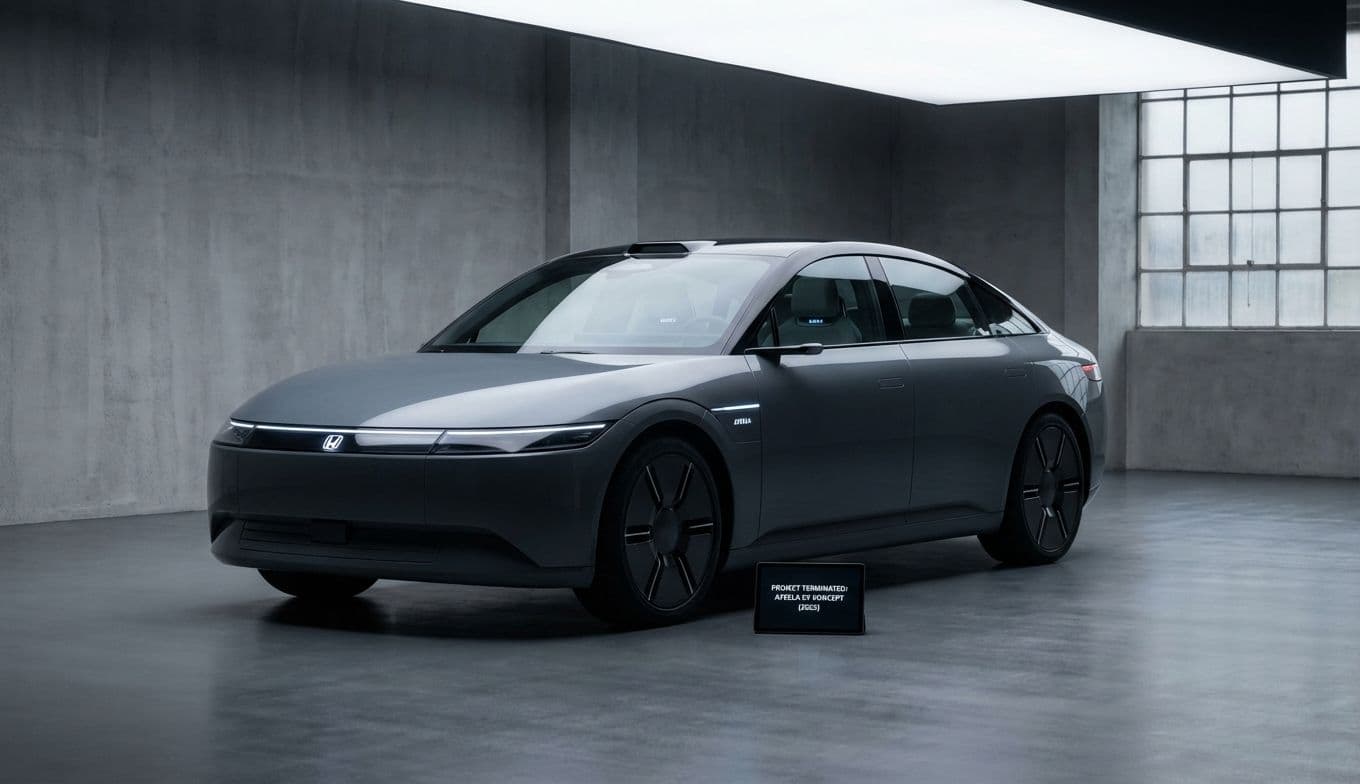
Sony Honda Afeela EV Cancelled: Why the $90K Dream Died
Team GimmieThe Walkman of Cars Has Walked Away
The Walkman of cars has officially walked away. Sony and Honda’s joint venture, Afeela, was supposed to be the ultimate mashup of high-end entertainment and legendary engineering—a "moving living room" that would redefine the road. Instead, it has become a 90,000 dollar cautionary tale. By pulling the plug on their electric sedan and SUV concepts, these two giants have admitted what many in the industry were afraid to say out loud: the car of the future doesn't matter if nobody can afford to drive it into the present.
For those who were holding their breath for a vehicle that blended PlayStation-level graphics with Honda's reliability, the dream is over before the first production model even hit the pavement. The reason behind the cancellation is a simple, brutal business calculation. Sony and Honda realized there was no viable path forward for a luxury EV that prioritized "digital experiences" over basic economic reality. It turns out, consumers aren't quite ready to pay a massive premium for a car just because it has a high-refresh-rate screen in the dashboard.
The $15 Billion Reality Check
Let’s be blunt: the EV hype train has hit more than a few speed bumps. What was once a runaway locomotive fueled by environmental promises and technological optimism has slowed to a crawl. Consumers are proving to be far more practical than manufacturers gave them credit for. The sticker shock of high-end EVs, coupled with a charging infrastructure that still feels like a work in progress, means that mass adoption is happening on a much more grounded timeline.
Honda is feeling the weight of this shift more than most. The company is currently bracing for a massive write-down—potentially as much as 15.7 billion dollars—on its electric investments. This represents the first annual loss for Honda in over 70 years as a public company. When a titan of the industry faces financial headwinds of this magnitude, it’s a clear signal that the market isn't just "cooling off"—it's maturing.
The Afeela was built on the premise of high-margin luxury, but the modern buyer is looking for value, practicality, and a clear benefit over gasoline. A 90,000 dollar price tag simply doesn't align with the current economic landscape. We are entering an era where "flashy" is losing out to "functional."

Sensible EVs: Where the Real Value Lives
The demise of the Afeela moonshot doesn't mean the electric dream is dead. It just means the focus is shifting toward vehicles that actually make sense for a Tuesday morning commute. If you are in the market for an EV—or looking to give the gift of sustainable transport—the best moves right now are the ones that prioritize stability over spectacle.
For the Practical Parent: The Kia EV6 and the Hyundai Ioniq 5 are the current gold standards for sensible innovation. They offer excellent range and incredibly fast charging speeds without the six-figure price tag. Both models have built a solid reputation for reliability, which is a far better "feature" than a built-in gaming console when you’re trying to get the kids to soccer practice.
For the Tech-Savvy Commuter: While it’s no longer the only game in town, the Tesla Model 3 remains a solid choice for those who value software integration and a proven charging network. However, the competition is closing the gap fast, and the interior's minimalism is increasingly being matched by more traditional luxury brands.
For the Eco-Conscious Traditionalist: The Ford Mustang Mach-E offers a familiar SUV form factor with electric power. It’s a perfect example of a "transitional" vehicle—it feels like a real car, looks like a classic, and delivers a driving experience that doesn't require a computer science degree to operate.
These vehicles are winning because they aren't trying to be "smartphones on wheels." They are trying to be great cars that happen to be electric.
Entertainment Without the Wheels
The Afeela was marketed as a mobile entertainment hub. While that specific car is gone, the tech it promised—stunning visuals, immersive audio, and seamless connectivity—is very much available in products that don't require a garage. If you were attracted to the Afeela’s "tech-first" philosophy, you can find that same level of innovation in entertainment-adjacent gifts that offer much better value for your money.
If you want world-class audio, skip the car speakers and look at the Sony WH-1000XM5 noise-canceling headphones. Ironically, Sony is still the king of audio when they aren't trying to build a chassis around it. They offer a tangible, immediate benefit for travelers and remote workers alike.
For the ultimate visual experience, the LG C3 OLED TV provides the kind of high-end display tech that Afeela promised for its dashboard. It delivers perfect blacks and stunning contrast that makes movies and gaming look better than any car screen ever could.
And if it’s the "gaming on the go" aspect that caught your eye, the Steam Deck OLED is the gold standard. It’s a portable powerhouse that allows for high-fidelity gaming anywhere, without the 90,000 dollar overhead of a luxury sedan. These products represent the "sensible tech" movement: high performance, proven reliability, and a clear purpose.
The Gimmie Guide to Buying Tech
As the industry shifts away from experimental moonshots, how do you tell the difference between a revolutionary product and a total dud? Use this checklist before making your next big tech purchase or gift:
-
The Ecosystem Test: Does the product play well with what you already own, or does it require a completely new set of proprietary cables and subscriptions?
-
The Service Factor: Can you get this fixed in your zip code? One reason the Afeela felt risky was the lack of a dedicated service network. Stick to brands with established footprints.
-
Software vs. Hardware: Is the product "coming soon" with features via a future software update? Never buy a product based on a promise. Buy it for what it can do today.
-
The Three-Year Rule: Will this technology be obsolete in 36 months? High-quality audio and display tech tend to have longer lifespans than experimental "smart" gadgets.
The Afeela’s demise is a stark reminder that innovation needs to be coupled with affordability and practicality. We should applaud the ambition of Sony and Honda, but as consumers, we must demand substance. The electric car isn't going anywhere, but the era of the overpriced, over-hyped tech experiment is finally coming to an end. That’s not just good for the industry—it’s great for your wallet.