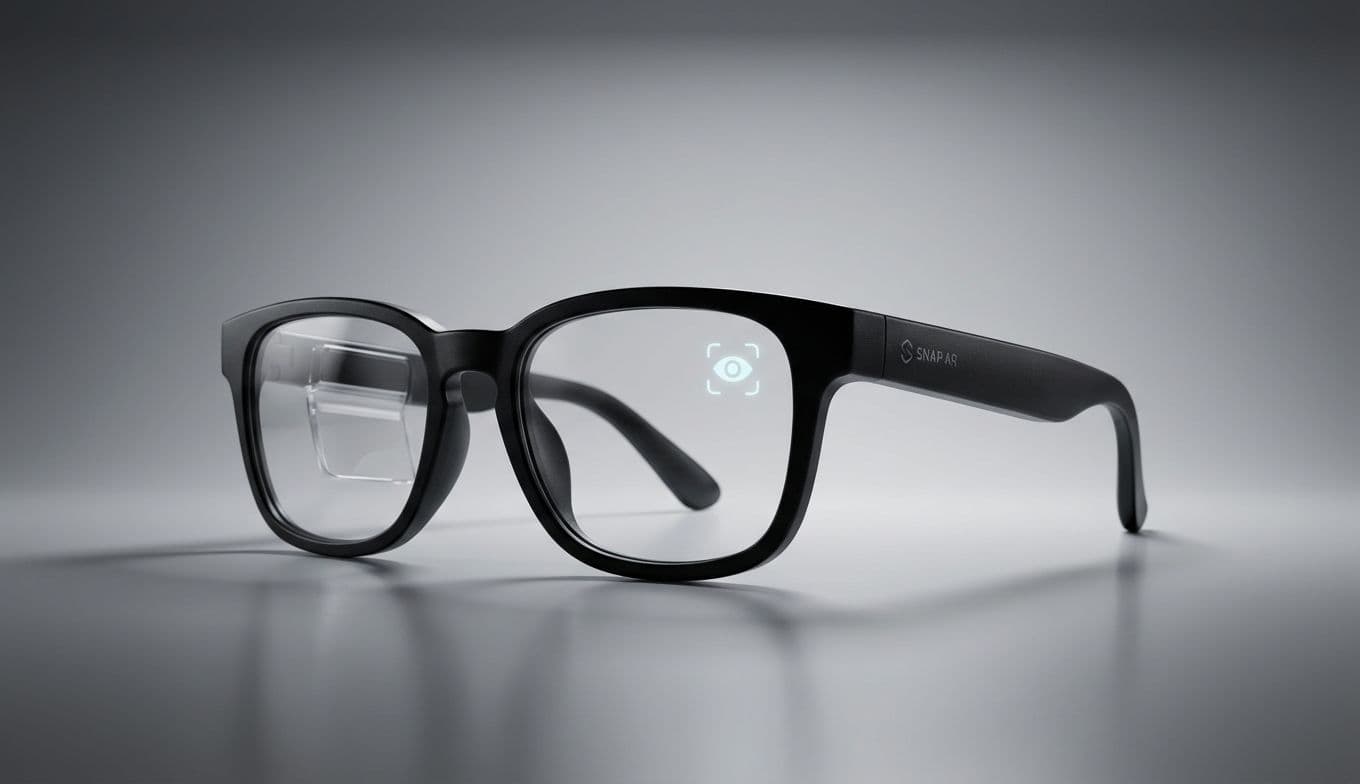
Snap AR Glasses: Are Qualcomm-Powered Specs Worth Buying?
Team GimmieSnap's AR Glasses: A Glimmer of the Future, But Is It Ready for Your Holiday Wishlist?
It is a familiar story in the tech world: a company with big, futuristic dreams announces another step toward making those dreams a reality. This time, it is Snap, the social media company behind the augmented reality (AR) lenses that have graced our selfies for years. They have just inked a new multi-year deal with Qualcomm, meaning their next generation of consumer AR glasses will be powered by Qualcomm’s Snapdragon XR chips.
This sounds exciting, and on the surface, it is a promising development for the elusive world of AR. But as someone who has tested more gadgets than I care to admit, I am approaching this with a healthy dose of skepticism. For the discerning consumer and the potential gift-giver, the question is not whether the technology is cool—it is whether it is actually ready for the real world. Let’s break down what this means for you.
The Snap and Qualcomm Marriage
Snap has been dabbling in AR glasses for a decade, evolving from the original Spectacles—which were essentially just a camera on your face—to sophisticated devices that overlay digital information onto the physical world. The big news here is the shift toward the general consumer. Previous AR-capable versions were locked away for developers and select creators. By partnering with Qualcomm, Snap is signaling that they are finally ready to try and put these on the faces of everyday people.
However, a strategic agreement is not a finished product. We still do not have a launch date, a confirmed price, or a battery life estimate that does not sound like wishful thinking. While Snap is leaning on a proven player in the chip space, bringing high-end AR into a pair of glasses that people actually want to wear in public is a massive hurdle.
Snap-Style AR: Moving Beyond the Gimmick
When most people talk about AR, they use generic examples like seeing the history of a building or a floating recipe. But Snap’s vision is much more personal and, frankly, weirder. Their advantage lies in the ecosystem they have already built.
Instead of looking at a historical landmark, imagine your friend’s Bitmoji sitting on your actual living room sofa, reacting to your conversation. Think about playing an interactive game where digital creatures hide behind your real furniture, or wearing a virtual outfit that only people with the glasses can see. Snap has spent years perfecting these "Lenses." Their AR is about social connection and play, not just productivity.

For these glasses to work, they need to make these digital overlays feel solid and stable in your environment. They also need to do it without making you look like you are wearing a piece of scuba gear. That is where the Qualcomm silicon comes in—it provides the horsepower to render these complex visuals without the glasses overheating on your temples.
Risk vs. Reward: Is the Recipient Ready?
If you are considering these as a gift for the upcoming holiday season (assuming they hit the shelves in time), you need to categorize your recipient. Not everyone is built for the "bleeding edge" of technology.
The Early Adopter (The Tech Pioneer) Reward: They get to be the first person in their circle to see the future. They will love the novelty of seeing Bitmojis in 3D and testing new lenses before anyone else. Risk: They will likely deal with short battery life, software bugs, and a limited number of apps. They are essentially paying to be a beta tester.
The Style Icon (The Fashion-First User) Reward: If Snap nails the design, these could be the ultimate conversation starter. Risk: Tech-heavy glasses are notoriously bulky. If they do not look as good as a pair of Wayfarers, they will end up in a drawer after two weeks.
The Practical User (The Pragmatist) Reward: Minimal. Risk: High. This user wants things that "just work." AR glasses at this stage require patience and a willingness to troubleshoot. For this person, wait for version 3.0.
What to Buy Instead: The Smart Glasses You Can Gift Today
If you need a gift right now and cannot wait for Snap to finalize their roadmap, the market has finally matured enough to offer some real alternatives. You do not have to wait for a "maybe" when there are "definitelys" on the shelf.
Ray-Ban Meta Smart Glasses If your recipient wants something stylish that enhances their social media life, this is the current gold standard. They do not have an AR screen, but they have an incredible camera for POV videos and built-in AI that can "see" what you are looking at and answer questions via audio. They look like regular glasses and they are actually useful for everyday life.
Xreal Air 2 If your recipient is a gamer or a movie buff, these are a different beast. They are "spatial display" glasses. You plug them into a phone, laptop, or Steam Deck, and they project a massive, high-definition screen in front of your eyes. It is not "social AR" like Snap’s vision, but it is a polished, functional way to use AR tech for entertainment today.
The Verdict: Hold Your Horses
My advice? Manage your expectations. While the partnership between Snap and Qualcomm is a positive sign, it is probably too early to place these on your holiday shopping list for anyone other than the most dedicated enthusiast.
We need to see a concrete product, a clear price point, and—most importantly—evidence that these glasses can last more than an hour on a single charge. True innovation in consumer AR is still a work in progress. For now, keep an eye on the news, but keep your receipt for the Ray-Bans. The future is coming, but it might not be ready to wrap in a bow just yet.