Second Mover Advantage: Why Version 2.0 Tech Wins (Nuro & More)
Team GimmieThe Curse of the Pioneer: Why Version 2.0 Is the Real Winner
Remember the Pebble smartwatch? If you were an early adopter back in 2012, you probably loved that quirky, e-paper wearable. It was a pioneer, the first to prove that we actually wanted notifications on our wrists. But being first didn’t save it. While Pebble was busy figuring out the basics of battery life and screen visibility, Apple was watching. When the Apple Watch finally arrived, it wasn’t just a new gadget; it was a refined ecosystem that learned from every stumble Pebble made. Today, Pebble is a piece of tech history, and the Apple Watch is on millions of wrists.
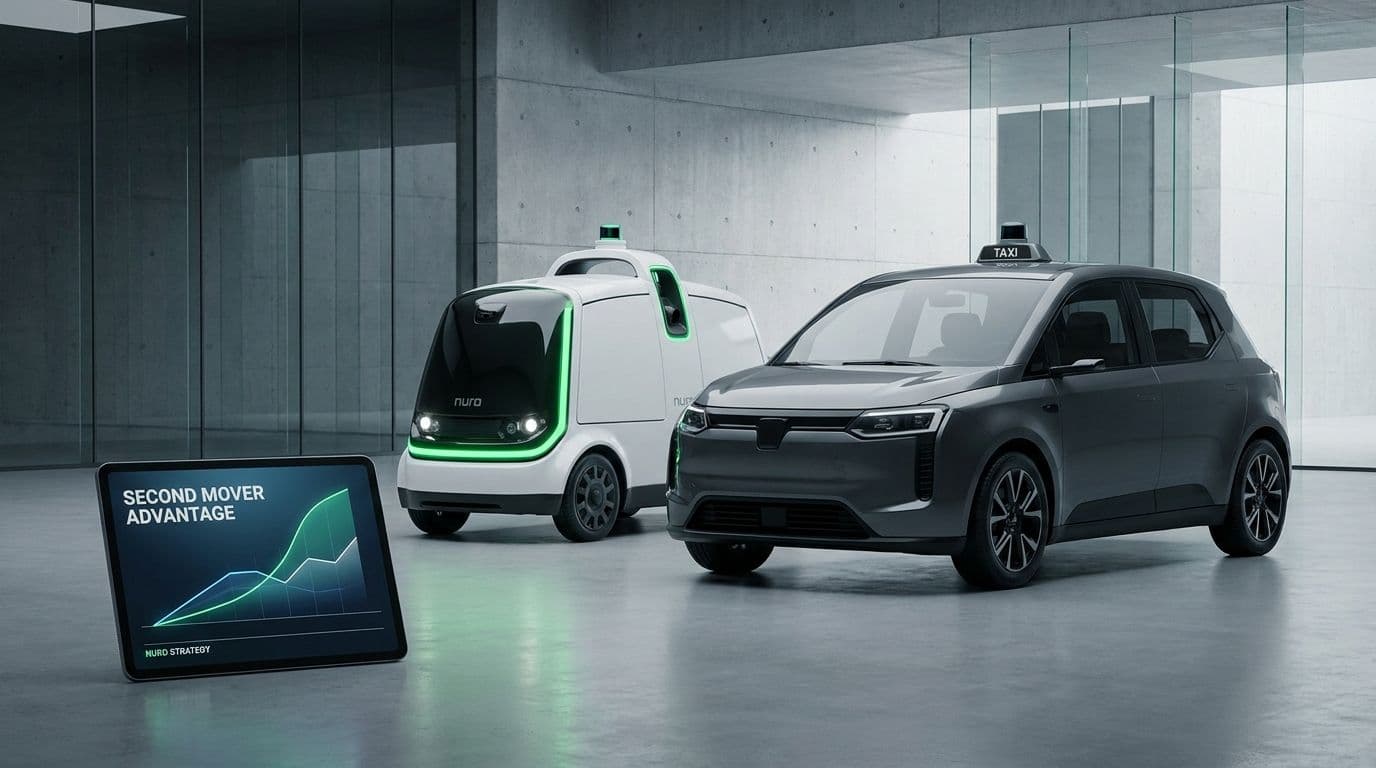
There’s a lesson here that goes beyond Silicon Valley history books. It’s a concept called the "second mover advantage," and it’s currently being played out in the high-stakes world of robotaxis. While Waymo—owned by Alphabet—is the undisputed pioneer with thousands of cars already on the road, a company called Nuro is making a very different bet. Nuro isn't trying to be the first to the finish line; they’re trying to be the one that actually builds a sustainable, refined business by letting the first movers clear the path.
Nuro’s Strategic Patience
Nuro was founded by veterans of Google’s self-driving project, so they know exactly how hard it is to be the pioneer. For years, they focused on small, sidewalk-friendly delivery bots. But recently, they made a massive pivot toward robotaxis. However, they aren’t doing it the "pioneer way" by building everything from scratch and fighting every regulatory battle alone.
Instead, Nuro is playing it smart. They’ve struck deals with Uber and Lucid—two companies that have already perfected the parts of the puzzle Nuro doesn't want to reinvent. Lucid provides the high-end electric vehicle platform, and Uber provides the massive network of riders. Nuro just provides the "brain." By being the second mover, they can skip the experimental phase and move straight to a polished, scalable service. They aren't the ones getting stuck in wet cement or blocking emergency vehicles in early-access cities; they are the ones taking notes so their eventually-launched service avoids those exact headlines.
Why the "Second Mover" Is a Gift-Giving Superpower

As consumers, we are often told that "newest is best." But as a product reviewer, I’ve seen that the opposite is often true, especially when it comes to high-end tech gifts. The second-mover strategy is actually the ultimate buyer’s philosophy for anyone who wants their money to go toward something that actually works, rather than something that just sounds cool in a press release.
Take drones, for example. If you were looking for a high-end tech gift a few years ago, you might have been tempted by the first wave of specialized "follow-me" drones from startups. They were exciting, but they were also notoriously buggy, prone to signal loss, and difficult to repair.
Compare that to gifting a DJI Mini 4 Pro today. DJI wasn't the first company to put a camera on a quadcopter, but they are the ultimate second mover. They watched the pioneers struggle with flight stability and battery life, and they spent years refining the tech. When you gift a Mini 4 Pro, you aren’t giving someone a "project"—you’re giving them a perfected experience. It’s reliable, the software is mature, and the safety features are so advanced that it’s almost impossible to crash. That’s the "Version 2.0" advantage in action.
The Peace of Mind Factor
There is a certain "guinea pig" tax that comes with buying the first generation of any technology—whether it's a folding smartphone, a new VR headset, or a robotaxi service. When you are the first, you are essentially paying for the privilege of being a beta tester.
For Nuro, the decision to wait and learn is about safety and public trust. Every time a first-mover robotaxi has a weird glitch or gets stuck in traffic, the public’s skepticism grows. Nuro’s strategy allows them to enter the market when the technology has matured and the "weirdness" has been ironed out.
As a consumer, you can apply this same logic to your own life. Think about the peace of mind you feel when you buy a product that has thousands of five-star reviews and has been through three or four hardware iterations. You aren’t worried about the hinge breaking or the software crashing because the company has already learned from the mistakes of their earlier models—and the mistakes of their competitors. This "vetted" quality is what makes for a truly great gift. It’s the difference between a gift that someone plays with once and puts in a drawer, and a gift that becomes part of their daily life.
The Takeaway for Givers: The Second-Mover Heuristic
If you are looking at a big-ticket tech item for a graduation, a wedding, or a major birthday, don't just look for the "world's first." Instead, run the product through this quick mental checklist:
-
The Three-Year Rule: Has this category of product been on the market for at least three years? That’s usually how long it takes for the manufacturing kinks to get worked out.
-
The Refinement Check: Is this a "Version 2" or "Version 3"? Most tech hits its "sweet spot" in the second or third generation (think iPhone 4 or the second-gen Bose noise-canceling headphones).
-
The Infrastructure Test: Like Nuro using Uber’s network, does this product work seamlessly with things the recipient already owns? A smart home device that only works with its own proprietary app is a "pioneer" problem; a device that works with everything else is a "second mover" solution.
The Long Game
Nuro’s move into the robotaxi space is a reminder that in the world of technology, speed isn't everything. Their goal to deploy tens of thousands of vehicles across the US is ambitious, but it’s an ambition built on a foundation of observation and partnership rather than just raw ego.
For those of us watching from the sidelines—and those of us deciding where to spend our hard-earned money—it’s a valuable lesson. Innovation is vital, but refinement is what actually makes technology useful for the rest of us. Whether you’re waiting for a robotaxi to pick you up or you’re picking out a high-end e-bike for a loved one, remember: the path less boldly blazed at the very beginning often ends up being the most reliable road home.