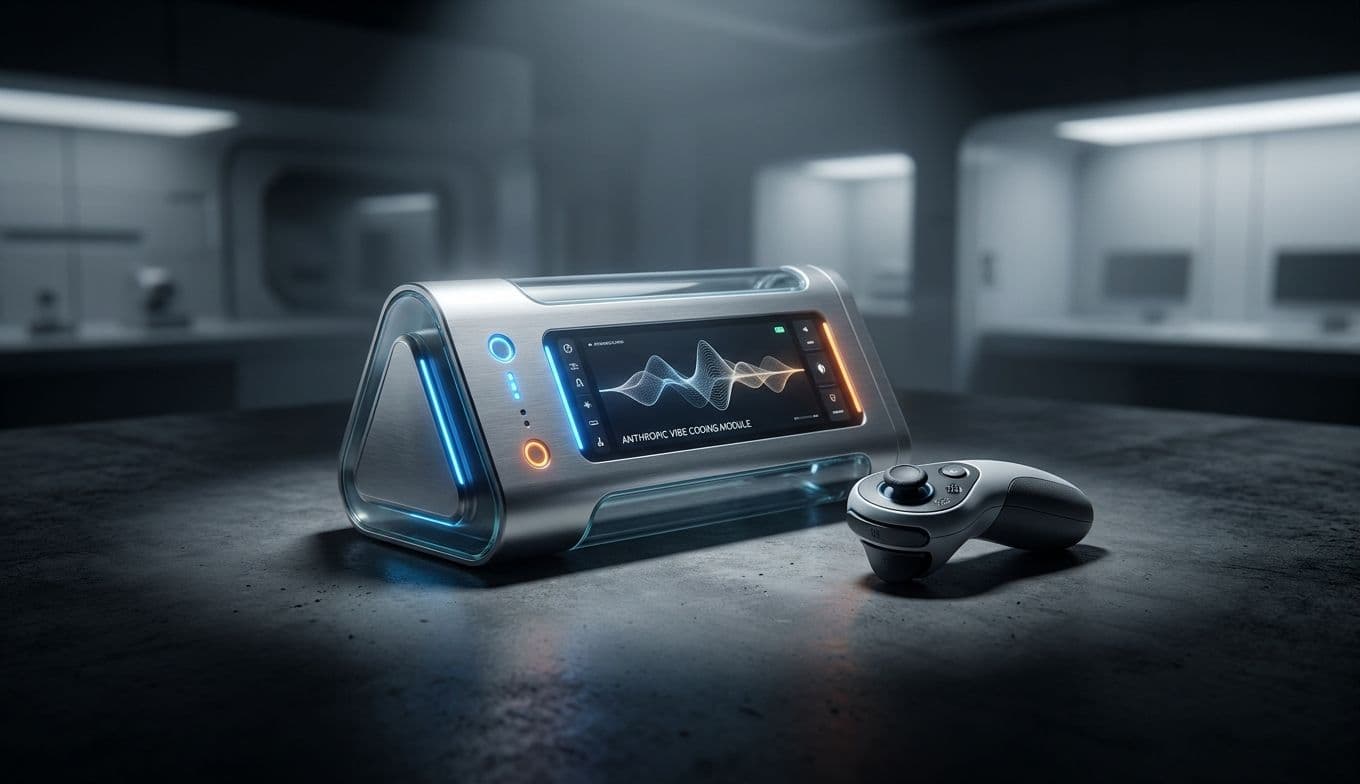
Schematik & Vibe Coding: The Future of Hardware Making
Team GimmieSCHEMATIK: MASTERING VIBE CODING AND THE GIFT OF UNLIMITED POTENTIAL
Remember the first time you asked an AI to write a snippet of code and it actually worked? It felt like a superpower. You didn't need to memorize every library or sweat over a missing bracket; you just needed a vision. We call this vibe coding, and it has already transformed how we build software. But for those of us who want to build things we can actually touch—robots, smart home gadgets, or custom wearable tech—the experience has remained stuck in the dark ages.
Building hardware has traditionally required a punishing mix of electrical engineering and low-level programming. You’d spend forty hours wrestling with C++ just to get a servo motor to twitch. That code wall has kept millions of creative people on the sidelines.
Enter Schematik. Hailed as the Cursor for hardware, Schematik is a platform designed to let you vibe code the physical world. It’s the bridge between a digital idea and a functioning machine, and it’s about to change everything for the maker community.
BEYOND THE SCREEN: WHY VIBE CODING IS THE FUTURE OF MAKING
The core problem with hardware has always been the friction. If you want to build a smart bird feeder that identifies species, you need to handle camera drivers, image processing, and motor control logic. Usually, that’s where the fun dies and the debugging begins.
Schematik treats hardware components like digital building blocks. Instead of writing lines of code to define a pinout on a Raspberry Pi 5, you interact with a visual interface that understands the intent. It’s intuitive, fast, and surprisingly powerful. By removing the syntax friction, it allows the creator to focus on the innovation rather than the plumbing.
This isn't just about making things easier; it’s about making them possible for a new demographic. Designers, hobbyists, and weekend tinkerers can now build complex systems that previously required a dedicated engineering team. We are moving from a world of How do I write this? to a world of What do I want to create?
ANTHROPIC AND THE QUEST FOR A PHYSICAL BODY
The tech world recently stood up and took notice when reports surfaced that Anthropic—the AI powerhouse behind Claude—is showing a serious interest in Schematik. Why would an AI company care about a hardware interface? Because AI is currently a brain without a body.

Right now, Claude can tell you how to fix a leaky faucet, but it can’t actually reach out and tighten a bolt. By integrating with a platform like Schematik, AI models can finally step out of the screen. Imagine an AI that doesn't just suggest a recipe but actually talks to your kitchen sensors to see which ingredients are nearing their expiration date and adjusts the oven temperature accordingly.
This democratization of the physical interface is the missing link for the next generation of smart tech. When AI can vibe code its own physical environment, the ceiling for what we call home automation disappears. We’re moving away from rigid If This Then That rules and toward systems that can observe, reason, and act in real-time.
BUILDING THE ULTIMATE MAKER STACK
If you are looking to get into this world—or looking for the perfect gift for someone who is—you need to understand the hardware stack that powers this revolution. You can’t buy Schematik in a box yet, but you can definitely gift the ingredients that make the magic happen.
The Brains: Raspberry Pi 5 and ESP32 Every project needs a commander. For high-level tasks like computer vision or AI processing, the Raspberry Pi 5 is the gold standard. It’s powerful enough to run local models and has the connectivity to handle complex peripherals. For smaller, battery-powered projects like smart jewelry or remote sensors, the ESP32 is the king. It’s cheap, tiny, and has built-in Wi-Fi and Bluetooth. These are the primary targets for Schematik’s visual programming.
The Senses: Sensor Modules Hardware needs to feel the world around it. To get the most out of a vibe coding setup, a maker needs a library of sensors. Look for 37-in-1 sensor kits. These usually include everything from ultrasonic distance sensors (eyes) and microphones (ears) to pressure sensors (touch) and gyroscopes. With Schematik, a maker can connect these sensors to a logic flow as easily as dragging an icon.
The Muscles: Actuator Kits Action is what makes hardware exciting. This means motors. Look for robotics starter kits that include servos and stepper motors. These are the muscles that allow an AI-driven project to move, turn, and interact with the physical environment.
THE 2026 GIFT GUIDE FOR FUTURE INVENTORS
If you’re shopping for a maker, don’t just buy a finished gadget. Buy them the potential to build anything. Here is how to pick the right starter kit for the Schematik era.
For the Aspiring Roboticist: Look for the SunFounder or Freenove Robot Kits for Raspberry Pi 5. These kits are essentially a physical sandbox. They come with the chassis, the motors, and the camera modules. When paired with Schematik, the recipient can bypass the boring setup and start teaching the robot to navigate their living room or play fetch with a dog.
For the Smart Home Enthusiast: The CrowPi2 is a fantastic all-in-one laptop-style learning station. It houses a Raspberry Pi and a massive array of built-in sensors and buttons under the keyboard. It’s the ultimate playground for someone who wants to prototype smart home systems without a mess of tangled wires on their desk.
For the Budget-Conscious Tinkerer: An ESP32 Ultimate Starter Kit is the way to go. These are incredibly affordable—often under fifty dollars—and provide enough components to build dozens of different projects, from weather stations to automated plant waterers. It’s the perfect entry point for someone who wants to see if vibe coding hardware is for them.
THE ROAD AHEAD: MAKING IS HUMAN AGAIN
We are witnessing a shift in the definition of engineering. For decades, the barrier to entry was technical literacy—the ability to speak the machine's language. But as tools like Schematik and AI models from companies like Anthropic merge, the barrier to entry is becoming pure creativity.
Schematik represents a promise that the physical world is finally catching up to the digital one. It’s becoming more approachable, more visual, and ultimately, more human. Whether you're buying for a seasoned engineer who is tired of debugging or a child with a wild imagination, the era of vibe coding the physical world is officially here. The gift of unlimited potential isn't just a catchy phrase; it’s the reality of what happens when we stop fighting the tools and start building the future.