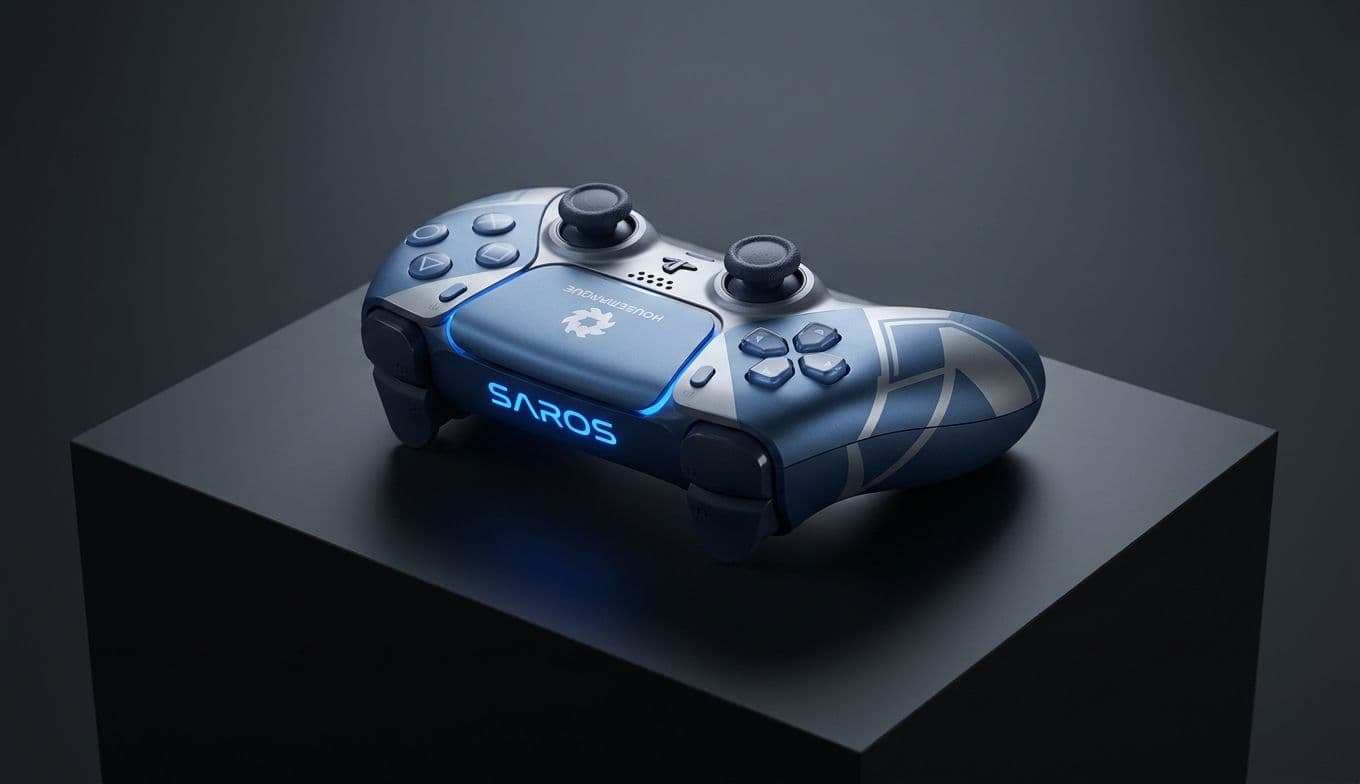
Saros PS5: Mastering DualSense Haptics & Adaptive Triggers

Saros PS5: Mastering DualSense Haptics & Adaptive Triggers

Team GimmieTeam Gimmie
Published on April 25, 2026

The Unfulfilled Promise of the DualSense

When the PlayStation 5 first arrived on the scene, the DualSense controller wasn't just an accessory; it was a mission statement. Between the adaptive triggers that fought back against your fingers and the haptic motors capable of mimicking the pitter-patter of rain, it felt like we had finally moved beyond the era of simple "rumble" packs. But in the years since, that revolution has felt more like a slow burn. Most developers have treated these features as charming extras—a little vibration here, a bit of resistance there—rather than core components of the experience. It was like owning a high-performance sports car and never taking it off a residential street.

That era of restraint is officially over. Saros, the latest title from Housemarque, is finally doing for the DualSense what the developers did for the PS5’s processing power with Returnal. They aren't just using the controller; they are weaponizing it. Saros moves past the "neat trick" phase of hardware and turns sensory feedback into a survival tool. It’s an uncompromising look at what happens when a developer stops treating a controller like a gamepad and starts treating it like an extension of the player’s nervous system.

Lessons from the Playroom: Elevating the Standard

To understand why Saros matters, we have to look back at the benchmark: Astro’s Playroom. Every PS5 owner has played it. It was a delightful, whimsical tech demo that showed us we could feel the difference between walking on sand and skating on ice. It was the perfect proof of concept. But for a long time, it remained the high-water mark for haptic implementation. Most big-budget sequels that followed opted for a "one size fits all" approach to vibration to ensure their games felt the same across all platforms.

Saros breaks that cycle. Where Astro’s Playroom used haptics for charm, Saros uses them for tension and immersion. This isn’t about feeling a cute robot’s footsteps; it’s about feeling the distinct, metallic grind of a machinery malfunction deep within your weapon. Housemarque has taken the foundational ideas from the PS5 launch and applied them to a dark, high-stakes atmosphere where the feedback you feel in your palms is just as important as what you see on the screen. It is the evolution from a tech demo to a masterclass in game design.

A Masterclass in Sensory Feedback: How Saros Feels

In Saros, the DualSense is no longer silent. The game leverages the 3D audio and haptics to create a bubble of situational awareness that makes a headset feel almost optional. When a projectile whizzes past your head, you don’t just hear it in the surround sound; you feel a localized ripple move across the controller from the top-left to the bottom-right. It’s a tactile map of the battlefield.

The adaptive triggers are where the game truly justifies its existence. Instead of a uniform pull for every gun, each piece of equipment has a physical personality. You’ll feel the heavy, notched resistance of a charging railgun, where the trigger clicks into place only when the shot is ready to be unleashed. If your weapon overheats, the trigger becomes stiff and unyielding, physically pushing back against your finger to signal that you’ve pushed the hardware too far. You aren't just looking at a UI bar on the screen to see your ammo; your hands tell you exactly what’s happening before your brain even processes the visual.

Then there is the grit. Saros excels at conveying environmental storytelling through touch. You can feel the granular hiss of a sandstorm as it ebbs and flows, or the rhythmic, low-frequency thrum of an alien monolith as you approach it. These aren't just random buzzes; they are nuanced, high-fidelity vibrations that have been tuned to specific frequencies. It’s the difference between a generic alarm and a finely tuned instrument.

The Gift-Giver’s Blueprint: Who Should Play Saros?

If you are looking at Saros as a potential gift, it’s important to know that this isn't a casual "pick up and play" experience for everyone. This is a game built for the enthusiast—the person who wants to see exactly what their $500 console is capable of doing. It’s a high-octane, atmospheric journey that rewards focus and precision.

To help you decide if this is the right choice for the gamer in your life, here is a quick-reference checklist for who will get the most out of Saros:

  • The Tech Early-Adopter: If they are the type of person who always wants the latest hardware and talks about "immersion," this is their holy grail. It is currently the best way to showcase the PS5’s unique tech.
  • Fans of Returnal: Since this comes from the same pedigree, anyone who enjoyed the challenge and atmosphere of Housemarque’s previous work will find themselves right at home.
  • The Immersion Junkie: If they play with the lights off and a high-end sound system, they will appreciate how Saros uses 3D audio and haptics to build a world that feels tangible.
  • Players Who Value a Challenge: This isn't a "relaxing" game. It’s intense, demanding, and requires the player to be fully "in the zone."

If the person you’re shopping for prefers cozy simulators or casual sports games, Saros might be a bit of a shock to the system. But for the PlayStation devotee who feels like they’ve seen it all, this game will make their console feel brand new again.

The Future is Tactile

The success of Saros sends a clear message to the rest of the industry: don't leave the DualSense on the shelf. For too long, we’ve focused almost entirely on frame rates and resolution. While those things matter, they only engage our eyes. Saros proves that engaging a player’s sense of touch can be just as transformative as a 4K texture.

We are seeing a shift in how we define a "next-gen" experience. It’s no longer just about how many polygons are on the screen; it’s about how much of the game world we can actually feel. Saros serves as a blueprint for other developers to follow. It reminds us that the PS5 isn't just a faster PS4—it’s a different kind of machine entirely. If you’ve been waiting for a reason to really fall in love with your PS5 again, Saros is the answer. It’s loud, it’s visceral, and it’s a brilliant reminder that in the world of gaming, the best experiences are the ones you can feel in your bones.