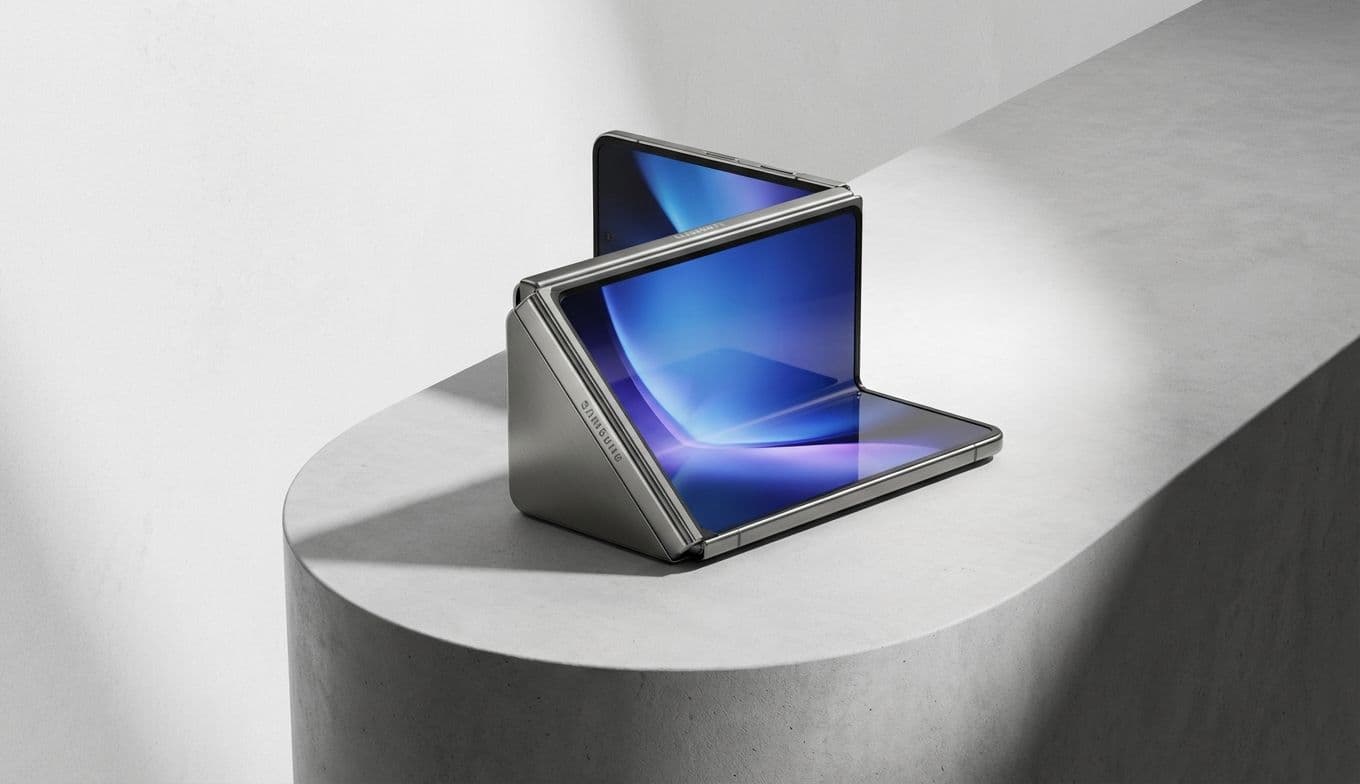
Samsung Z TriFold Hands-On: The First True Foldable Tablet
Team Gimmie
1/5/2026

The Z TriFold is the Tablet You Will Actually Carry
The foldable phone market has long suffered from a dirty little secret: most of these expensive, flexible devices spend 90 percent of their lives acting like heavy, thick versions of the slab phones we already own. I lived this reality over the recent holiday break while carrying the Google Pixel 10 Pro Fold. I took it across state lines, through airports, and into family living rooms, and I can count the number of times I actually deployed the inner screen on one hand. It was a phone first, a phone second, and a tablet only when I remembered I was supposed to be impressed by it. My family didn't even realize it could unfold until I pointed it out twenty-four hours into the trip.
The friction is real. If the payoff for unfolding a device is only a slightly larger square, most of us simply won't bother. We stay in the comfortable, narrow confines of the outer screen because the transition feels like an event rather than a natural progression. But after spending an hour obsessively snapping, gliding, and deploying the Samsung Z TriFold, I realized the conversation has finally shifted. This isn't a phone that happens to get bigger. It is a full-scale tablet that has the decency to collapse into a pocketable footprint. It makes the single-hinge foldables of 2025 look like a half-measure.
Engineering the Accordion
The magic of the Z TriFold lies in its dual-hinge architecture. While previous foldables felt like a book opening, this feels like an accordion deploying. There is a tactile, mechanical joy in the way the third panel snaps into place, creating a sprawling horizontal canvas that genuinely mimics a dedicated workstation. Where single-fold devices often leave you with an awkward, nearly-square aspect ratio that letterboxes movies and squishes spreadsheets, the TriFold expands into a cinematic wide-screen format that demands your attention.
The physics of the device are a triumph of weight distribution. Samsung has somehow balanced the triple-stack of glass and metal so that it doesn't feel like a lopsided brick when fully extended. During my hour of folding and unfolding, I found myself looking for excuses to keep it open. The tension in the hinges is calibrated perfectly; there is enough resistance to feel premium and durable, yet it glides open with a fluid motion that feels like it’s inviting you to do more. It solves the unused screen problem by making the payoff so massive that the act of unfolding feels worth the two seconds of effort every single time.

Who is This Third Panel For
The jump from two panels to three isn't just a marginal upgrade; it’s a categorical shift in how we use mobile tech. This device isn't for the casual scroller who just wants to check Instagram. It is built for specific power-user personas who have been waiting for the hardware to catch up to their ambitions.
First, there is the Spreadsheet Warrior. If you have ever tried to manage a complex Excel file or a multi-column Trello board on a standard phone, you know the frustration of constant pinching and zooming. The TriFold provides enough lateral real estate to view a full desktop-sized sheet without compromise. You can have your data on the left two panels and your communication apps on the right, turning a subway ride into a legitimate deep-work session.
Then, we have the Cinematic Commuter. Standard foldables often struggle with modern video content, leaving massive black bars at the top and bottom. The TriFold’s aspect ratio is a dream for streaming. It fills the field of vision in a way that makes a dedicated iPad Mini feel redundant. For the frequent flyer or the long-distance commuter, it is the difference between squinting at a video and actually getting lost in a movie.
Finally, there is the Digital Nomad who is tired of the device carousel. We’ve all been there: carrying a phone for calls, a tablet for reading, and a laptop for work. The TriFold is the first device that realistically lets you leave the tablet at home. It’s the ultimate minimalist tool for the person who wants maximum capability with zero bag clutter.
Solving the Durability Doubt
The biggest question with any multi-hinge design is naturally the longevity of the screen. With two separate fold points, you are essentially doubling the potential for trouble. However, the architecture here suggests a more refined approach to the crease. Because the screen folds in a Z-shape—one fold inward, one fold outward—the stress on the panel is distributed differently than a standard inward-closing book.
The outer-facing fold of the third panel is protected by a sophisticated hard-coating that feels significantly more glass-like than the soft, plasticky displays of years past. While we will need months of real-world testing to see how it handles the grit and dust of a coat pocket, the initial structural integrity is confidence-inducing. The hinges don't just hold the screen; they lock it into a flat, rigid plane that removes the distracting undulations often found in larger flexible displays.
The Verdict on the Future
We are moving past the era where a folding screen is a novelty meant to spark conversation at a dinner table. We are entering the era of the functional transformer. The Samsung Z TriFold is a statement that the dual-purpose device has finally matured. It is no longer a compromised phone trying to be a tablet; it is a high-performance tablet that understands you need to be able to carry it in your jeans.
If you are someone who finds yourself constantly reaching for a second device to finish a task your phone started, the TriFold is the answer. It eliminates the friction of the transition and replaces it with a sprawling, vibrant workspace that fits in the palm of your hand. It is the first foldable that doesn't just ask for your money—it earns your time by making you actually want to use the screen you paid for. The revolution isn't just unfolding; it's finally big enough to see clearly.