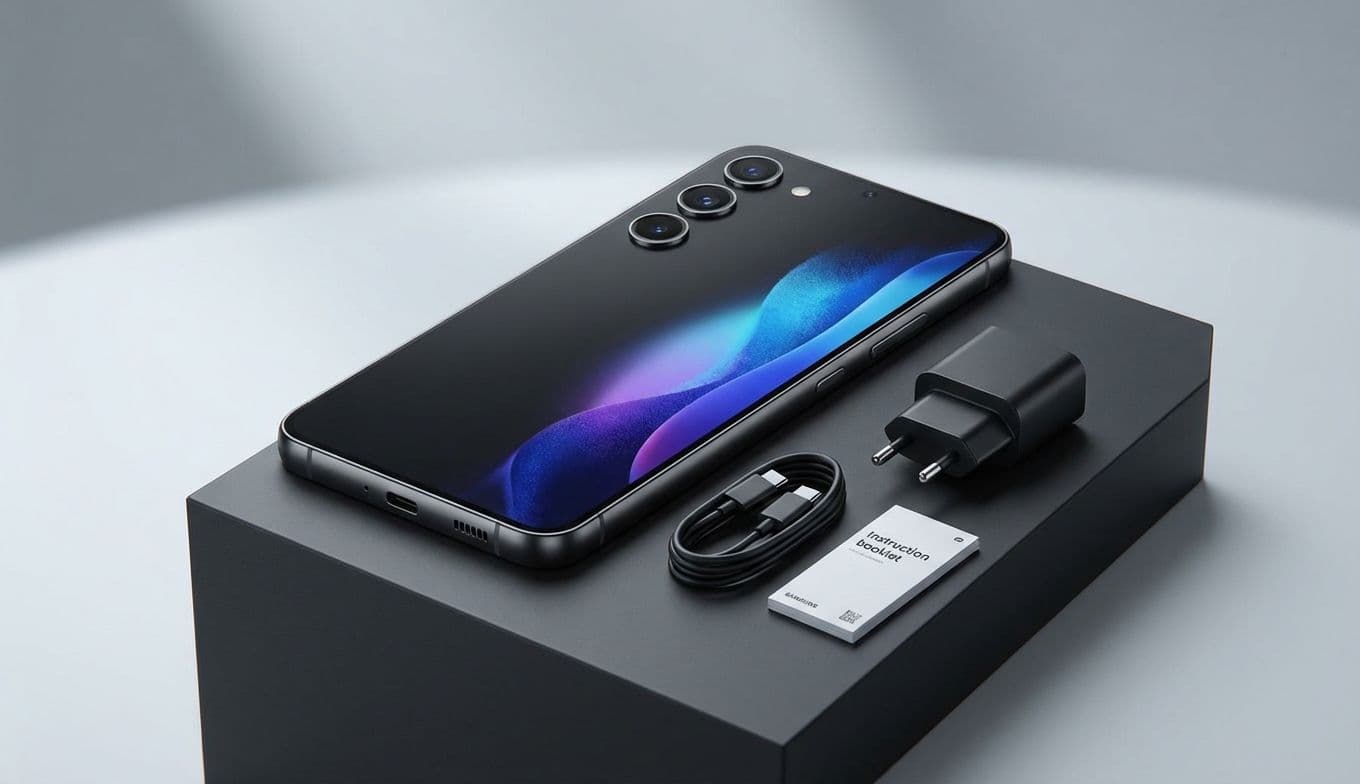
Samsung Galaxy S26 Unpacked 2026: AI Genius or Digital Slop?

Samsung Galaxy S26 Unpacked 2026: AI Genius or Digital Slop?

Team GimmieTeam Gimmie
Published on February 24, 2026

SAMSUNG GALAXY UNPACKED 2026: THE FINE LINE BETWEEN AI GENIUS AND DIGITAL SLOP

February 25, 2026, is the date marked on every tech enthusiast’s calendar. Another Samsung Unpacked event is upon us, and the script feels familiar: shiny glass slabs, slightly thinner bezels, and a tidal wave of AI-powered promises. We are expecting the Galaxy S26, S26 Plus, and the range-topping S26 Ultra to take center stage. But as the marketing engine revs up to tell us how these phones will change our lives through "intelligent experiences," a more cynical term is starting to dominate the conversation: AI slop.

I’ve spent decades putting flagship phones through their paces, and I’ve seen the pendulum swing from meaningful innovation to desperate feature bloat. We are currently in the thick of the "AI Era," where every menu and every app is being injected with generative features. The question for the Galaxy S26 isn’t just whether it’s faster or has a better screen—it’s whether the software is actually getting smarter or if Samsung is just layering on digital clutter that gets in the way of what we actually bought the phone to do.

THE LESSONS OF THE S24 AND S25: WHEN AI GOES WRONG

To understand why we’re on "slop watch" for the S26, we have to look at the track record of the last two generations. Samsung’s Galaxy AI push began in earnest with the S24, and while features like Circle to Search were genuine productivity wins, others felt half-baked.

Remember the Live Translate feature? While impressive in a vacuum, it frequently tripped over common idioms and struggled with background noise, making it more of a "party trick" than a reliable business tool. Then came the S25 and its Portrait Studio. For many users, this was the definition of AI slop. It took high-resolution photos of real people and turned them into uncanny, cartoonish sketches that looked like cheap 2010 mobile avatars. It didn’t enhance the photo; it replaced reality with something of lower quality.

We also saw the limitations of Generative Edit. While it promised to move subjects around a frame seamlessly, it often left behind "ghost" artifacts—blurry patches of pixels where a person used to be. For a $1,300 flagship, "good enough" AI isn’t good enough. It’s slop. The S26 needs to prove it has moved past the "uncanny valley" phase of AI development and into something that provides consistent, professional-grade utility.

THE PUPPY STICKER TRAP: WHY GIMMICKS HURT THE USER EXPERIENCE

In a recent preview of the "seamless Galaxy camera experience," Samsung highlighted the ability to turn a photo of a puppy into custom stickers with a few taps. On paper, it’s cute. In practice, it’s a symptom of a larger problem: UI clutter.

When you buy a Galaxy S26 Ultra, you are buying one of the most sophisticated camera systems on the planet. You want to capture the perfect sunset, your child’s first steps, or a professional-grade landscape. Every time Samsung adds a "sticker creator" or an "AI sketch-to-image" button directly into the camera interface, they are adding a layer of friction.

This is the "slop factor" in action. By prioritizing gimmicky features that 90% of users will use once and then forget, the core experience suffers. Menus become deeper, buttons become smaller, and the shutter lag—a historical pain point for Samsung—remains unaddressed because engineering resources are being diverted to puppy stickers. A truly "smart" phone shouldn't just offer more things to do; it should intelligently hide the things you don't need so you can focus on the perfect shot.

HARDWARE STILL MATTERS: BEYOND THE CLOUD

It is easy to get distracted by the AI hype, but we have to remember that AI is a hungry beast. Processing generative images or real-time translations requires massive amounts of power. This brings us to the fundamentals: battery life and thermal management.

If the S26 series leans even harder into on-device AI, we need to see if the hardware can actually handle the load. I’ve seen plenty of "smart" phones turn into hand-warmers after five minutes of photo editing. When the S26 reviews start landing, don't just look at the AI benchmarks. Look at the real-world battery drain. Does using the "Smarter Camera" features mean you won't make it to dinner time on a single charge?

Furthermore, we need to watch the "NPU" (Neural Processing Unit) performance. If Samsung is offloading most of this AI work to the cloud, you’ll deal with frustrating lag and the requirement of a constant, high-speed data connection. True innovation happens when the phone can think for itself, locally, without draining the battery or waiting for a server in the sky to respond.

THE GIMMIE GIFT GUIDE: WHO SHOULD BUY THE S26 ON DAY ONE?

If you are considering the Galaxy S26 as a gift—or an upgrade for yourself—the decision shouldn't be based on the marketing sizzle reel. Based on what we know, here is how you should categorize your buying decision:

THE TECH-EARLY ADOPTER (BUY DAY ONE) If the person you’re buying for loves being on the bleeding edge and actually enjoys tinkering with new features—even if they are buggy—the S26 is a safe bet. They will find the "slop" entertaining rather than frustrating, and they’ll be the first to show off the new AI tricks to their friends. For them, the novelty is the value.

THE PERFECTIONIST PARENT (WAIT) If you’re buying this for someone whose primary goal is capturing perfect, reliable photos of their family, wait. You need to see if the AI actually improves the camera’s ability to freeze motion and handle low light without making skin tones look like plastic. Wait for the first major software patch (usually 3 months in) to ensure the "smart" features aren't just getting in the way of a clear photo.

THE PRAGMATIC PROFESSIONAL (WAIT) For the user who needs their phone to be a tool—long battery life, reliable signal, and fast multitasking—the AI features are often a distraction. Wait for the independent reviews to confirm that the new AI processing hasn't compromised the fundamentals of the device. If the battery life takes a hit because of the "Smarter" OS, it’s not the right tool for a professional.

FINAL VERDICT: CAUTIOUS OPTIMISM VS. REAL-WORLD UTILITY

The Galaxy S26 series represents a crossroads for Samsung. They can either continue down the path of "AI for the sake of AI," filling our phones with digital stickers and cartoon filters, or they can use that incredible processing power to solve real problems—like eliminating shutter lag, improving battery efficiency, and making voice-to-text actually flawless.

As we head into the February 25th announcement, keep your "slop detector" on high alert. Look past the flashy demonstrations of puppy stickers and listen for the boring stuff: efficiency, reliability, and speed. A phone that helps you do less work to get a better result is a smart phone. A phone that gives you more work to do to get a gimmicky result is just slop.

Wait for the hands-on testing, ignore the pre-order hype, and ask yourself: is this feature going to make my life easier three months from now, or is it just another button I’ll have to learn to ignore?