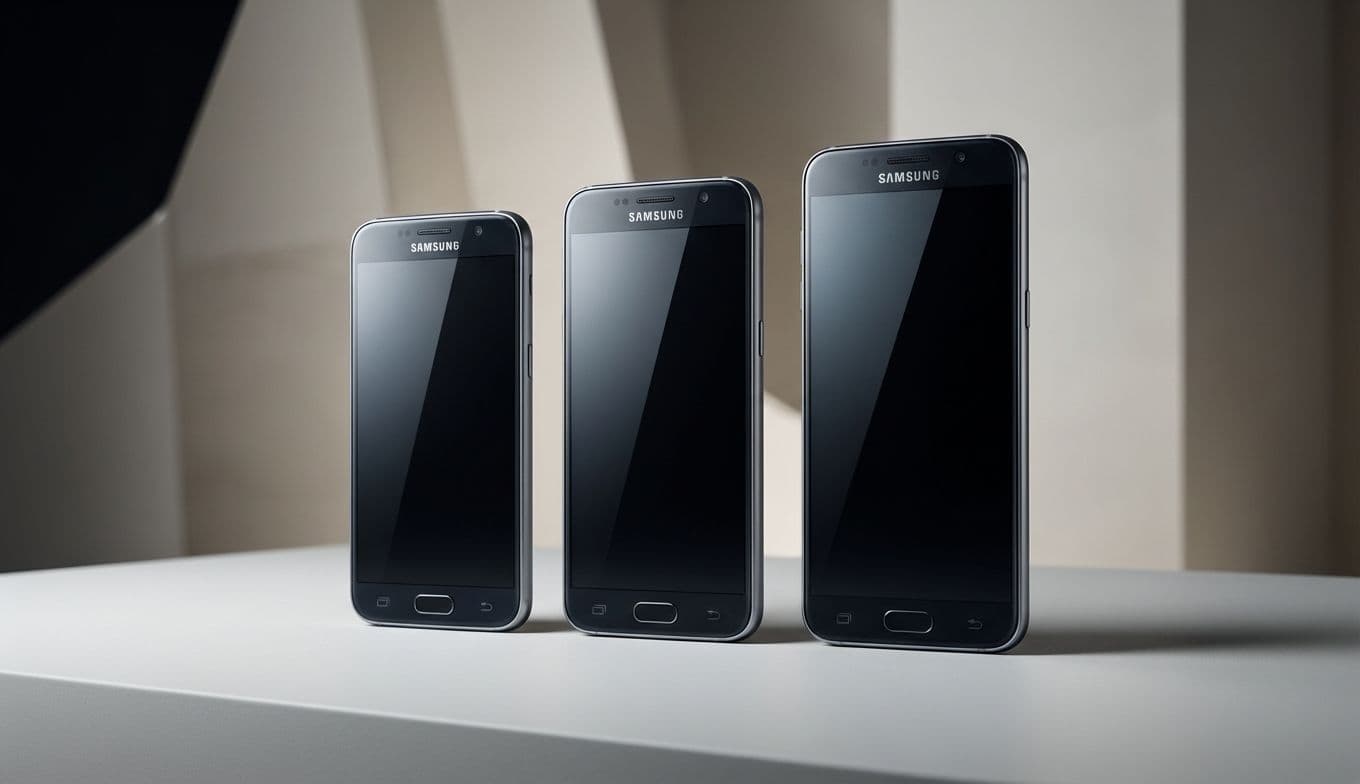
Samsung Galaxy A37 & A57 Review: Is the $50 Price Hike Worth It?
Team GimmieThe $50 Tax: Is Samsung’s New Galaxy A-Series Still a Smart Buy?
The tech world, much like the rest of the economy, seems to be playing by new rules these days. For years, the Samsung Galaxy A-series was the gold standard for anyone who wanted a high-quality smartphone experience without the eye-watering four-digit price tag of a flagship. You knew what you were getting: a great screen, a dependable battery, and the comfort of the Samsung brand for a price that felt like a steal.
But with the arrival of the Galaxy A37 and Galaxy A57, that narrative is shifting. On the surface, they are the predictable mid-range successors we’ve come to expect—incremental upgrades in a familiar chassis. But there is a catch that’s hard to ignore. Samsung has introduced a $50 price bump across the board. The Galaxy A37 now starts at $449, and the Galaxy A57 lands at a crisp $499. As someone who has spent years sifting through the endless stream of phone releases, this isn’t just a minor adjustment for inflation. It feels like a sign that the "budget-friendly" mid-range era is being rebranded as "premium-lite," and that makes choosing a new phone—especially for gifting—a much trickier proposition.
The Reality of the $50 Hike
Let’s be honest: that extra $50 stings. When you’re shopping in the mid-range market, fifty dollars is often the difference between buying the phone outright or having to finance it. Samsung is leaning on the general economic climate as justification, and to be fair, they aren’t entirely wrong. Global supply chains remain volatile, and the cost of raw components for high-refresh-rate displays and 5G modems hasn’t exactly plummeted.
However, as consumers, we have to ask what we are actually getting for that extra cash. If you look at the leap from last year’s models (the A36 and A56) to these new versions, the word "incremental" feels like an understatement.
The Spec Sheet Reality Check
To understand why this price hike is so controversial, you have to look at what hasn’t changed. The Galaxy A57 still features a 5,000mAh battery—a capacity Samsung has used for years. It still supports 25W wired charging, which, in 2026, feels glacially slow when competitors are offering full charges in under thirty minutes. The display remains a 6.6-inch Super AMOLED with a 120Hz refresh rate. It’s a beautiful screen, don’t get me wrong, but it’s essentially the same panel we saw two generations ago.

The "upgrades" are mostly internal and invisible. You get a slightly more efficient Exynos 1580 processor and a marginal improvement in low-light processing for the primary camera sensor. While the Galaxy A57 now matches the build quality of more expensive phones with a more refined metal frame, the actual user experience remains largely identical to the $449 model from last year. For gift-givers, this is a crucial distinction. When you spend more, you want a "wow" factor. A slightly more efficient chip rarely provides that.
The Quick Verdict for Gift-Givers
If you’re in a rush and trying to decide if these phones belong under a wrapping paper bow, here is the breakdown:
Buy the Galaxy A37 or A57 if: The recipient is already deep in the Samsung ecosystem (Galaxy Watch, Buds, Tablet), they prioritize four years of guaranteed software updates, or you find a carrier deal that offsets that $50 price hike.
Look elsewhere if: You want the best possible camera for the money, you need fast charging for a busy lifestyle, or you are looking for a phone that feels like a significant jump forward from a device purchased three years ago.
Better Alternatives at the $500 Mark
This is where my skepticism regarding Samsung’s value proposition really kicks in. The mid-range market is currently a battlefield, and at the $449 to $499 price point, Samsung is no longer the undisputed king.
If you are looking for the best camera experience, the Google Pixel 9a is the obvious challenger. Google’s computational photography consistently outperforms Samsung in the mid-range, and the Pixel’s "clean" Android interface is often preferred by those who find Samsung’s One UI a bit cluttered. Furthermore, the Pixel 9a often sees deep discounts during holiday windows, frequently dropping to $399.
If performance and charging speed are the priority, the OnePlus 13R is a powerhouse that makes the Galaxy A57 look like a relic. For the same $499, you’re often getting significantly faster processing and 80W fast charging that can top up the battery while you’re eating breakfast. It’s a much more "future-proof" gift for a teenager or a power user.
Who Are These Phones Actually For?
Despite my gripes with the pricing, Samsung’s A-series will still sell millions of units. There is a specific type of user for whom these phones are still the right call:
The Samsung Loyalist: If you’ve used Samsung phones for a decade, the interface is muscle memory. Moving to a Pixel or a OnePlus feels like learning a new language. For these users, the $50 hike is simply a "loyalty tax" they are willing to pay for familiarity.
The Long-Term Owner: Samsung is excellent about software support. Providing four generations of OS updates and five years of security patches means these phones can easily last half a decade. If you are buying a gift for someone who keeps their phone until it literally stops working, the A57 is a safe, durable bet.
The Practical Parent: These phones are water-resistant (IP67) and built like tanks. For a teen who might be a bit reckless or an older relative who needs a dependable workhorse that won't surprise them with weird software bugs, the A37 is a very solid, if unexciting, choice.
Final Thoughts: The End of the Mid-Range Sweet Spot?
The Galaxy A37 and A57 are perfectly competent smartphones. They won’t lag during daily tasks, they take respectable photos, and they look great. But the $50 price increase forces us to look at them through a much more critical lens. It highlights a frustrating trend where mid-range devices are drifting closer to the $500–$600 range, chipping away at the clear value they once represented.
As a reviewer, I’m always looking for products that genuinely move the needle or offer a "slam dunk" for the consumer's wallet. These new A-series phones don’t quite do that. They are the safe, conservative choice in an era where "safe" is becoming increasingly expensive.
For gift-givers, the advice is simple: don’t just buy the latest model because it’s the one on the front of the display. Compare the specs. If you can find a refurbished or "new-in-box" Galaxy S24 FE for $500, buy that instead—it’s a vastly superior phone to the A57 in every measurable way. The days of a guaranteed mid-range win are over; now, more than ever, it’s about finding the best deal in a market that’s trying to see just how much we’re willing to pay for the "normal" standard.