Samsung Creaseless Foldable Display: CES 2026 & The Future iPhone
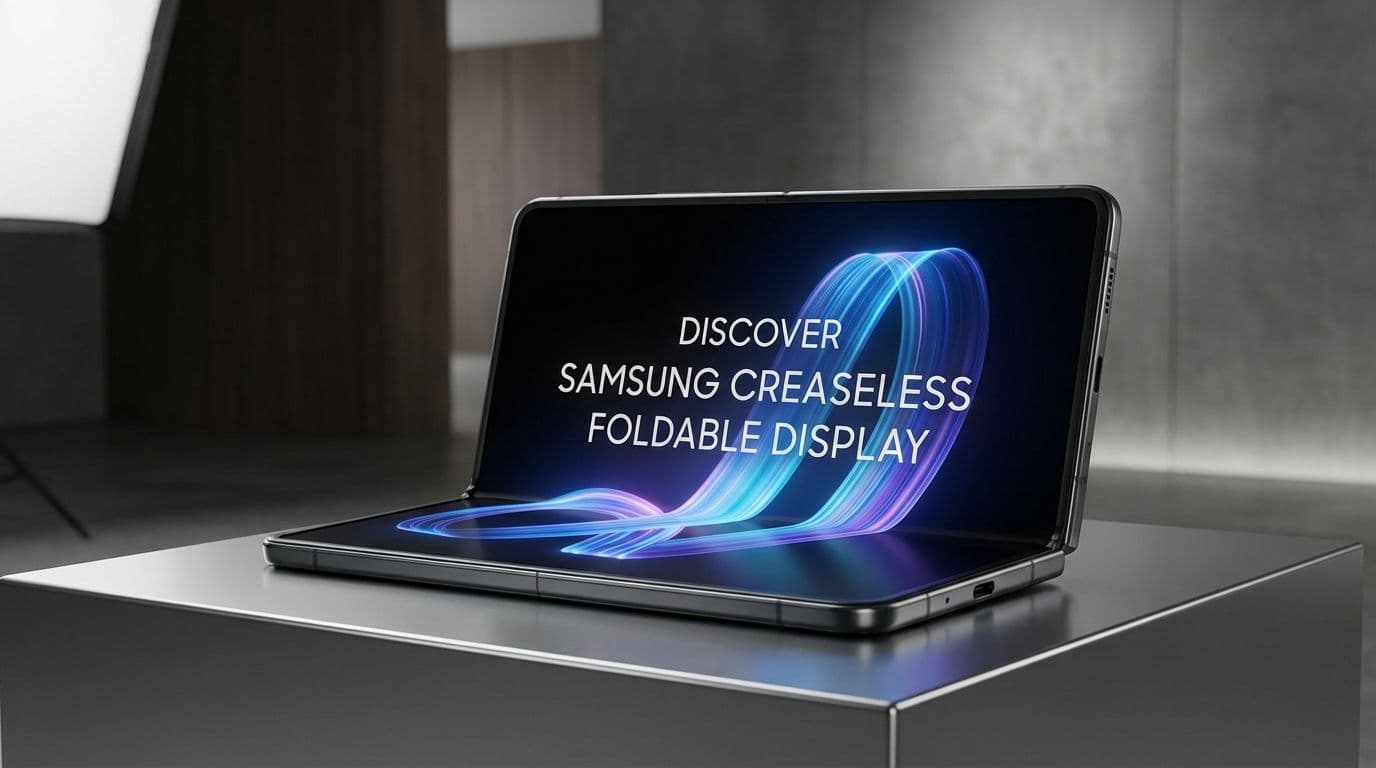
Samsung Display unveiled a revolutionary creaseless foldable panel at CES 2026. Discover how this breakthrough impacts the future foldable iPhone and Galaxy Z Fold 7.

By Team Gimmie
Updated August 27, 2026
The Foldable Holy Grail: Samsung’s Creaseless Display and the iPhone of the Future
For years, the foldable phone market has been defined by a single, stubborn compromise: the crease. That visible trench down the center of the screen is a constant reminder that you are using a device that bends. It is the elephant in the room for every Samsung Galaxy Fold and its competitors. But at CES 2026, we may have just seen the end of that era—or at least, a very tantalizing glimpse of it.
Samsung Display unveiled a concept panel that appears to be completely, impossibly creaseless. The buzz at the show was electric, fueled in part by the mystery surrounding the hardware. In a move that felt like a high-stakes spy novel, the panel was reportedly whisked away and removed from the floor shortly before major press outlets could get their hands on it. This "now you see it, now you don't" approach has only added to the legend of what might be the most significant display breakthrough in a decade.
Why the Crease Actually Matters
This is not just about aesthetics, though a smoother screen is a welcome change. The crease is a physical imperfection that breaks the "magic" of the device. Think about reading a long-form article or a novel on the Kindle app; as your eyes track across the sentence, the text physically dips into a shadow in the center of the page. It’s a subtle distraction that pulls you out of the story.
For creative professionals, it is even more problematic. Imagine trying to edit a portrait in Lightroom or fine-tune a color grade in a video. That tiny dip in the screen creates a distortion of light and shadow exactly where you need accuracy. It is a compromise we have learned to live with, but if Samsung’s new display technology delivers on its promise, that compromise is about to become a relic of the past.
The Apple Connection: Is This the Folding iPhone?
The implications here extend far beyond Samsung’s own Galaxy lineup. It is no secret that Samsung Display is a primary supplier for Apple. Every time Samsung showcases a breakthrough in OLED technology, the industry immediately looks toward Cupertino.
For years, rumors of a folding iPhone have been stalled by reports that Apple is dissatisfied with the durability and visual "imperfections" of current foldable screens. Apple’s brand is built on seamless design; they were never going to release a phone with a valley in the middle of the display. This creaseless concept is exactly what Apple needs to greenlight a folding iPhone. Imagine the polished, premium aesthetic of an iPad Pro that folds down to the size of an iPhone 16—without a single visible seam. It’s enough to make even the most seasoned tech skeptic lean in.