Rivian Georgia Factory Pivot: 2026 EV Buying Strategy
Team GimmieThe EV Reality Check: Why Rivian’s Factory Pivot Changes Your 2026 Buying Strategy
The honeymoon phase of the electric vehicle revolution has officially ended. For the last few years, the narrative was simple: build them, and they will come. We saw staggering production targets and a "gold rush" mentality that made it seem like every garage in America would have a charger by 2027. But as of May 2026, the market is undergoing a necessary, if somewhat painful, reality check.
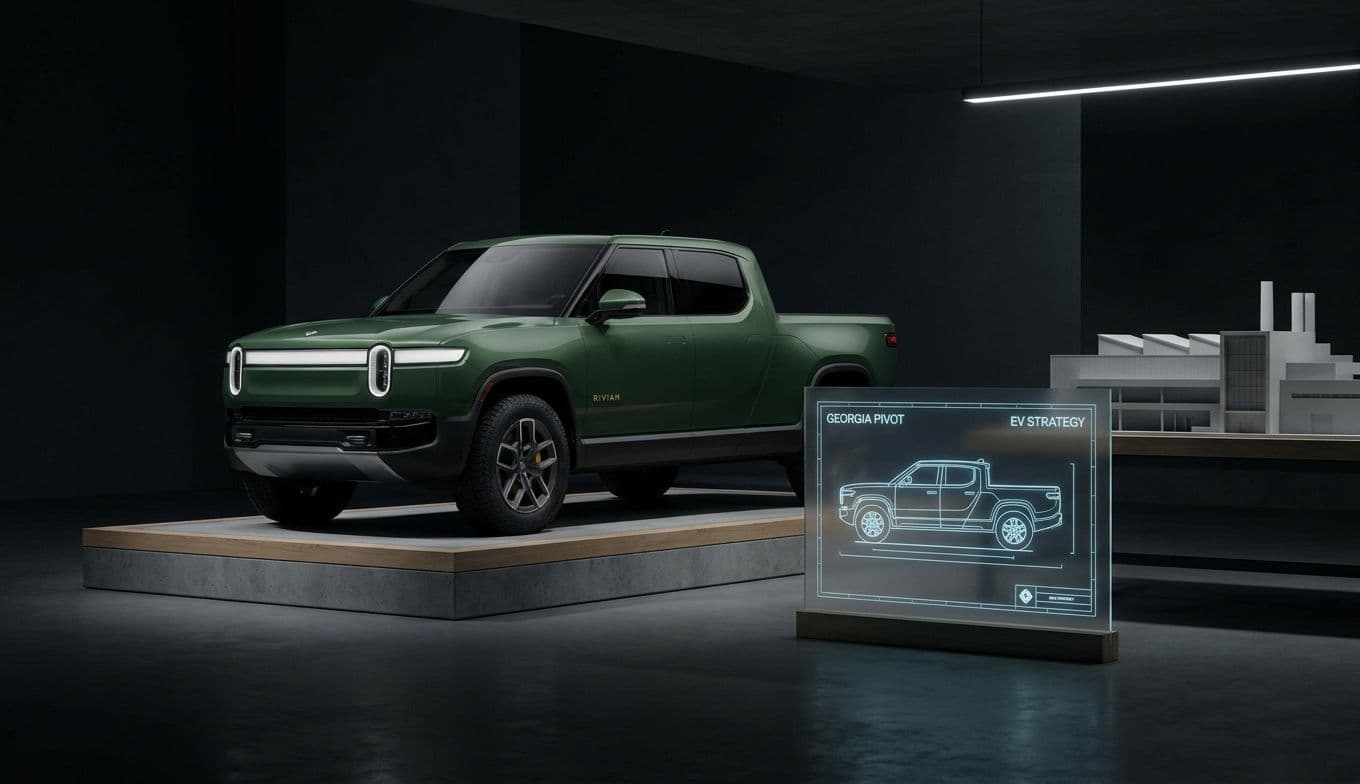
The latest signal comes from Rivian, a brand that has long been the gold standard for the "adventure EV" lifestyle. The company recently announced it is scaling back the planned capacity of its massive Georgia manufacturing facility. Originally intended to churn out 400,000 vehicles annually across two phases, that number has been trimmed to 300,000.
This isn't just a minor administrative tweak. It is a direct response to a shifting economic and political landscape, specifically a significant reduction in a U.S. Department of Energy (DOE) loan agreement following the current administration’s tighter grip on federal spending. For consumers and high-end gift-givers, this news should change how you look at the EV market this year.
The $6.6 Billion Question: Why the Downsize Matters
To understand why this matters for your wallet, you have to look at the "why" behind the numbers. Rivian’s decision to downsize isn't necessarily a sign of failure, but a sign of survival. The reduction in the DOE loan—a ripple effect of the Trump administration's skepticism toward aggressive green-energy subsidies—means Rivian has to be much more careful with its cash.
When a manufacturer scales back, it usually means one of two things: longer waitlists or a pivot to higher-margin, premium builds. For the person eyeing a new R2 or R3 model, this is your cue to move from "watching" to "acting." With a lower production ceiling, the scarcity of these vehicles is likely to increase. If you were hoping for a surplus of inventory to drive down prices, you might be waiting a long time.
However, there is a silver lining. By focusing on a capacity of 300,000 units instead of 400,000, Rivian can concentrate on quality control and the long-term reliability of its current R1T and R1S lineup. In the high-stakes world of $80,000 electric trucks, "fewer but better" is often a win for the consumer who values longevity over novelty.

Gifting an EV? Focus on the Ecosystem, Not the Hype
If you are considering an electric vehicle as a major gift—perhaps a graduation present or a milestone anniversary surprise—the Rivian news suggests you need to be more strategic. In an era of reduced federal support and shifting production targets, buying an EV is no longer just about the car; it’s about the infrastructure supporting it.
Before you put a bow on a 6,000-pound SUV, ask yourself if the recipient is ready for the "EV lifestyle" as it exists today, not as it was promised three years ago.
First, look at charging. Public infrastructure is still catching up to the hype. If you are gifting a high-end vehicle, the best "accessory" you can provide is a professional-grade Level 2 home charging station, like the Wallbox Pulsar Plus ($600). Without home charging, an EV can quickly turn from a luxury gift into a logistical headache.
Second, consider the waitlist. With production targets being re-evaluated across the industry, the "latest and greatest" model might not actually be available for eighteen months. If you need a gift for a specific date in 2026, you may want to look at established inventory rather than pre-ordering a model that is dependent on a factory still under construction.
High-Voltage Alternatives Under $2,000
If the shifting landscape of full-sized EVs feels too volatile or expensive, you don’t have to abandon the "electric" dream entirely. The micro-mobility market is actually more stable and arguably more practical for many urban dwellers. These make for incredible gifts that deliver immediate utility without the $1,000 monthly payment.
The RadPower RadRunner 3 Plus ($1,500 - $1,800): This is the workhorse of the e-bike world. It’s perfect for the person who wants to run errands or commute without a car. It’s accessible, well-built, and significantly easier to maintain than a high-tech electric SUV.
The Segway Ninebot KickScooter Max G2 ($900): For a younger professional or a student, this is the gold standard for last-mile transportation. It features a 43-mile range and built-in suspension, making it a "real" vehicle rather than a toy.
Gifting these alternatives allows you to embrace electric tech today without worrying about DOE loan shifts or factory delays in Georgia.
The Gimmie AI Verdict: Buy, Wait, or Pivot?
Is now the time to pull the trigger on a premium EV? Here is our quick-glance strategy for the remainder of 2026:
-
BUY NOW if you want an R1S or R1T. These are proven platforms. With production capacity tightening, these flagship models will hold their value better as "scarcity" becomes the new market reality.
-
WAIT if you are holding out for the "budget" $45,000 R2. The Georgia factory news means these models will be the first to face delays or price adjustments. Don’t count on a late 2026 delivery.
-
PIVOT if you live in an apartment without dedicated charging. The dream of a seamless public charging network is taking longer than expected. An e-bike or a high-end hybrid is a more honest choice for your current lifestyle.
The Bottom Line: Prudence Over Hype
Rivian’s pivot is a quiet admission that the path to an all-electric future is a marathon, not a sprint. As a consumer, your best move is to match that pragmatism. Don’t buy based on where the market was supposed to be; buy based on where it actually is.
The most valuable product isn’t the one with the biggest factory or the loudest press release—it’s the one that actually shows up in your driveway and works every single morning. Whether that’s a $90,000 truck or a $1,500 e-bike, the goal remains the same: mobility that makes your life better, not more complicated. Use this "reality check" as an opportunity to be a smarter, more deliberate buyer.