Ring Privacy Concerns: Search Party Backlash & Secure Alternatives

Ring Privacy Concerns: Search Party Backlash & Secure Alternatives

Team GimmieTeam Gimmie
Published on February 20, 2026

The Blue Ring Problem: Why Graphics Aren't the Issue

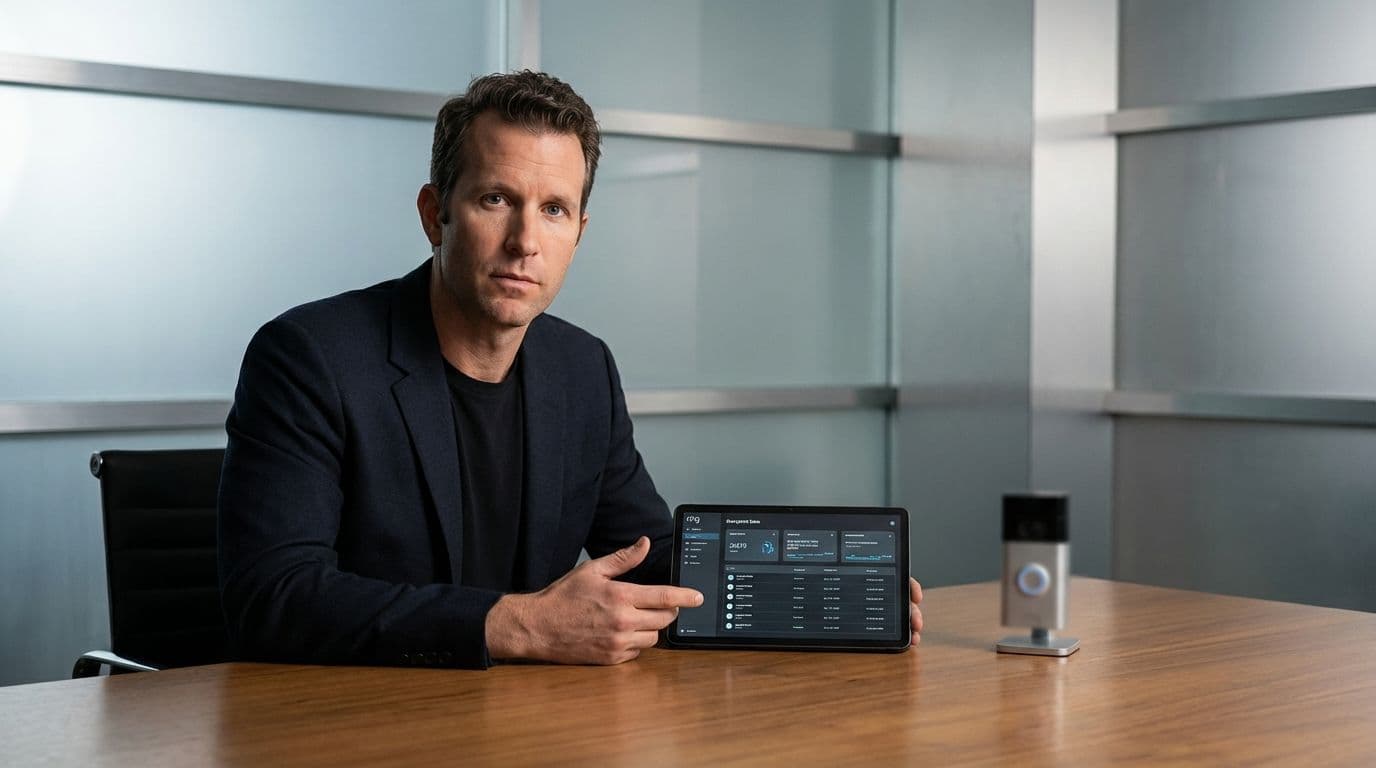
It is not every day that a company’s product, designed to offer peace of mind, sparks a firestorm of controversy that lasts months. But that is exactly the position Ring found itself in following the launch of its Search Party feature and a high-profile Super Bowl advertisement. After the backlash reached a boiling point, Ring founder Jamie Siminoff embarked on what the media called an explanation tour. His goal was to quell public outcry over privacy concerns, but in many ways, the defense only highlighted how disconnected the company has become from the people it serves.

Siminoff eventually acknowledged that a particular ad graphic—showing blue rings radiating out from suburban homes like a digital sonar—might have been triggering for some. While it is nice that he noticed the imagery was a bit dystopian, focusing on the graphics is a classic corporate sidestep. The issue isn't the color of the rings or the layout of the map. The issue is the underlying reality that those graphics represent: a vast, interconnected, AI-powered network of cameras that has the potential to become an all-seeing surveillance tool.

When you combine a massive camera network with features like Search Party, which allows users to crowdsource video footage to find lost items or missing people, you are not just buying a doorbell. You are contributing to a communal surveillance dragnet.

The Search Party Reality: Is Convenience Worth the Oversight?

The Search Party feature is built on a noble premise. Who wouldn't want to help find a neighbor’s lost dog or, more critically, a missing child? In these scenarios, technology feels like a modern-day superpower. However, the mechanism behind it is where the concerns take root.

For those wondering about the logistics: the Search Party feature is currently an opt-in system. This means that a Ring user must proactively choose to share their footage when a request is made. While that sounds like a win for privacy on paper, the social pressure and the default settings of the Neighbors app environment create a culture where surveillance is the standard, not the exception.

The bigger question is one of data governance. When you opt-in to share that footage, who else is watching? How long is that data cached on a server? While Ring has made strides in allowing users to manage their privacy settings, they still haven't fully addressed the concern that these community features normalize the idea of every front porch being a government-accessible lookout point.

The Privacy-First Pivot: Better Alternatives to Ring

If the recent headlines have you feeling a bit uneasy about the blue rings on your own street, you are not alone. Many homeowners are looking for the security benefits of a smart doorbell without the baggage of cloud-based mass surveillance. If you are ready to pivot, there are several brands that prioritize local storage and user privacy.

Eufy Security Eufy has become a favorite for those who want to keep their data in-house. Their HomeBase 3 system allows for local storage, meaning your video stays on a hard drive inside your home rather than on a company server in the cloud. There are no monthly subscription fees for storage, which is a nice bonus for your wallet as well as your privacy.

Arlo While Arlo does offer cloud services, they have a much more transparent privacy pledge than many of their competitors. Their cameras offer high-end features like 4K video and wide-angle lenses, and their Secure plans give users more granular control over what is recorded and shared.

Ubiquiti (UniFi Protect) For the truly tech-savvy or the privacy purist, Ubiquiti is the gold standard. This is a prosumer-grade system that is entirely self-hosted. There is no cloud involved unless you explicitly set it up. You own the hardware, you own the storage, and no corporate entity has a back door to your footage. It requires a bit more setup and a higher upfront cost, but for total peace of mind, it is hard to beat.

Pro-Tip: The Unspoken Etiquette of Gifting Surveillance

A smart doorbell is a popular gift, but in the current climate, it has become a complicated one. Before you wrap up a camera for a friend or family member, consider the ethics of the gift. You aren't just giving them a gadget; you are giving them a device that requires a privacy stance.

Never surprise someone with a surveillance device. Some people have very strong feelings about being part of a digital neighborhood watch. Before buying, have an honest conversation. Ask them: Are you comfortable with a camera that records the sidewalk? Do you want a system that stores data in the cloud? If they are hesitant, consider a different smart home gift—like a high-quality smart lock or a set of automated lights—that provides security without the surveillance implications.

What Real Accountability Actually Looks Like

As Jamie Siminoff wrapped up his explanation tour, he promised fewer maps in future ads. That is a start, but it isn't enough to win back the trust of a skeptical public. If Ring truly wanted to lead the industry in privacy, their tour should have sounded very different.

True accountability would have included a commitment to end all warrantless police access to user footage—no exceptions. It would have included a shift toward making end-to-end encryption the default setting for every user, not just an advanced option hidden in the menus. Most importantly, it would have involved a transparent plan to move away from the neighborhood watch on steroids model and back toward personal home security.

As consumers, our power lies in our choices. The convenience of being able to see who is at your door from a smartphone is undeniable, but it should never come at the expense of our fundamental right to privacy. Until companies like Ring can provide concrete assurances that their technology won't be weaponized for mass surveillance, the best move for the privacy-conscious is to look toward local-first alternatives. The promise of security is only as strong as the trust it is built on, and right now, that foundation is looking a little shaky.