Ring Drops Flock: Privacy Analysis & Secure Alternatives
Ring has ended its Flock Safety partnership, but privacy concerns remain. Discover why this PR move falls short and explore 3 secure, local-storage alternatives.
The Ring and Flock Breakup: Why Your Privacy Deserves More Than a PR Pivot
Let’s cut through the noise. When news broke that Ring was severing its integration ties with Flock Safety—a company notorious for its mass-surveillance license plate readers and cozy relationships with law enforcement—the internet almost breathed a sigh of relief. On the surface, it looked like Ring was finally listening to the mounting criticism regarding its role in the "surveillance state." But as someone who spends far too much time dissecting the ethics behind our smart home gadgets, I’m here to tell you: don’t take the bait.
This breakup isn't a change of heart; it’s a change of optics. By distancing itself from Flock, Ring is attempting to shed the "Big Brother" label while keeping the rest of its massive data-harvesting machine humming along. The real issue was never just one partnership. It is an underlying philosophy that treats your front porch as a data point for corporate and state interests. If you’re looking for home security—whether for yourself or as a thoughtful gift—it’s time to look past the blue logo and see the bigger picture.
The Illusion of Progress
Ring’s official statement cited the time and resources required to maintain the Flock integration as the reason for the split. It’s the corporate equivalent of saying, "It’s not you, it’s my schedule." By framing this as a logistical hurdle rather than an ethical stance, Ring avoided answering the hard questions about how much access law enforcement should have to private camera feeds.
The reality is that the Amazon-owned giant has a long history of making it easy for authorities to request footage, often bypassing the traditional warrants that protect our civil liberties. Severing ties with Flock doesn't change the fact that Ring’s business model is built on cloud-dependency and centralized data. For the conscientious consumer, this isn't a victory; it’s a distraction.
Privacy-First Security: A Specific Buying Guide
If you’re ready to move beyond the Ring ecosystem, you don’t have to sacrifice safety for privacy. The market has evolved, and there are now specific products that prioritize local control and data ownership. Here are three alternatives that offer genuine peace of mind without the ethical baggage.
About Team Gimmie
A small team of friends and colleagues working together to produce useful content to help you...gift better.
The Eufy Video Doorbell E340 (Dual Camera)
Eufy has made a name for itself by championing local storage. The E340 is a powerhouse because it uses two cameras to eliminate blind spots, but its real value lies in the HomeBase 3 compatibility. Instead of your videos living on an Amazon server, they stay on a hard drive in your living room. There’s no monthly subscription fee, and because the AI processing happens on the device itself, your facial recognition data isn't being analyzed in the cloud.
Reolink Video Doorbell (PoE or WiFi)
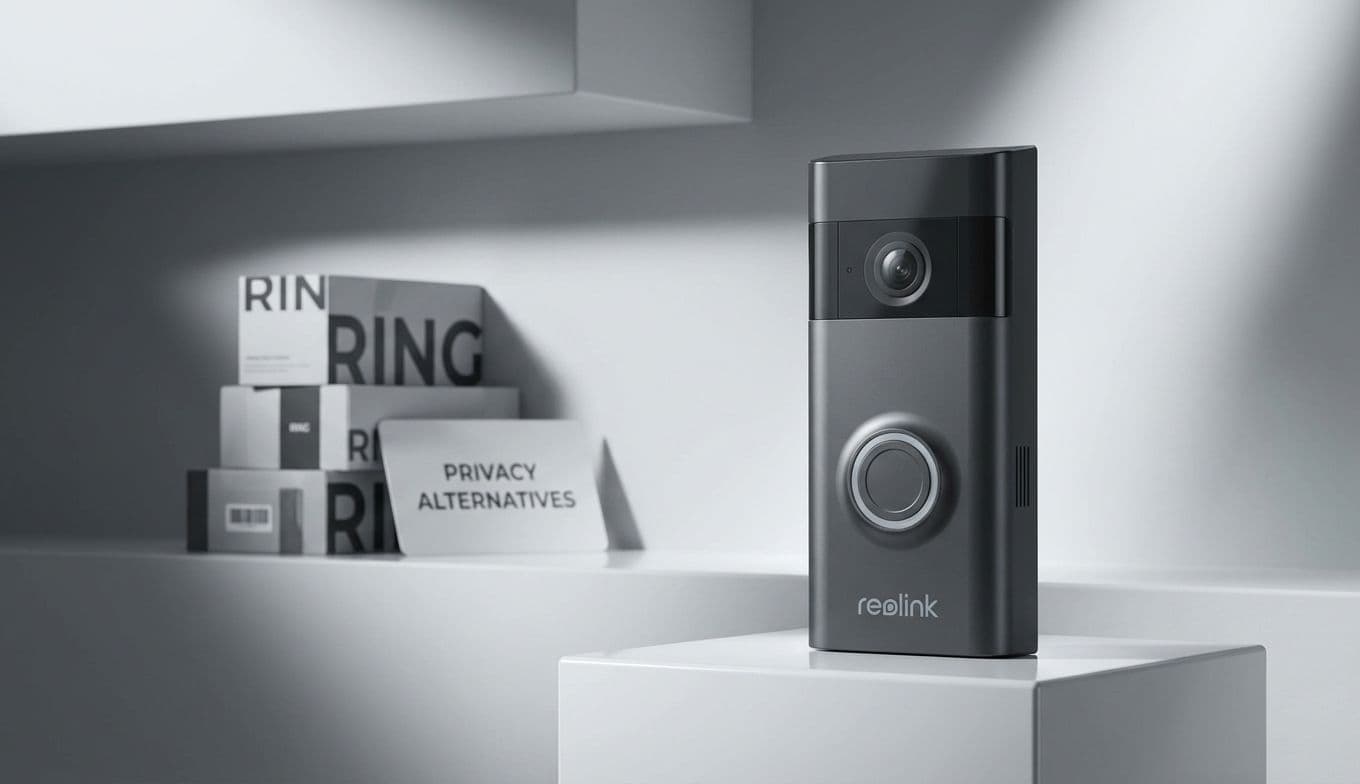
For those who want to be completely off the corporate grid, Reolink is a top-tier choice. Their doorbells include a microSD card slot for local recording, and they support standard protocols like RTSP. This means you can plug it into a third-party Network Video Recorder (NVR) that you control entirely. It doesn’t require an internet connection to function—making it the ultimate "Intranet of Things" device.
The Tapo C425 Battery Camera
If you need something wireless and easy to install (the classic Ring selling point), TP-Link’s Tapo line is surprisingly robust. The C425 offers 2K resolution and, importantly, supports local storage up to 512GB via microSD. It’s a great entry-point for a grandparent or a non-tech-savvy friend who wants security without a recurring bill or a privacy headache.
The Great Trade-Off: Privacy vs. Convenience
Choosing a security system often feels like a tug-of-war. To help you decide where you land, let’s look at how a privacy-focused setup compares to the standard Ring experience.
The Ring Ecosystem (Convenience-Heavy)
Setup: Incredible. You’re up and running in five minutes.
Integration: Works perfectly with Alexa and other Amazon devices.
Data Ownership: Low. Your footage is stored on their servers; you pay a monthly fee to see your own history.
Risk: Subject to corporate policy changes and law enforcement data requests.
The Local Storage Ecosystem (Privacy-Heavy)
Setup: Moderate. You might need to manage a microSD card or a local hub.
Integration: Improving, especially with the rise of Matter (more on that below).
Data Ownership: High. You own the hardware and the data. No monthly fees.
Risk: If someone steals the camera (and you don't have a hub), you might lose the footage, though most modern local systems now use encrypted local hubs to prevent this.
The Matter Standard: Your Get-Out-of-Jail-Free Card
One reason people stick with Ring is the fear of "ecosystem lock-in." They worry that if they buy a different doorbell, it won't talk to their smart lights or their kitchen tablet. Enter Matter.
Matter is a new universal language for smart homes. When you buy a device with the Matter logo, it’s designed to work across Apple Home, Google Home, and Amazon Alexa simultaneously. This is a game-changer for the ethical consumer. You can now buy a privacy-first smart lock from a specialized security company and have it work seamlessly with your existing hub. You no longer have to sell your soul to a single tech giant just to have a cohesive smart home.
The Ethical Gift-Giver’s 3-Point Checklist
Giving the gift of security is a kind gesture, but giving a device that spies on the recipient is... awkward. Before you hit Buy on that "Deal of the Day," run the product through this three-point vetting process:
Where does the video live?
If the device requires a subscription to save video, the data is in the cloud. Look for devices that offer a microSD slot or a local base station. Local storage is the only way to ensure the owner is the only one with the keys to the footage.
Does the company have a Law Enforcement Portal?
Research whether the brand has a history of providing "warrantless access" to police. Companies like Arlo and Eufy have moved toward more transparent policies, while others remain opaque. A quick search for the brand’s Transparency Report can be very eye-opening.
Can it function without an active internet connection?
A truly secure device should be able to record to a local card even if the WiFi goes down. If a camera turns into a paperweight the moment the internet blinks, it’s not just a privacy risk—it’s a security flaw.
What Ring Must Do to Earn Back the Crown
For those of us in the tech community, the "breakup" with Flock isn't enough to move the needle. If Ring wants to be a leader in the next decade of smart home tech, they need to implement four fundamental changes:
Default End-to-End Encryption: This should be the standard, not an opt-in feature buried in the settings.
Local Storage Options: Give users the choice to save video to an encrypted base station in their own home.
Warrant-Only Access: Commit to a strict policy of requiring a judicial warrant for all law enforcement data requests, with no "emergency" loopholes.
True Interoperability: Fully embrace Matter without trying to wall off features behind an Amazon-only garden.
The Bottom Line
Ring’s decision to drop Flock is a tactical retreat, not a change in strategy. As consumers, we have more power than we realize. Every time we choose a local-storage camera over a cloud-dependent one, we’re voting for a future where our homes remain our private sanctuaries.
True security isn’t just about a motion sensor or a loud siren; it’s about knowing that your private life isn't being packaged and sold (or shared) behind your back. This holiday season, or the next time you’re upgrading your porch, look beyond the shiny marketing. Choose the tech that protects your home—and your rights—in equal measure.
Ring Drops Flock: Privacy Analysis & Secure Alternatives | Gimmie