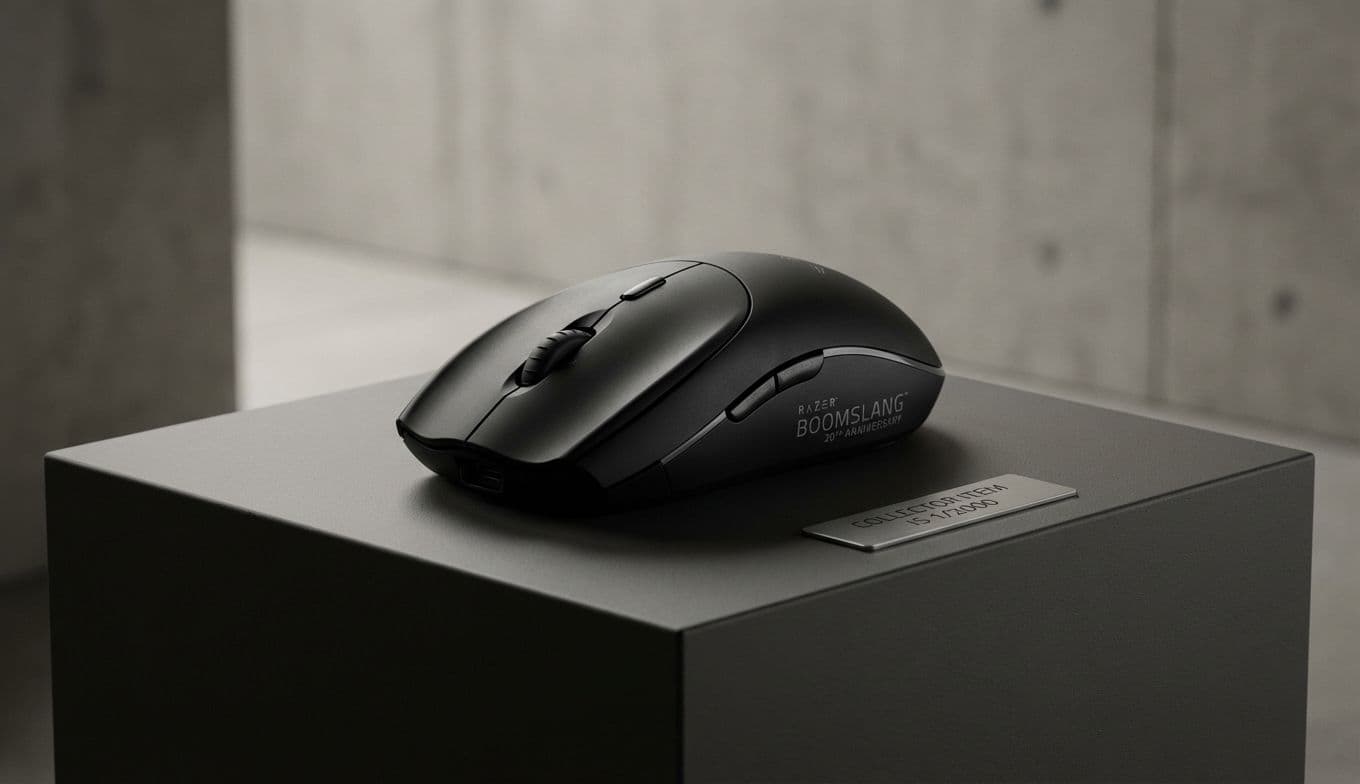
Razer Boomslang 20th Anniversary Review: Collector's Item
Team GimmieThe Ghost of LAN Parties Past: Why the Razer Boomslang 20th Anniversary is a Museum Piece, Not a Mouse
If you close your eyes and listen closely, you can almost hear the hum of a dozen massive CRT monitors and the click-clack of mechanical keyboards in a basement that smells faintly of stale pizza and Mountain Dew. It is 1999, and the world of competitive gaming is in its infancy. In this era of Quake and Unreal Tournament, one peripheral stood above the rest, promising a level of precision that felt like cheating: the Razer Boomslang.
Fast forward two decades, and Razer has resurrected this legendary beast for its 20th anniversary. But before you reach for your wallet thinking you’ve found the ultimate performance upgrade for your gaming rig, we need to have a serious talk about what this device actually is. This isn't a tool for winning modern tournaments; it’s a beautifully crafted, titanium-clad piece of tech heritage.
The Grandfather of the Gaming Mouse
To understand why anyone would pay a premium for the Boomslang 20th Anniversary Edition, you have to understand the 1999 original. Before Razer entered the scene, "gaming mice" didn't really exist. You used the beige, plastic peripheral that came with your PC—usually a clunky office mouse with a physical rubber ball inside that collected lint and required constant cleaning.
The original Boomslang changed everything. It was the first mouse to treat gaming as a serious pursuit, offering a massive leap in sensitivity and a shape that was unlike anything else on the market. It was the spark that ignited the entire multi-billion dollar gaming peripheral industry we see today. For the veteran gamer who spent their high school years dragging heavy towers to LAN parties, the Boomslang name carries the same weight that a 1960s Mustang does for a car enthusiast. It is the original icon.
A Shape Only a Mother (or a Pro Gamer from 1999) Could Love
The most striking thing about the Boomslang—both then and now—is its shape. In an era where most modern mice are designed with tall, ergonomic humps to support the palm, the Boomslang is notoriously flat, wide, and low-slung. It looks less like a computer tool and more like a futuristic low-rider.

This is where we have to issue a serious warning: the ergonomics are incredibly polarizing. This is a "love it or hate it" design that was originally intended for a very specific "fingertip" or "claw" grip. If you are used to the comfortable, palm-filling curves of a modern mouse like the Razer DeathAdder or the Logitech G502, the Boomslang will feel alien, and potentially even uncomfortable, for long gaming sessions.
For the modern competitive player, this shape is objectively outdated. It doesn't offer the same stability or wrist support that twenty years of ergonomic research has gifted us. However, for the collector, that's almost the point. It’s a tactile reproduction of a specific moment in time, quirks and all.
Sentiment vs. Specs: The Collector’s Trade-off
Razer didn't just re-release the old plastic shell. The 20th Anniversary Edition is a luxury object. It features a titanium-alloy frame and arrives in a premium wooden box that feels more like a humidor for high-end cigars than packaging for a computer accessory. Inside, the technical specs have been updated—it features a modern 16,000 DPI optical sensor and high-quality switches that the 1999 version could only dream of.
But here is the honest truth: you can find these same technical specs in mice that cost a fraction of the price. If you are looking for pure performance-per-dollar, the Boomslang is a terrible investment. Technically speaking, a $50 mouse with a more modern shape will likely help you play better than this $250 collector's item.
The price isn't for the sensor or the switches; it’s for the titanium, the history, and the nostalgia. It’s for the person who wants to hold a piece of gaming history in their hand and feel the weight of two decades of progress. It feels expensive because it is, and it feels premium because it’s meant to be looked at as much as it is meant to be used.
The Gifting Verdict: Should You Buy This?
If you are a gift-giver looking to surprise the gamer in your life, you need to be very careful with this one.
Do NOT buy this if:
- The person you are buying for is a teenager or a young adult who primarily plays modern shooters like Valorant or Apex Legends.
- They are looking for a functional upgrade to improve their kill-death ratio.
- They value comfort and ergonomics above all else.
In these cases, they will likely find the mouse awkward and the price tag confusing.
DO buy this if:
- They are a "tech historian" or a long-time gamer who frequently talks about the "good old days" of PC gaming.
- They have a dedicated display shelf for their gaming gear.
- They actually owned (and loved) an original Boomslang in the late 90s.
Think of this as a "museum piece" for the desk. It’s the kind of gift that says, "I understand your passion and the history of your hobby." For the right person, opening that wooden box and seeing the iconic green glow of the Boomslang is a core memory in the making.
A Trophy of the Early Aughts
At the end of the day, the Razer Boomslang 20th Anniversary Edition is a triumph of sentiment over utility. It’s a beautiful, expensive, and somewhat impractical tribute to the mouse that started it all.
If you view it as a modern gaming tool, you’ll be disappointed by its eccentric shape and high price. But if you view it as a trophy—a physical piece of the early 2000s LAN party era—it’s one of the coolest things Razer has ever produced. It’s not a mouse for everyone, but for the person who remembers the click of a mechanical ball and the glow of a 19-inch monitor, it’s a masterpiece. Just maybe keep a more comfortable mouse nearby for when you actually have to get some work done.