Philips Hue SpatialAware Review: True Smart Lighting Arrives

Team Gimmie

Team Gimmie

1/7/2026

Philips Hue SpatialAware Review: True Smart Lighting Arrives

The Smart Light Revolution Finally Finds Its Map

I have spent the better part of a decade testing smart home gadgets, and if I am being honest, the reality rarely lives up to the glossy marketing. We are sold a dream of a futuristic, frictionless home, but we often end up with a collection of clunky apps, confusing hubs, and expensive bulbs that feel more like toys than interior design. I have long been a skeptic of the smart lighting hype, specifically when it comes to color-changing bulbs. Why spend fifty dollars on a single light if the result is a muddy, disjointed mess that looks more like a college dorm than a high-end lounge?

That skepticism is why I was so intrigued when Philips Hue announced its new SpatialAware technology. After years of bulbs being essentially blind to their surroundings, Hue is finally giving its lights a sense of place. It turns out I, and probably you, have been using smart lights all wrong.

The End of the Blind Light Bulb

For years, smart lights have operated in a vacuum. You could group them into a room, but they had no idea where they were located in relation to one another. If you activated a dynamic scene like Savanna Sunset, your bridge would simply push out a random assortment of oranges and pinks. The result was often a jarring patchwork—a bright spot of neon orange in the corner next to a pale pink lamp, with no flow or logic between them.

SpatialAware changes this by using the augmented reality (AR) capabilities in your smartphone. Through the Hue app, you perform a simple scan of your room. By moving your phone around the space, the app maps the walls, the furniture, and, most importantly, the precise three-dimensional location of every Hue light in that room.

This matters because it transforms lighting from a series of individual points into a cohesive canvas. When the system knows exactly where your lamps are, it can paint the room with intention. Instead of a diluted wash of color, you get a nuanced gradient. The light transitions realistically from one side of the room to the other, mimicking the natural flow of a real sunset or the dappled shade of a forest. It is the difference between a light show and actual, immersive lighting design.

The Hardware Checklist: What You Actually Need

Before you get too excited about remapping your entire home, there are some technical requirements to keep in mind. This is not a magic fix for every bulb on the market. To use SpatialAware, you need a specific foundation within the Hue ecosystem.

First, you must have the Philips Hue Bridge. While many newer Hue bulbs can operate via Bluetooth, the advanced processing required for SpatialAware lives in the Bridge. Second, you need White and Color Ambiance bulbs. Standard white bulbs or "White Ambiance" (which only change color temperature) do not have the color depth to take advantage of these spatial gradients.

Finally, your smartphone needs to be up to the task. For iPhone users, you will need a device that supports ARKit (generally an iPhone 11 or newer, though LiDAR-equipped Pro models provide the most accurate scans). Android users will need a device that supports ARCore. If your phone can handle modern AR games or filters, it can likely handle a Hue room scan.

The Perfect Gift for the Techie Who Has Everything

We all have that one person on our gift list who is notoriously difficult to shop for—the tech enthusiast who already owns every gadget under the sun. Usually, gifting them more smart home gear feels like a gamble. Will they actually use it, or will it sit in a drawer?

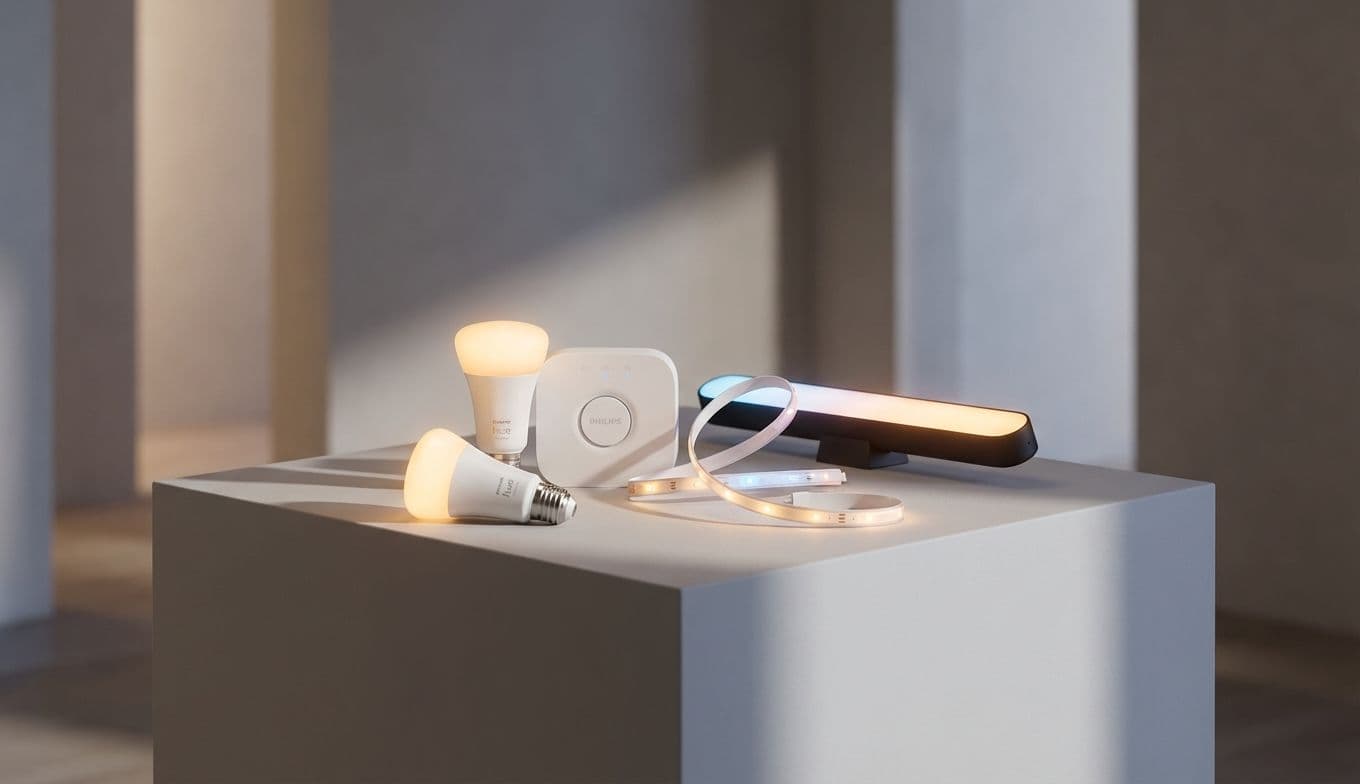
SpatialAware makes the Hue ecosystem a top-tier gift again because it provides a genuine "wow" factor that has been missing for years. If you are looking to buy for someone new to the hobby, I recommend the Philips Hue White and Color Ambiance Starter Kit. It includes the necessary Bridge and three bulbs, providing everything they need to map their first room.

For the expert user who already has a house full of lights, look toward the Hue Festavia String Lights. These are not just for Christmas trees anymore; when paired with SpatialAware, these individual LEDs can be mapped into the room’s 3D space, creating an incredibly granular light show that moves through the room like a living piece of art. Another excellent upgrade is the Hue Play Gradient Lightstrip, which is designed to wrap around the back of a TV but can now be integrated into the wider room's spatial map for a truly cinematic experience.

Sensory Design: Moving Beyond Hot Spots

When you actually sit in a room powered by SpatialAware, the difference is tactile. In a traditional smart light setup, you often deal with "harsh hot spots"—areas where a single bulb is too bright or a color is too saturated compared to its neighbor. It feels artificial.

With a spatially mapped room, those hot spots vanish. The transitions become velvety and fluid. Imagine sitting down for a movie night. With a Cinematic Glow scene, the lights behind you might dim to a deep, moody indigo, while the lights near your peripheral vision cast a soft, warm amber that doesn’t reflect off the screen. Because the system knows where the TV is and where you are sitting, it can eliminate glare and focus the "pool of light" exactly where it adds the most value.

During a dinner party, you can move from a bright, functional "Cooking" light to a "Golden Hour" scene that feels intentional. The light doesn't just change color; it shifts its weight. The focus moves from the overhead fixtures to the accent lamps in the corners, creating an atmosphere that feels intimate and upscale rather than just "colored."

A Smart Upgrade That Earns Its Keep

Philips Hue has long been the premium choice in smart lighting, often commanding prices much higher than the competition. For a long time, it was hard to justify that premium based on hardware alone. However, SpatialAware is the kind of software innovation that justifies the investment. It proves that Hue isn't just selling bulbs; they are selling an environment.

If you are a current Hue user, this is a compelling reason to dust off the app and spend ten minutes scanning your living room. The improvement in your existing scenes will be immediately noticeable. If you have been waiting on the sidelines, wondering if color-changing lights are just a gimmick, this technology is the turning point.

By giving lights a sense of place, Philips has finally moved the smart home away from "remote-controlled lights" and toward true "intelligent illumination." It is no longer about just changing the color of a bulb; it is about using light to shape the mood of your home. For the first time, the reality of the smart home might actually be catching up to the hype.

#smart lighting gradients#Hue AR mapping#Philips Hue Bridge requirements#immersive smart home lighting#Hue Festavia features