Peakdo LinkPower Review: The Essential Starlink Mini Battery

Peakdo LinkPower Review: The Essential Starlink Mini Battery

Team GimmieTeam Gimmie
Published on March 21, 2026

The Untethered Office: Why a Battery Just Made the Starlink Mini Essential

Most tech upgrades are boring. We are conditioned to expect the incremental: a processor that is five percent faster, a screen that is slightly brighter, or a camera that takes marginally better photos in the dark. It is rare to see a single accessory take a good product and transform it into a revolutionary one. But that is exactly what happened when I paired my Starlink Mini with the Peakdo LinkPower battery.

I have been living the van life dream for a while now, and for a digital nomad, the Starlink Mini was already a revelation. It is small enough to fit in a backpack and powerful enough to handle a Zoom call from the middle of a national forest. But it had one glaring weakness: the cord. For all its portability, the Mini still required a 12V or 110V power source. In a van, that meant being tethered to the house battery system, which dictated exactly where I could park and where the dish could sit.

By adding a dedicated battery pack, the Starlink Mini has finally hit its final form. It is no longer just a portable satellite dish; it is a truly wireless gateway to the world, and it has changed how I work.

The Shade vs. Signal Dilemma

To understand why a battery matters, you have to understand the daily struggle of the remote worker in the wild. Last week, I was camped in the Cascades, tucked into a beautiful grove near Mt. Rainier. The temperature was pushing 85 degrees, and in a van, that heat is magnified. To keep the interior livable, I needed to park deep under the canopy of some massive Douglas Firs.

In the old days—which, in tech terms, was last month—I would have had to choose between a cool van and a working internet connection. To get a clear view of the northern sky, the Starlink dish needed to be about 40 feet away from the trees. If I wanted to power it from the van, I would have had to snake a proprietary cable through a cracked window (letting in bugs and heat) or a door (risking cable damage), and even then, I was limited by the length of the cord.

With the Peakdo LinkPower battery, that dilemma vanished. I parked in the deep shade, walked the Mini out to a sun-drenched clearing 50 feet away, and set it down. No cables. No tripping hazards. Just high-speed internet exactly where the signal was strongest. The dish stayed in the sun; I stayed in the shade. That is the kind of practical freedom that does not show up on a spec sheet but changes your entire day-to-day experience.

Hard Data: Runtime, Weight, and Real-World Use

Let’s get into the weeds of the hardware, because if you are going to drop serious money on a setup like this, the numbers matter.

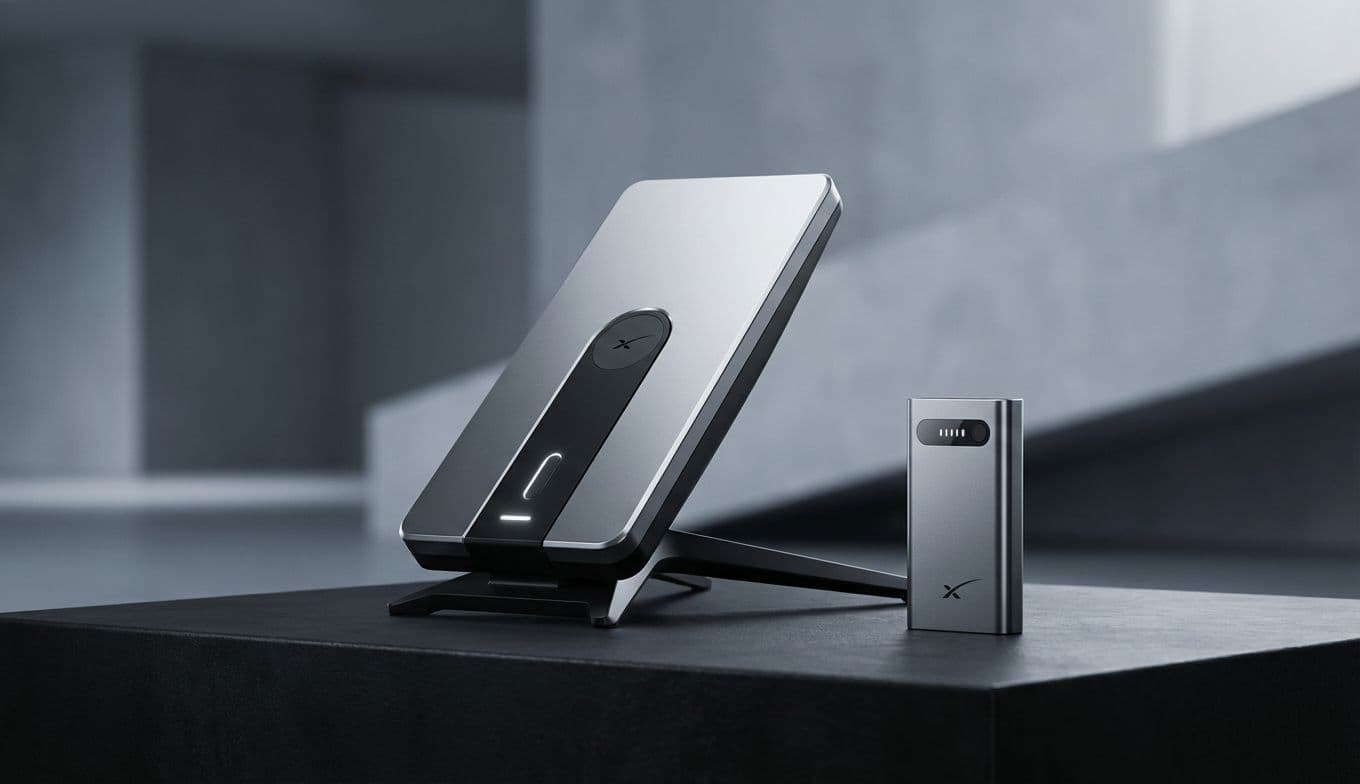
The Starlink Mini itself retails for $599, and the Peakdo LinkPower battery adds another $249 to the kit. For that investment, you are getting a battery that is surprisingly compact. It weighs about 1.8 pounds and clips directly to the back of the Mini or sits neatly in the kickstand area.

In my testing, the 100Wh capacity of the LinkPower delivered between five and six hours of continuous use. If you are just checking emails and doing light browsing, you might stretch it to seven. If you are on a grueling three-hour video conference with heavy data upload, expect it to land closer to the five-hour mark.

For most remote workers, five hours is the perfect window. It covers a full morning of deep work before you need to head back to the vehicle for lunch and a recharge. The battery charges via USB-C PD, which means I can top it off using the same charger I use for my MacBook, simplifying my gear bag significantly.

Durability and the Reality of the Elements

One of the biggest selling points of the Starlink Mini is its ruggedness. It carries an IP67 rating, meaning it can handle a dust storm or a downpour without breaking a sweat. When you add a third-party battery, you have to be a bit more careful.

While the Peakdo battery is built with a sturdy, high-impact plastic shell that feels like it can handle a few bumps in a backpack, it does not share the same submersion rating as the Starlink hardware. The connection point where the battery feeds power to the Mini is the "Achilles' heel." While it is designed to be weather-resistant, I wouldn't leave the battery sitting in a puddle during a thunderstorm. If the clouds turn dark, I still make a point to bring the unit under the awning.

That said, the weight-to-performance ratio is hard to beat. At less than two pounds, the battery doesn’t make the Mini feel cumbersome. The entire kit—dish, stand, and battery—still fits into a standard 20-liter daypack with room to spare for a laptop and a liter of water.

Is the $850 Investment Worth It?

There is no getting around the fact that this is an expensive setup. Between the hardware costs and the monthly Starlink subscription (which usually runs $150 for the Roam plan or $50 for the Mini-specific limited data plan), you are making a significant financial commitment.

Who is this for?

The Professional Nomad: If your job requires you to be online for 40 hours a week and you want to spend those hours in places where cell towers don't exist, this is not a luxury; it is a business expense. The reliability of satellite internet combined with the flexibility of battery power eliminates the "connection anxiety" that plagues most remote workers.

The Weekend Warrior: If you just want to stream Netflix at a campsite, this is probably overkill. You would be better off with a high-end cellular hotspot.

The Emergency Preparedness Enthusiast: For those building a "go-bag" for disaster scenarios, this combo is unbeatable. In a situation where the power grid is down and cell towers are congested or destroyed, having a self-contained, battery-powered communications hub that provides high-speed data is an incredible asset. It’s quiet, unlike a gas generator, and far more portable than a traditional satellite setup.

The Final Verdict

The Starlink Mini was a great product that felt just slightly unfinished. It was mobile, but it wasn't free. The addition of the Peakdo LinkPower battery is the bridge that finally connects the promise of the device with the reality of how people actually want to use it.

By removing the power cord, you aren't just removing a wire; you're removing a limitation. You gain the ability to chase the best signal, stay in the shade, and work from a picnic table that is nowhere near a van or a wall outlet. For the modern adventurer who refuses to choose between the wilderness and a career, this is the most important hardware upgrade of the year. It turns the world into your office, and for once, that isn't just marketing fluff—it's the truth.