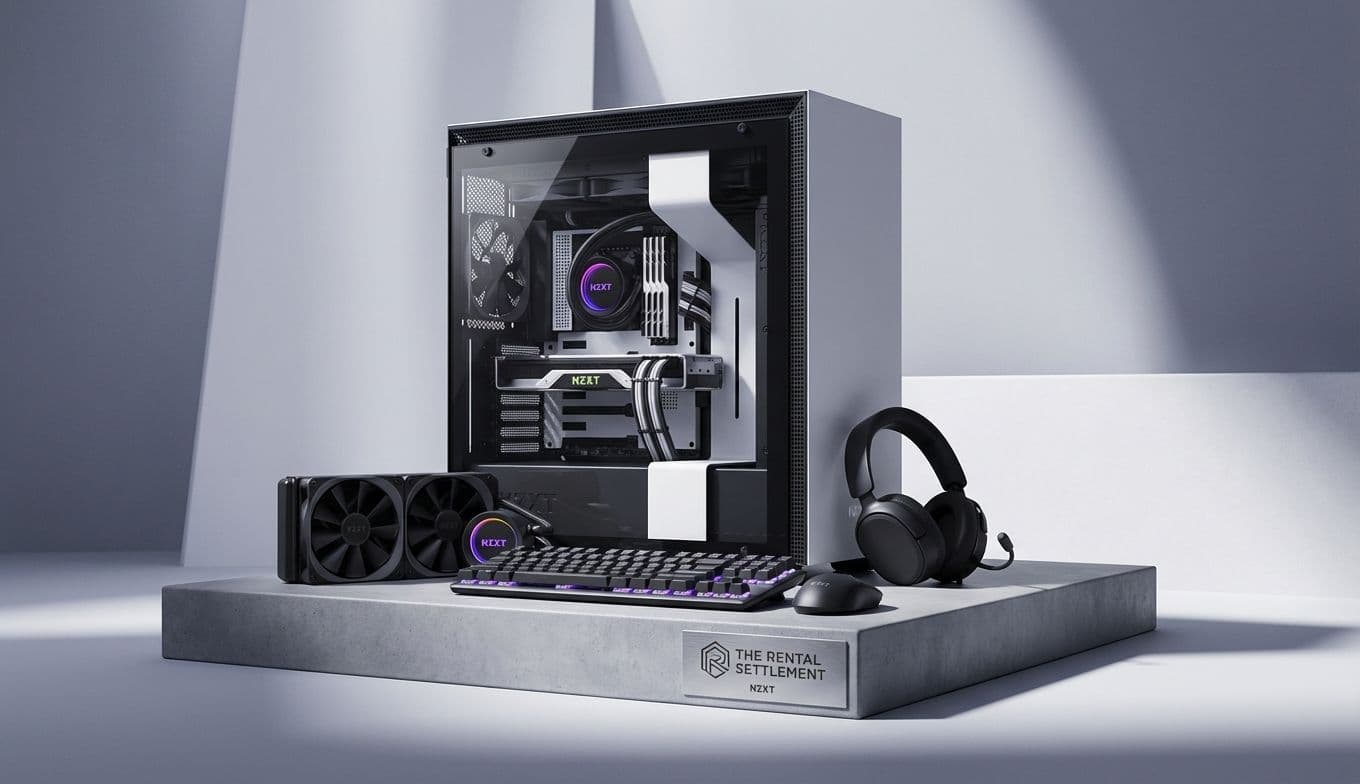
NZXT PC Rental Settlement: The $3.45M Warning for Gamers
Team GimmieThe $3.45 Million Warning: Why Your Next PC Should Be an Investment, Not a Subscription
Nineteen thousand three hundred twenty-two people. That is the number of customers who allegedly found themselves caught in what court documents described as a deceptive trap orchestrated by PC manufacturer NZXT and its partner, Fragile. We are not just talking about a minor marketing mix-up here; we are talking about a preliminary $3.45 million settlement to close a civil RICO (Racketeer Influenced and Corrupt Organizations) case.
When a tech company faces allegations typically reserved for organized crime, it is time for every consumer to pay attention. The core of the lawsuit, which was brought to light and heavily scrutinized by Steve Burke at Gamers Nexus, centered on the NZXT Flex PC rental program. The service was marketed as a way to access high-end gaming hardware without the massive upfront cost. But for many, it turned into a financial nightmare of aggressive debt collection and the crushing realization that they were paying thousands of dollars for hardware they would never actually own.
The NZXT fiasco serves as a definitive cautionary tale for anyone looking to upgrade their setup or buy a gift for a loved one. It exposes the thin line between convenience and exploitation in the world of hardware leasing.
THE BRUTAL MATH OF THE RENTAL TRAP
The appeal of a rental is always the low entry point. If you want a gaming rig that can handle 4K streaming and high frame rates, you are looking at an upfront cost of $2,500 or more. A monthly payment of $150 sounds much more palatable than dropping two months' rent all at once. However, when you look at the math, the "affordability" of these programs vanishes almost instantly.
Let’s run the numbers on a typical high-end rental. Imagine you are renting a PC with a retail value of $2,200 for a monthly fee of $169.
In 12 months, you have paid $2,028. You are nearly at the retail price of the machine, but you have zero equity in it. In 18 months, you have paid $3,042. You have now overpaid for the computer by $842. In 24 months, you have paid $4,056.
At the two-year mark, you have paid nearly double what the computer is worth. In a standard retail scenario, that extra $1,800 could have bought you a top-tier GPU upgrade, a professional-grade monitor, and a high-end peripheral set. Instead, in a pure rental model like the original Flex program, you own nothing. If you stop paying, the company takes the PC back, and you are left with a $4,000 hole in your bank account and no computer to show for it.

The NZXT settlement happened because customers allegedly believed this was a rent-to-own agreement. There is a massive legal and financial difference between the two. Rent-to-own means your payments eventually lead to a title transfer. Pure rental is just a subscription for hardware that depreciates every single day you use it.
BEYOND THE BILL: AGGRESSIVE DEBT COLLECTION
What made the NZXT case particularly egregious wasn't just the confusing terms—it was the alleged behavior when customers tried to leave or missed a payment. The lawsuit pointed to aggressive debt collection tactics that pressured users who were often already struggling with the high cumulative costs.
When you rent tech, you aren't just a customer; you are a debtor. If the hardware breaks, or if your financial situation changes, you are often tethered to a contract that favors the corporation. This is why we generally advise against these models for gaming PCs. Unlike a car, which you might need for a commute to earn a living, a gaming PC is a luxury item. Entering into a high-interest, high-pressure financial agreement for a luxury item is a recipe for long-term stress.
BETTER PATHS TO HIGH-END POWER
If the $2,500 price tag of a new rig is a barrier, you have significantly better options than falling into a rental trap. You can get elite performance without the "RICO-adjacent" drama by looking at these three alternatives:
- THE CERTIFIED REFURBISHED ROUTE Don't confuse "used" with "certified refurbished." When you buy from a manufacturer's official outlet, you get a machine that has been tested, cleaned, and often comes with a full warranty.
The Dell Outlet is a goldmine for Alienware and G-Series gaming desktops. You can often find "Like New" systems that were simply order cancellations or minor floor models for 30% to 40% off retail. For creative professionals, the Apple Certified Refurbished store is the gold standard; their machines are indistinguishable from new and are eligible for AppleCare.
-
STRATEGIC PRE-BUILTS The "PC Master Race" often insists on building from scratch, but for most people, a high-quality pre-built is a smarter move. Brands like Corsair and HP (specifically the Omen line) often have sales that bring the price of a full system below the cost of buying the parts individually. Look for "mid-cycle" refreshes. When a new GPU launches, the previous year’s models (like an RTX 4070 rig) often see massive price cuts.
-
COMPONENT-BY-COMPONENT UPGRADES If you already have a PC, you don't need to replace the whole thing. A $300 GPU upgrade and another $80 for a RAM boost can give an aging machine a second life. This is the ultimate way to avoid the "subscription" lifestyle—you own every part, and you only buy what you need when you can afford it.
WHY RENTALS MAKE TERRIBLE GIFTS
If you are a parent or a relative looking to gift a PC to a young gamer, the rental model is particularly dangerous. A gift should be a source of joy, not a recurring monthly obligation that could impact your credit score or lead to aggressive collection calls.
Gifting a rental is essentially gifting a bill. If the recipient loses interest in the hobby six months later, you are still on the hook for the contract, or you are facing hefty restocking fees to return the unit. It is much better to buy a more modest, entry-level PC that you actually own (like a rig with an NVIDIA RTX 4060) than to rent a "beast" of a machine that you’ll be paying for long after it has become obsolete.
FINAL THOUGHTS: THE COST OF THE FINE PRINT
The NZXT settlement is a win for consumer transparency, but the rental model isn't going away. In fact, NZXT and Fragile are still offering rental programs under revised agreements. The lesson isn't that you should never use these services, but that you must go in with your eyes wide open.
Always ask: Is there a path to ownership? What is the total cost after 24 months? What happens if the hardware fails? If the salesperson or the website can't give you a straight answer, walk away.
In the world of tech, ownership is freedom. It gives you the right to repair, the right to resell, and the peace of mind that once you’ve paid for your gear, it’s yours. Don't let a slick marketing campaign and a low monthly fee trick you into a $3.45 million mistake of your own. Stay informed, do the math, and always prioritize value over the illusion of convenience.