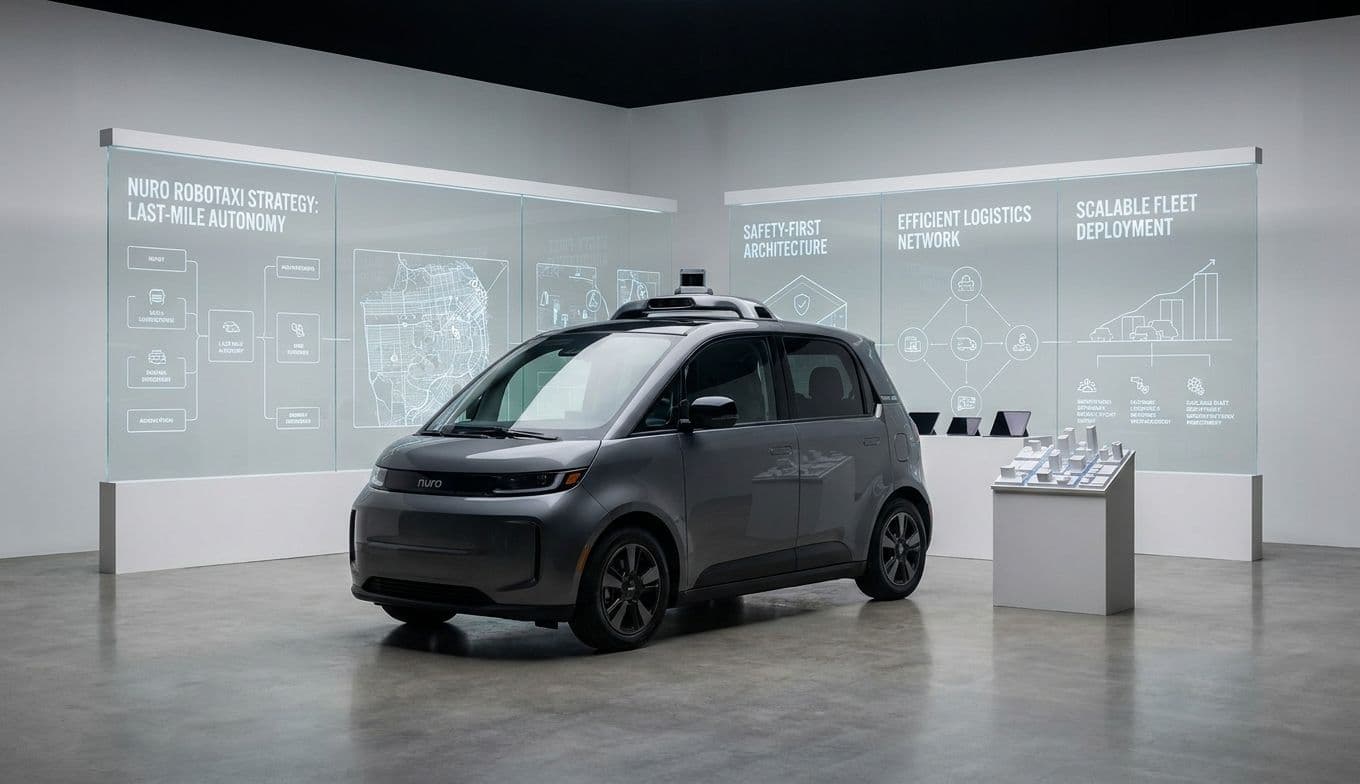
Nuro Robotaxi: The Second-Mover Strategy with Lucid & Uber

Nuro Robotaxi: The Second-Mover Strategy with Lucid & Uber

Team GimmieTeam Gimmie
Published on May 25, 2026

The Second Mover Advantage: How Nuro and Lucid are Polishing the Robotaxi Experience

We have all seen the headlines. For years, Waymo has been the undisputed king of the robotaxi hill, zipping through Phoenix and San Francisco while the rest of the industry scrambled to keep up. It is easy to buy into the first-mover narrative—the idea that whoever plants their flag first wins the territory. But as anyone who bought the first-generation folding phone can tell you, being first often means being the person who finds all the bugs.

In the world of autonomous vehicles, those bugs can be literal and high-stakes. We saw this clearly when Cruise, once a frontrunner, had to suspend its entire fleet following a series of high-profile safety incidents and regulatory scrutiny. While the pioneers were busy breaking things to move fast, Nuro was quietly watching from the sidelines. Known primarily for their adorable, toaster-shaped delivery bots, Nuro has made a massive pivot. They are no longer just delivering your groceries; they are aiming to deliver you.

By embracing a second-mover strategy, Nuro is betting that the winner of the robotaxi race won't be the company that started first, but the one that learned the most from everyone else's stumbles.

Learning from the Pioneers

Think of the robotaxi industry like the early smartphone market. Waymo and Cruise are the Blackberrys and Palm Pilots—essential pioneers that proved the concept but carried the heavy burden of inventing the infrastructure from scratch. They had to navigate a nightmare of early-stage regulatory hurdles and gather millions of miles of data using bulky, expensive sensors that made cars look like science experiments.

Nuro is positioning itself as the refined successor. By entering the passenger space now, they can integrate third-generation lidar and AI models that are smaller, faster, and significantly cheaper than what was available five years ago. They aren't burdened by legacy hardware or the need to justify a decade of experimental "dead-end" research. Instead, they are cherry-picking the best advancements in the field and focusing entirely on the one thing the pioneers often neglected: the actual passenger experience.

The Lucid Factor: Luxury as a Standard

One of the biggest criticisms of early robotaxis is that they feel, well, like robots. They are often modified mass-market sedans filled with visible wires and clunky hardware. Nuro is taking a different path by partnering with Lucid Motors.

Instead of building a dorky "pod," Nuro is integrating its Nuro Driver technology into the Lucid Air, a vehicle already hailed as one of the best-engineered electric luxury cars on the planet. For the consumer, this changes everything. When you hail a Nuro-powered vehicle, you aren't stepping into a science project; you are stepping into a cabin defined by its glass canopy roof, sustainable high-end textiles, and more rear legroom than a long-wheelbase Mercedes.

By using the Lucid Air as their platform, Nuro is promising a refined, quiet, and premium environment. This is the second-mover advantage in action. While competitors are still trying to figure out how to make their sensors work in the rain, Nuro is focusing on whether the passenger has enough space to work on a laptop or relax in a massage seat during a cross-town commute. They are turning a utility service into a premium product.

The Uber Integration: Frictionless Mobility

The biggest hurdle for any new tech service is getting people to actually use it. We all have "app fatigue," and the last thing anyone wants is to download a separate Nuro app, set up a new payment method, and learn a new interface just to get a ride.

This is where the partnership with Uber becomes Nuro’s secret weapon. Rather than trying to build a customer base from scratch, Nuro is plugging directly into the world’s largest ride-sharing ecosystem. For the average user, this means the experience will be almost invisible. You will open the Uber app you already use, enter your destination, and—in supported cities—you will see a Nuro Autonomous option alongside UberX and Uber Black.

This integration solves the practicality problem that has plagued smaller autonomous startups. There is no learning curve. You get the same predictable pricing, the same safety tracking features, and the same familiar interface. By leveraging Uber’s massive routing data and user base, Nuro can scale its operations at a fraction of the cost it would take to build a standalone brand.

What to Watch: The Nuro Roadmap

While we are still in the early stages of this rollout, the timeline for Nuro’s transition from delivery bots to passenger transport is moving fast. If you are a tech-early adopter or someone who tracks the future of transportation, here is the roadmap to keep an eye on:

Late 2024 to Early 2025: Nuro begins intensive public road testing of the Nuro Driver system within the Lucid Air platform in select California and Texas markets. These will likely be "safety driver" tests where a human is still behind the wheel.

Mid-2025: The Uber integration goes live in limited pilot zones. This is when the first public users will be able to select an autonomous Nuro ride through the Uber app.

2026 and Beyond: Commercial scaling. Nuro aims to deploy tens of thousands of vehicles across the US, moving beyond the "test city" phase and into mainstream metropolitan areas.

The Road Ahead

The robotaxi industry is finally moving out of its awkward teenage years. The "move fast and break things" era is being replaced by a focus on safety, luxury, and seamless integration. While it is tempting to crown the first player on the field as the winner, history favors the refined.

Nuro’s strategy of standing on the shoulders of pioneers like Waymo—while avoiding the catastrophic stumbles of companies like Cruise—is a masterclass in strategic patience. By pairing Lucid’s world-class interior design with Uber’s massive logistical network, Nuro is skipping the experimental phase and going straight for a polished consumer product.

For those of us watching from the sidewalk, the result is a future where autonomous transport feels less like a gimmick and more like a service we would actually want to use every day. Nuro might be the second mover, but they are clearly aiming to be the one that stays.