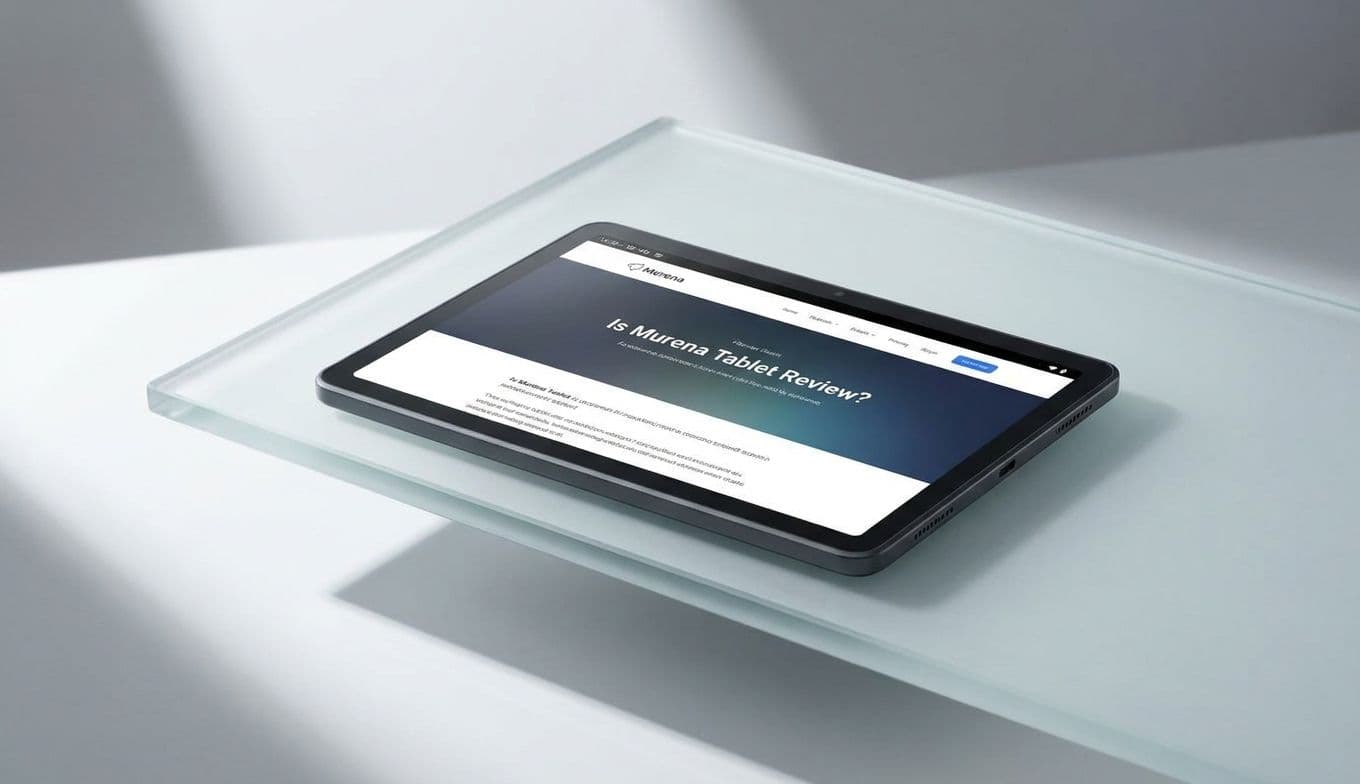
Murena Tablet Review: Is the De-Googled /e/OS Worth It?
Team GimmieThe Great Disconnect: Why the Murena Tablet is the Ultimate Gift for the Digitally Exhausted
We have all been there. You mention a specific brand of coffee in a private text, and three minutes later, your social media feed is a wall of espresso machine advertisements. It is creepy, it is invasive, and for a growing number of people, it is the breaking point. This is where the Murena tablet enters the conversation. It is not just another slab of glass and aluminum; it is a political statement disguised as a piece of consumer electronics.
The Murena tablet runs /e/OS, a de-Googled version of Android that aims to strip away the trackers and data-slurping telemetry that define modern life. But as any tech enthusiast will tell you, privacy usually comes with a tax. The question is whether that tax is paid in dollars, in frustration, or in both. If you are looking for a gift that says I value your autonomy more than your convenience, this is the device. However, you need to know exactly who you are giving it to before you hit the buy button.
The Gift Persona: Who is this actually for?
This is not a tablet for your tech-illiterate grandparent who just wants to play Bridge and FaceTime the grandkids. This is a device for the Digital Minimalist.
Think of the student who is tired of being a data point for big tech, or the professional who handles sensitive information and needs a clean environment for secure note-taking. It is the perfect gift for the person in your life who uses a VPN, covers their webcam with a sticker, and has spent at least one dinner party explaining why they deleted their Facebook account.
For this recipient, the Murena is not just a tool; it is a relief. It provides a sanctuary from the constant nudges of the attention economy. It is for the person who wants a tablet that works for them, rather than a tablet that treats them like the product.
The App Ecosystem: What works and what breaks?
The biggest hurdle for any non-technical user is the app situation. Because the Murena tablet is de-Googled, it does not have the Google Play Store. Instead, it uses the App Lounge, which allows you to install standard Android apps through a clever workaround.

Here is the reality of the experience:
Most common apps like Signal, Telegram, Spotify, and even Instagram will install and run. However, apps that rely heavily on Google Play Services—the invisible glue that holds many Android apps together—can be temperamental.
Banking apps are the primary casualty. Many high-security financial apps will refuse to run on a modified operating system like /e/OS. Similarly, if you are a heavy user of Google Workspace (Drive, Docs, Sheets), you can access them through the browser, but the native app experience will be clunky or non-existent.
For media, you are in a bit of a gray area. While you can watch YouTube through privacy-respecting alternatives like NewPipe, apps like Netflix or Disney Plus might struggle to play in high definition due to DRM (Digital Rights Management) restrictions. If the person you are buying for is a hardcore cinephile who needs 4K streaming on the go, this might be a dealbreaker. But if they are a reader, a writer, or a researcher, the friction is negligible.
The Privacy Tax: Murena vs. The Titans
When you spend around $500 on a tablet, you are usually comparing it to the iPad Air or the Samsung Galaxy Tab S series. In a straight hardware fight, the Murena loses.
The iPad Air offers a faster processor, a more vibrant screen, and a more polished accessory ecosystem. The Samsung S-series gives you an OLED display that makes colors pop in a way the Murena simply cannot match. On paper, the Murena looks like a mid-range tablet from three years ago.
So, why pay the premium? You are paying for the engineering required to un-hook a device from the most pervasive data-tracking network on earth. With an iPad, the hardware is subsidized by the fact that you are locked into the Apple ecosystem. With a standard Android tablet, your data is the hidden currency. With Murena, you are paying the full, honest price for the hardware and the privacy-first software development. You are buying a device that doesn't report your location to a server in Mountain View every four minutes.
Real-World Scenarios: Where it shines and where it stumbles
To understand if this tablet fits your life, or the life of your gift recipient, consider these two scenarios:
Scenario A: The Deep Work Retreat You are headed to a coffee shop to outline a project or read a long-form PDF. You open the Murena. There are no pings from Google Photos reminding you of a trip five years ago. There are no personalized ads appearing in your browser based on your last search. You use the pre-installed, encrypted Notes app to jot down ideas. The tablet feels like a digital notebook—silent, obedient, and private. In this scenario, the Murena is superior to any iPad.
Scenario B: The Travel Companion You are on a six-hour flight and want to catch up on a new series on a major streaming platform, then check your bank balance, then book an Uber upon landing. This is where the friction starts. You might find the streaming app won't play in HD. Your banking app might give you a security warning and close. The Uber app might struggle to pinpoint your location without Google Maps API. In this scenario, the Murena feels like a project rather than a tool.
The Verdict: Is it worth the hassle?
The Murena tablet is a specialized tool for a specific type of person. It is an act of digital rebellion.
If you are buying this for someone who just wants things to work and doesn't care about data privacy, they will likely find it frustrating. They will miss the seamless integration of Google and the polish of mainstream OS features.
However, for the intentional user—the one who is willing to trade a little bit of convenience for a lot of peace of mind—this is one of the most thoughtful gifts you can give. It is the gift of being left alone. In 2026, there is almost no higher luxury than that.
The Murena /e/OS tablet is not just a piece of technology; it is a boundary. If the person in your life has been looking for a way to draw a line in the sand against big tech, you just found their new favorite device.